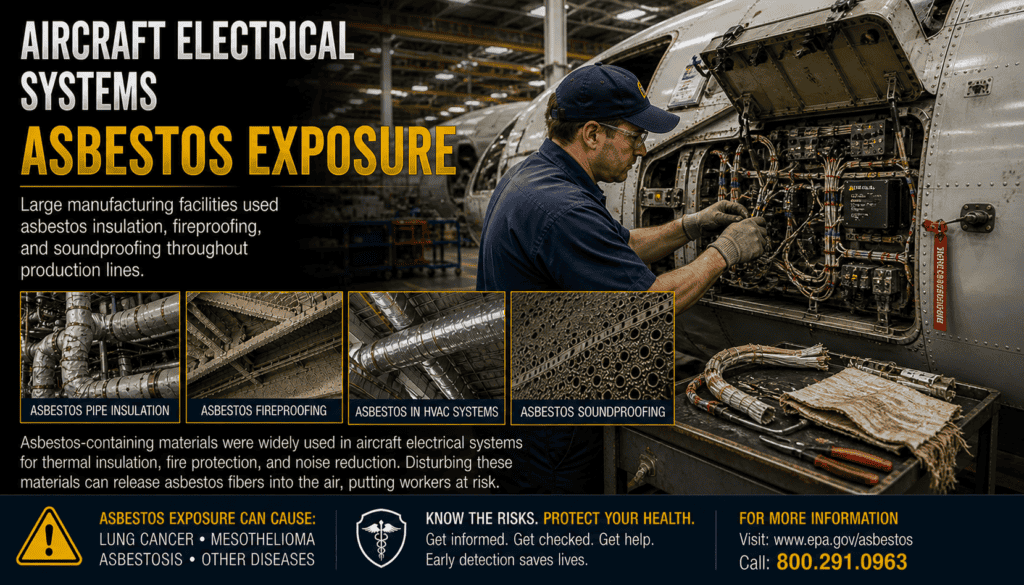
✈️ Aircraft Electrical Systems Asbestos Exposure
Aircraft electrical systems exposed workers to asbestos during manufacturing, installation, testing, and repair. For decades, aircraft manufacturers relied on asbestos-containing materials to insulate wiring, protect control systems from heat, and reduce fire risk throughout aircraft and factory electrical infrastructure. As a result, electricians, assemblers, technicians, and maintenance workers were frequently exposed while handling asbestos-insulated wiring, panels, control boxes, and electrical equipment.
Cutting, stripping, drilling, and installing electrical components disturbed asbestos insulation and backing materials, releasing fibers into the air—often in enclosed production areas. Many aircraft electrical workers were later diagnosed with mesothelioma or asbestos lung cancer linked directly to this occupational exposure.
🔥 Why Asbestos Was Used in Aircraft Electrical Systems
Aircraft electrical systems operate near engines, exhaust systems, and high-heat environments. Asbestos was widely used because it provided:
-
Heat resistance to protect wiring near hot components
-
Fireproofing for electrical panels and junction boxes
-
Electrical insulation for wires and cable sleeves
-
Durability under vibration and mechanical stress
-
Resistance to chemical and fuel exposure
These properties made asbestos a standard material in both aircraft electrical components and manufacturing facility infrastructure.
🏭 Primary Asbestos Exposure Sources in Aircraft Electrical Work
⚡ Wiring & Cable Insulation
Aircraft electrical systems used asbestos in:
-
Wire insulation and sleeving
-
Braided asbestos wire coverings
-
Heat-resistant cable wraps
Exposure occurred during:
-
Cutting and stripping wires
-
Routing and installing cable bundles
-
Repairing damaged wiring
-
Removing outdated electrical systems
Handling and trimming insulation released asbestos fibers directly into breathing zones.
🧰 Electrical Panels, Control Boxes & Switchgear
Manufacturing facilities and aircraft used asbestos-containing:
-
Panel backing boards
-
Control box insulation
-
Switchgear arc barriers
Electricians were exposed while drilling, mounting, opening, and servicing panels and control systems.
🔩 Electrical Gaskets & Fire Barriers
Asbestos was used in:
-
Electrical enclosure gaskets
-
Fire barriers around control equipment
-
Heat shields protecting sensitive electronics
Scraping, cutting, and fitting these materials released asbestos dust during installation and maintenance.
🏭 Facility Electrical Infrastructure
Aircraft plants contained asbestos in:
-
Electrical room fireproofing
-
Insulated conduit systems
-
Cable trays lined with asbestos materials
Maintenance, upgrades, and deterioration caused background asbestos exposure throughout electrical areas.
🌫️ Ventilation & Duct Systems Near Electrical Rooms
Electrical areas were often located near insulated ductwork and ventilation systems. Cutting or repairing ducts released asbestos fibers that circulated through electrical workspaces.
👷 Jobs Most Affected by Electrical System Asbestos Exposure
High-risk roles included:
-
Aircraft electricians
-
Electrical assemblers
-
Avionics technicians
-
Control system installers
-
Maintenance electricians
-
Quality inspectors
-
Tooling and support staff
Even workers not directly handling asbestos insulation were exposed due to shared airspace and dust migration.
🌫️ How Asbestos Exposure Occurred During Electrical Work
Exposure commonly occurred during:
-
Wire cutting and stripping
-
Electrical panel installation and repair
-
Control system upgrades
-
Facility electrical renovations
-
Cleanup of dust and debris
-
Maintenance of electrical rooms and equipment
Asbestos fibers settled on clothing, tools, and work surfaces and were repeatedly re-aerosolized throughout each shift.
🩺 Health Risks Linked to Aircraft Electrical System Asbestos Exposure
Asbestos-related illnesses typically develop 20–50 years after exposure, which explains why many aircraft electrical workers are diagnosed long after leaving manufacturing jobs.
The most serious asbestos-related illnesses include:
-
Mesothelioma
-
Asbestos Lung Cancer
Electrical workers faced cumulative exposure due to repeated handling of asbestos-insulated materials over long careers.
⚠️ Aircraft Electrical Work & Mesothelioma
Many aircraft electricians were never informed asbestos was present in wiring insulation, panels, or control systems. Respiratory protection was rarely required during peak production decades.
Key facts:
-
Mesothelioma is almost exclusively caused by asbestos
-
Aircraft electrical systems used asbestos extensively
-
Secondary exposure affected family members through contaminated clothing
⚖️ Legal Options for Aircraft Electrical System Workers
Workers diagnosed with asbestos-related disease may qualify for compensation through:
-
Mesothelioma lawsuits against manufacturers and suppliers
-
Asbestos trust fund claims
-
Wrongful death claims filed by surviving family members
Eligibility depends on job history, exposure documentation, diagnosis, and filing deadlines.
👨⚖️ How a Lawyer Can Help With an Aircraft Electrical Asbestos Claim
A lawyer experienced with asbestos cases can do far more than “file paperwork.” Key ways they help include:
-
Worksite & job-history investigation: Mapping where you worked (electrical rooms, assembly lines, control areas) and when.
-
Product identification: Identifying wiring insulation, panel, gasket, and electrical equipment manufacturers.
-
Evidence development: Gathering employment records, union records, coworker statements, and facility documentation.
-
Medical documentation support: Ensuring pathology reports and diagnostic records are properly prepared.
-
Choosing the best compensation path: Lawsuit vs. trust funds (or both), based on eligibility and deadlines.
-
Handling deadlines and filings: Meeting strict statutes of limitation.
-
Maximizing total recovery: Coordinating multiple claims where allowed.
This support allows workers and families to focus on health and care while claims are handled professionally.
❓ FAQs (Aircraft Electrical Systems Asbestos Exposure)
1) Did aircraft wiring really contain asbestos?
Yes. Many aircraft wires and cables used asbestos insulation for heat resistance.
2) I worked on control panels, not wiring. Can I still have a claim?
Possibly. Panels and control boxes often contained asbestos insulation and gaskets.
3) My exposure was decades ago. Is it too late?
Usually not. Most claims are based on diagnosis date, not exposure date.
4) Can families file if an aircraft electrician passed away?
Yes. Families may pursue wrongful death claims.
5) Will my case go to trial?
Not always. Many cases resolve through settlements or trust fund claims.
📞 Free Case Consultation (CTA)
If you or a loved one worked on aircraft electrical systems and was diagnosed with mesothelioma or asbestos lung cancer, legal options may be available.
Call now for a Free Case Consultation: 800-291-0963
Time limits may apply based on diagnosis date and state jurisdiction.