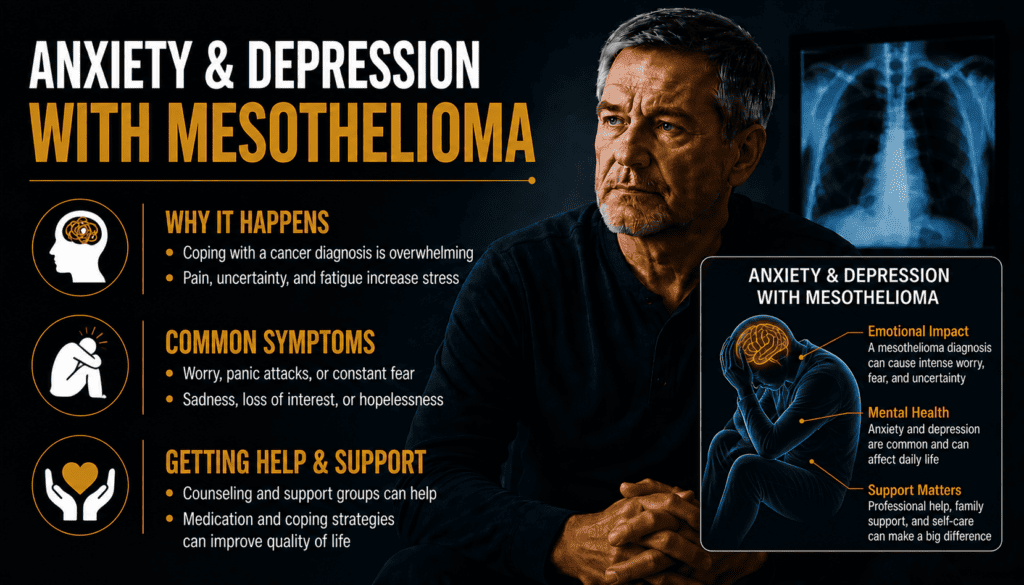
Anxiety & Depression with Mesothelioma
🧠 Why It Happens, How It Affects Daily Life & Treatments That Help
A mesothelioma diagnosis is life-changing. Beyond the physical symptoms, nearly every patient experiences emotional and psychological challenges, including anxiety, depression, fear of the future, and stress about finances or loved ones. These feelings are normal — and with the right support, they are treatable.
This guide explains why mesothelioma triggers emotional distress, how anxiety and depression impact quality of life, and the medical, psychological, and holistic treatments that help patients regain control and peace of mind.
📘 Why Mesothelioma Causes Anxiety & Depression
Mesothelioma affects several areas of a patient’s life:
💬 Fear of the Diagnosis
Uncertainty about:
-
Life expectancy
-
Treatment success
-
Pain levels
-
The future
These unknowns create emotional instability.
💸 Financial Stress
High medical costs, work disruption, and caregiving needs increase emotional pressure.
💉 Treatment Challenges
Chemotherapy, immunotherapy, radiation, and surgery all cause:
-
Fatigue
-
Pain
-
Nausea
-
Hormonal changes
-
Sleep disruption
These changes impact mood and energy.
🧬 Biological Factors
Cancer itself alters:
-
Hormones
-
Sleep patterns
-
Appetite
-
Brain chemistry
All of which contribute to depression or anxiety.
🧑🤝🧑 Family & Social Pressure
Patients worry about:
-
Burdening their loved ones
-
Leaving unfinished matters
-
How their diagnosis affects children or spouses
This emotional weight increases distress.
🧠 Symptoms of Anxiety in Mesothelioma Patients
Anxiety often begins early in the diagnosis, increases during treatment, and may spike during symptom progression.
⚠️ Common Symptoms
-
Racing thoughts
-
Constant worry
-
Feeling restless or on edge
-
Difficulty concentrating
-
Panic attacks
-
Rapid heartbeat
-
Chest tightness
-
Difficulty sleeping
-
Shortness of breath
-
Dizziness
Anxiety can worsen physical symptoms like shortness of breath or pain.
😔 Symptoms of Depression in Mesothelioma Patients
Depression often develops when symptoms interfere with daily routines or when treatment becomes overwhelming.
⚠️ Common Symptoms
-
Persistent sadness
-
Feeling hopeless or numb
-
Loss of interest in activities
-
Fatigue
-
Insomnia or oversleeping
-
Appetite changes
-
Irritability
-
Trouble making decisions
-
Withdrawal from friends and family
Depression can make it harder for patients to follow treatment plans or maintain nutrition — which affects survival.
🌪️ Emotional Challenges Throughout the Mesothelioma Journey
Mesothelioma creates emotional waves at different stages. Each stage brings unique challenges.
1️⃣ At Diagnosis
Emotions include:
-
Shock
-
Fear
-
Confusion
-
Anger
-
Disbelief
Patients often recall the diagnosis as the most emotionally difficult moment.
2️⃣ During Treatment
Stress increases due to:
-
Side effects
-
Hospital visits
-
Physical weakness
-
Unpredictable progress
-
Fear of recurrence
Fatigue and pain intensify emotional strain.
3️⃣ When Symptoms Progress
Patients may begin worrying about:
-
Loss of independence
-
Impact on loved ones
-
End-of-life care
-
Comfort levels
Emotional support becomes essential here.
4️⃣ For Caregivers
Loved ones experience:
-
Burnout
-
Sleep disruption
-
Fear
-
Financial stress
-
Emotional exhaustion
Caregiving is rewarding but extremely demanding.
💉 Medical Treatments for Anxiety & Depression
Doctors use a combination of medication, therapy, and lifestyle adjustments.
1️⃣ Prescription Medications
💊 Help stabilize mood and reduce symptoms.
Antidepressants
-
SSRIs (Zoloft, Lexapro)
-
SNRIs (Effexor, Cymbalta)
-
Tricyclic antidepressants
Anti-Anxiety Medications
-
Benzodiazepines (for short-term relief)
-
Buspirone
-
Beta-blockers (for panic symptoms)
Sleep Aids
-
Melatonin
-
Prescription sleep medications
-
Anti-anxiety medications with sedative benefits
A doctor should oversee all prescriptions, especially due to interactions with chemotherapy or immunotherapy.
2️⃣ Counseling & Mental Health Therapy
🧑⚕️ One of the most effective tools for emotional support.
Cognitive Behavioral Therapy (CBT)
Helps reframe negative thoughts and reduce fear.
Talk Therapy
Provides a safe space for discussing:
-
Life changes
-
Fears
-
Stress
-
Grief
Acceptance & Commitment Therapy (ACT)
Supports acceptance of difficult emotions while maintaining quality of life.
Family Counseling
Helps loved ones cope and communicate more effectively.
3️⃣ Support Groups
🤝 Provides community and understanding.
Benefits include:
-
Meeting others with mesothelioma
-
Sharing emotional burdens
-
Learning coping skills
-
Feeling less isolated
Many patients describe support groups as life-changing.
4️⃣ Palliative Care Support
🏥 Available at any stage of mesothelioma.
Palliative care improves:
-
Pain control
-
Breathing
-
Sleep
-
Emotional well-being
-
Quality of life
Patients who receive palliative support early often experience less anxiety and depression.
5️⃣ Lifestyle-Based Coping Strategies
🧘 Small daily habits reduce emotional strain.
🔹 Gentle Exercise
Walking, stretching, or yoga improve mood and energy.
🔹 Breathing Exercises
Helps manage anxiety episodes and shortness of breath.
🔹 Mindfulness & Meditation
Reduces stress and helps patients stay grounded.
🔹 Journaling
Helps patients express fears and track emotional progress.
🔹 Time in Nature
Improves calmness and reduces depression symptoms.
6️⃣ Nutrition Support
🥗 Nutrition affects mood directly.
Mesothelioma often causes:
-
Loss of appetite
-
Weight loss
-
Mineral deficiencies
A nutritionist can help stabilize energy and mood by recommending:
-
High-protein foods
-
High-calorie snacks
-
Hydration strategies
-
Supplement support
Better nutrition → better mental health.
🔍 Warning Signs That Need Immediate Attention
Call your doctor if you notice:
-
Suicidal thoughts
-
Panic attacks that worsen
-
Inability to sleep for several nights
-
Sudden personality changes
-
Loss of interest in all activities
-
Extreme or persistent sadness
-
Withdrawal from others
Early intervention can prevent emotional crises.
⚖️ Legal Support for Emotional Distress
Anxiety and depression from mesothelioma are not only medical issues — they are also compensable in legal claims.
💰 Emotional damages
Courts recognize:
-
Severe anxiety
-
Chronic depression
-
Loss of enjoyment of life
-
Mental suffering
These significantly increase compensation.
📑 Medical proof strengthens claims
Documented symptoms help:
-
Prove severity
-
Justify higher settlement amounts
-
Show total impact of the disease
👨⚖️ Attorneys consider emotional harm
Legal teams use your emotional health history to support:
-
Lawsuits
-
Trust fund claims
-
Veterans cases
Emotional suffering is a major part of the total damages owed.
📞 🚨 Urgent: Get Legal Help for Mesothelioma or Asbestos Lung Cancer
If you or a loved one is losing sleep, struggling to breathe, or suffering because of mesothelioma or asbestos-related lung cancer, do not wait.
You may qualify for significant financial compensation — but deadlines apply.
⚖️ What Our Legal Team Can Do Right Now
- 🏭 Pinpoint where asbestos exposure occurred
- 🧾 File asbestos trust fund claims worth millions
- 💼 Pursue lawsuits against responsible companies
- 🚀 Fast-track your case due to severe symptoms
- 💰 Recover compensation for treatment, bills & pain
⏳ Time matters. Your rights may depend on acting quickly.
📞 Call Now for Immediate Legal Help: 800.291.0963
Your case review is free, confidential, and available 24/7.
🛑 Disclaimer:
This 50-page guide provides general information only. It should not be used as medical or legal advice. If you suspect mesothelioma or have related symptoms, seek medical evaluation right away. For legal concerns, including asbestos exposure and compensation, consult a licensed attorney.