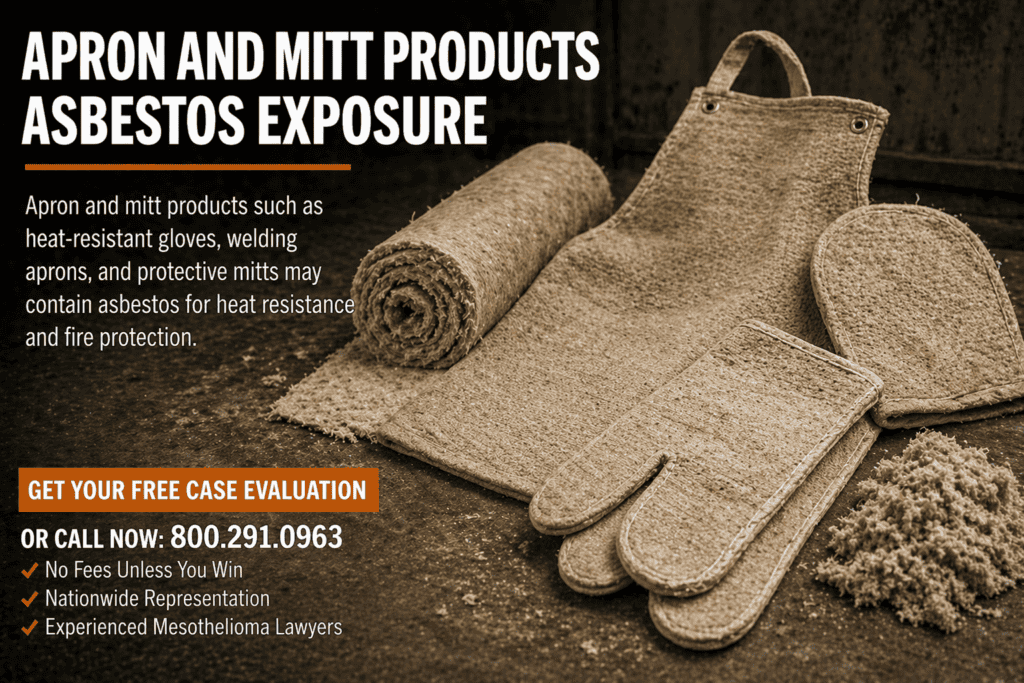
🧤 Apron and Mitt Asbestos Products Mesothelioma Lawsuits
If you or a loved one has been diagnosed with mesothelioma or asbestos lung cancer after exposure to asbestos aprons and mitts, you may qualify to file an asbestos lawsuit. Our attorneys represent welders, foundry workers, firefighters, glassblowers, and industrial employees exposed to protective gear made with asbestos fibers. These aprons, mitts, and gloves were designed to withstand extreme heat — but they released deadly fibers during use, laundering, and disposal.
Through apron and mitt asbestos lawsuits, victims may recover compensation for medical bills, lost income, long-term treatment, wrongful death, and pain and suffering. At Mesothelioma Help Center, we charge no upfront fees — clients pay nothing unless we win. Our legal team has decades of experience securing asbestos verdicts, settlements, and trust fund claims for those harmed by asbestos-laden protective equipment.
📖 Here’s What You’ll Learn When You Read This Page:
🧤 Aprons and mitts often contained asbestos for heat resistance.
🛠️ Workers inhaled fibers while wearing, laundering, or repairing protective gear.
🏭 Exposure common in foundries, shipyards, welding shops, and firefighting.
📑 Thousands of victims have filed lawsuits and asbestos trust fund claims.
📌 Facts About Asbestos in Apron and Mitt Products
• Asbestos provided heat and flame resistance in industrial protective clothing
• Exposure Risk: High during handling, cleaning, or disposal of gear
• Disease Risk: Mesothelioma, lung cancer, asbestosis
• Dust spread in work areas and on contaminated clothing
• Similar Occupations: Welders, machinists, glass workers, firefighters, foundry workers, laundry staff
🏛️ History of Asbestos Use in Apron and Mitt Products
From the 1930s to the 1980s, asbestos was woven into protective aprons, mitts, and gloves used in high-heat industries. Foundries, steel mills, power plants, shipyards, and glass factories relied on asbestos protective gear to shield workers from burns and fire.
However, the same fibers that provided protection also posed severe health risks. Workers inhaled asbestos when gear frayed, when dust was released during laundering, or when aprons and mitts deteriorated with age.
📊 Number of U.S. Workers Exposed to Asbestos from Apron and Mitt Products
| Occupational Group | Estimated Number of Workers Exposed |
|---|---|
| Welders & Metalworkers | Over 600,000 wore asbestos aprons and gloves. |
| Foundry Workers | Nearly 500,000 handled molten metals in asbestos gear. |
| Firefighters | Around 400,000 used asbestos mitts and coats during emergencies. |
| Shipyard Workers | Roughly 300,000 wore asbestos protective gear during repairs. |
| Glassblowers & Furnace Crews | About 200,000 used asbestos mitts near extreme heat. |
| Laundry Workers | Nearly 150,000 exposed while washing asbestos aprons and gloves. |
Total Estimated Exposure:
Over 2.1 million Americans were exposed to asbestos through aprons and mitt products.
🧤 Asbestos Apron and Mitt Products
🧤 Welding Aprons
Asbestos aprons shielded welders from sparks and heat. Fraying and handling released dangerous fibers into workshops and lungs.
🧤 Foundry Mitts
Thick asbestos mitts protected workers from molten metal. Cracks and wear released fibers, contaminating work areas.
🧤 Firefighter Gloves
Fire departments used asbestos gloves and mitts. Damage during emergency use exposed firefighters to toxic asbestos dust.
🧤 Glassworker Aprons
Glassblowers wore asbestos aprons for high-heat protection. Daily use released fibers into poorly ventilated spaces.
🧤 Shipyard Protective Gear
Shipyard crews used asbestos mitts during welding and repair. Handling gear released airborne asbestos fibers.
🧤 Industrial Oven Mitts
Factories used asbestos gloves near furnaces and boilers. Cutting, handling, and cleaning them released asbestos dust.
👷 Types of Workers & Asbestos Exposure from Apron and Mitt Products
👷 Welders
Wore asbestos aprons daily, inhaling fibers as gear deteriorated.
👷 Foundry Workers
Handled molten metal with asbestos mitts, disturbing fibers.
👷 Firefighters
Used asbestos gloves in high-heat firefighting scenarios.
👷 Shipyard Crews
Worked with asbestos protective gear during welding and repairs.
👷 Glassworkers
Wore asbestos aprons in glassblowing and furnace work.
👷 Machinists
Used asbestos gloves for handling heated parts.
👷 Laundry Workers
Exposed cleaning and shaking asbestos-contaminated aprons.
👷 Factory Workers
Handled and distributed asbestos aprons and mitts.
❓ FAQs About Apron and Mitt Products and Mesothelioma Lawsuits
Who qualifies?
Anyone diagnosed with mesothelioma or lung cancer after asbestos apron or mitt exposure may qualify.
How did exposure happen?
Wearing, laundering, or handling asbestos aprons and gloves released fibers into the air.
Are veterans eligible?
Yes. Veterans exposed to asbestos protective gear in shipyards and bases may qualify for VA benefits plus lawsuits.
What’s the filing deadline?
Most states allow 1–3 years from diagnosis or death to file. Prompt legal action is essential.
Do I pay anything upfront?
No. Our asbestos attorneys work on contingency — clients pay nothing unless recovery is secured.
🏭 Manufacturers of Apron and Mitt Asbestos Products
🏭 Johns-Manville – Produced asbestos aprons, mitts, and protective gloves.
🏭 Raybestos-Manhattan – Manufactured asbestos protective clothing for industrial use.
🏭 Owens-Corning – Distributed asbestos heat-resistant aprons and gloves.
🏭 Armstrong Cork Company – Supplied asbestos fabric for protective mitts and aprons.
🏭 Eagle-Picher – Produced asbestos gloves and industrial protective gear.
🏭 Celotex Corporation – Manufactured asbestos textiles for heat-resistant apparel.
🧤 Apron and Mitt Products Mesothelioma Cases
For much of the 20th century, asbestos was a key component in industrial aprons, mitts, gloves, and protective clothing because of its exceptional heat resistance and durability. These products were widely used in foundries, power plants, shipyards, glass factories, chemical plants, and metalworking facilities where workers handled molten materials or high-temperature machinery. Unfortunately, frequent use of asbestos-woven protective gear caused fibers to fray and become airborne. Many workers unknowingly inhaled or ingested these fibers during daily tasks, leading to mesothelioma diagnoses decades later.
👥 Who Qualifies
Individuals diagnosed with mesothelioma after using asbestos-lined aprons, mitts, or gloves — including foundry workers, welders, glassmakers, and power plant employees — may qualify for claims. Family members exposed secondhand from contaminated work clothing may also be eligible for compensation.
📊 Statistics
Thousands of mesothelioma cases nationwide have been linked to asbestos-containing protective clothing and industrial gear.
Each year, numerous former foundry, refinery, and manufacturing workers are diagnosed with asbestos-related diseases linked to protective mitts and aprons.
Settlements and asbestos trust fund awards for exposed workers often exceed six figures, with some cases resulting in multi-million-dollar compensation.
🧤 Apron and Mitt Products Asbestos Lung Cancer Cases
Asbestos-woven aprons and mitts also contributed to thousands of asbestos-related lung cancer cases. Prolonged exposure occurred when protective gear released microscopic fibers during handling, washing, or daily use in high-heat work environments. Fibers often lingered in work areas, contaminating air and surfaces long after equipment use.
👥 Who Qualifies
Individuals diagnosed with lung cancer after working with asbestos-lined protective clothing — such as foundry workers, welders, furnace operators, and machinists — may qualify for asbestos-related compensation. Family members exposed secondhand may also be eligible to file claims.
📊 Statistics
Protective gear exposure is a well-documented source of asbestos-related lung cancer in heavy industry occupations.
Thousands of lawsuits have been filed by workers who wore asbestos aprons and mitts, with many resulting in six-figure settlements or asbestos trust fund payments.
📜 History of Mesothelioma and Asbestos Lung Cancer from Aprons and Mitts
1930s–1970s: Asbestos was commonly woven into heat-resistant aprons, gloves, and mitts used in high-temperature industrial settings. Workers were routinely exposed while handling, cleaning, and storing these items.
1980s: Asbestos use declined due to regulations, but many older protective garments remained in use.
Today: Many cases involve retired welders, foundry workers, furnace operators, and machinists who were exposed daily to asbestos fibers shed from protective aprons and mitts.
⚖️ How a Mesothelioma Lawyer Can Help Apron and Mitt Workers & Families
If you or a loved one worked with asbestos aprons, gloves, or mitts and later developed mesothelioma, lung cancer, or asbestosis, you may qualify for legal compensation.
How a Mesothelioma Lawyer Can Help
🔎 Investigate Job Sites & Records – Attorneys trace asbestos exposure in foundries, shipyards, and factories.
📑 File Trust Fund Claims & Lawsuits – Recover compensation for medical bills, lost wages, and treatment.
👨👩👧 Represent Families of Victims – File wrongful death lawsuits for asbestos apron exposure.
💵 No-Win, No-Fee Basis – Clients owe nothing unless compensation is recovered.
🎖️ Assist Veterans – Help veterans exposed to asbestos protective gear pursue VA benefits and lawsuits.
📞 Legal Help for Apron and Mitt Asbestos Exposure
If you or a loved one worked with asbestos aprons or mitts and developed mesothelioma, lung cancer, or asbestosis — you may qualify for financial compensation.
📱 Call Now: 800.291.0963
• No upfront cost
• No fees unless we win
• Product and exposure research included
• Help for welders, firefighters, foundry workers, and families
Or request help online 24/7