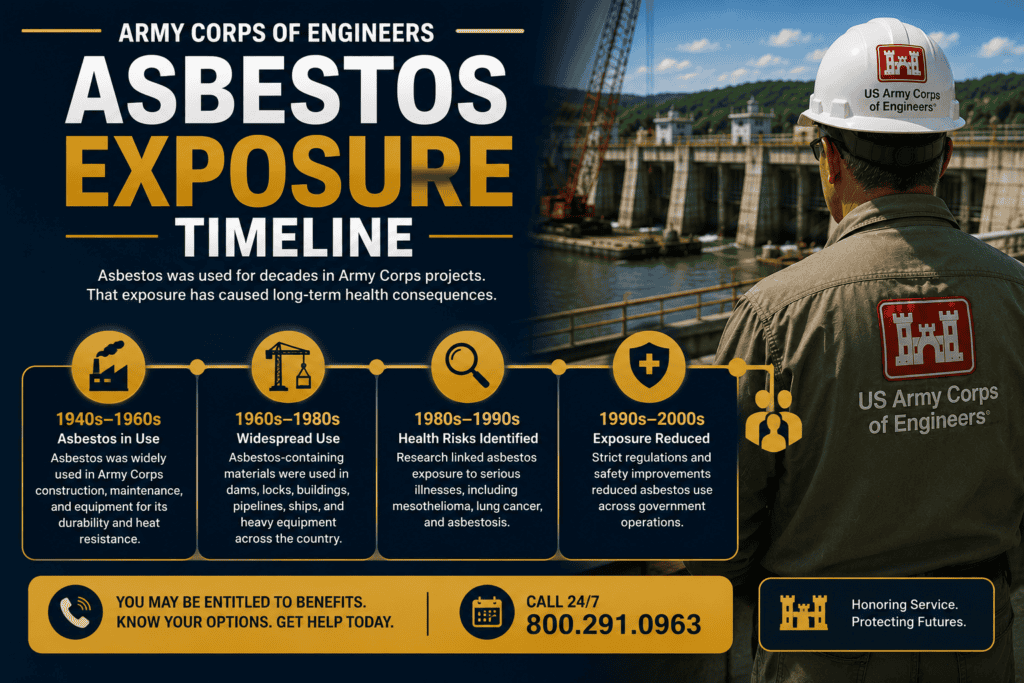
🕰️ Army Corps Asbestos Exposure Timeline
Decades of asbestos use across federal projects.
The U.S. Army Corps of Engineers used asbestos extensively for much of the 20th century across construction, infrastructure, military base development, dams, power plants, shipyards, hospitals, and emergency projects. Because asbestos diseases develop slowly, many Army Corps workers were not diagnosed until decades after exposure.
Understanding the timeline of asbestos use helps explain why mesothelioma and related illnesses continue to appear today.
📞 Free case review available: 800.291.0963
🧱 Early Adoption of Asbestos (1900s–1930s)
During early federal construction efforts, asbestos was favored for:
🏗️ Fireproofing structural steel
🔥 Heat insulation for boilers and steam systems
🧱 Cement products and panels
⚡ Electrical insulation
🚧 Dams, tunnels, and waterways
As the Army Corps expanded its role in national infrastructure, asbestos became a standard building material.
⚙️ Peak Asbestos Use (1940s–1970s)
Asbestos use surged during and after World War II, especially as the Army Corps oversaw:
🏢 Military base construction
🏥 Hospitals and medical facilities
⚡ Power plants and substations
🚢 Shipyards and ports
🚧 Flood-control and dam projects
🌍 Overseas military and reconstruction projects
Workers routinely handled asbestos without protective gear, often cutting, sanding, drilling, or removing materials.
⚠️ Growing Awareness of Health Risks (1970s–1980s)
By the 1970s:
🧪 Medical studies linked asbestos to mesothelioma
📰 Public awareness increased
📜 Federal regulations began limiting asbestos use
However, asbestos was not fully banned, and many Army Corps projects continued to involve existing asbestos materials.
🏚️ Legacy Exposure Continues (1990s–Present)
Even after regulations tightened, asbestos exposure continued due to:
🏚️ Aging buildings and infrastructure
🔧 Repairs, renovations, and demolitions
🚨 Emergency response and disaster recovery
❄️ Cold-weather insulation failures
🌊 Flood-damaged asbestos materials
Many exposures occurred long after asbestos installation.
🧬 Why Diseases Appear Decades Later
Asbestos diseases have long latency periods:
⏳ Mesothelioma: 20–50 years
⏳ Lung cancer: 15–40 years
⏳ Asbestosis: 10–30 years
This delay explains why retired Army Corps workers are still being diagnosed today.
⚖️ Legal Rights Despite Historical Exposure
Even if exposure occurred decades ago, workers and families may still pursue:
⚖️ Asbestos personal injury lawsuits
💼 Asbestos trust fund claims
💔 Wrongful death lawsuits
🎖️ VA benefits (when applicable)
Claims focus on asbestos manufacturers, not the Army Corps.
🛡️ How a Mesothelioma Attorney Uses the Timeline
An experienced attorney can:
🧭 Match diagnosis dates to exposure periods
📂 Reconstruct historical job assignments
🏭 Identify asbestos products used at the time
⚖️ File claims within legal deadlines
💼 Maximize compensation sources
📞 Call 800.291.0963 for a free timeline-based case review
❓ Frequently Asked Questions
Does older exposure reduce my chances of a claim?
No. Courts fully recognize long latency periods.
What if I worked across multiple decades?
That can strengthen your case by showing prolonged exposure.
Do records from the 1940s–1970s still exist?
Yes. Attorneys use federal archives and expert databases.
Can families file claims today?
Yes, including wrongful death claims.
Is it too late to act?
Only an attorney can confirm—deadlines vary.
📞 Get Help for Army Corps Asbestos Exposure—No Matter When It Happened
If you or a loved one worked on Army Corps of Engineers projects and later developed mesothelioma or another asbestos disease, help is available.
✅ Free consultation
✅ No upfront legal fees
✅ Nationwide representation
✅ Federal asbestos litigation experience
📞 Call now: 800.291.0963