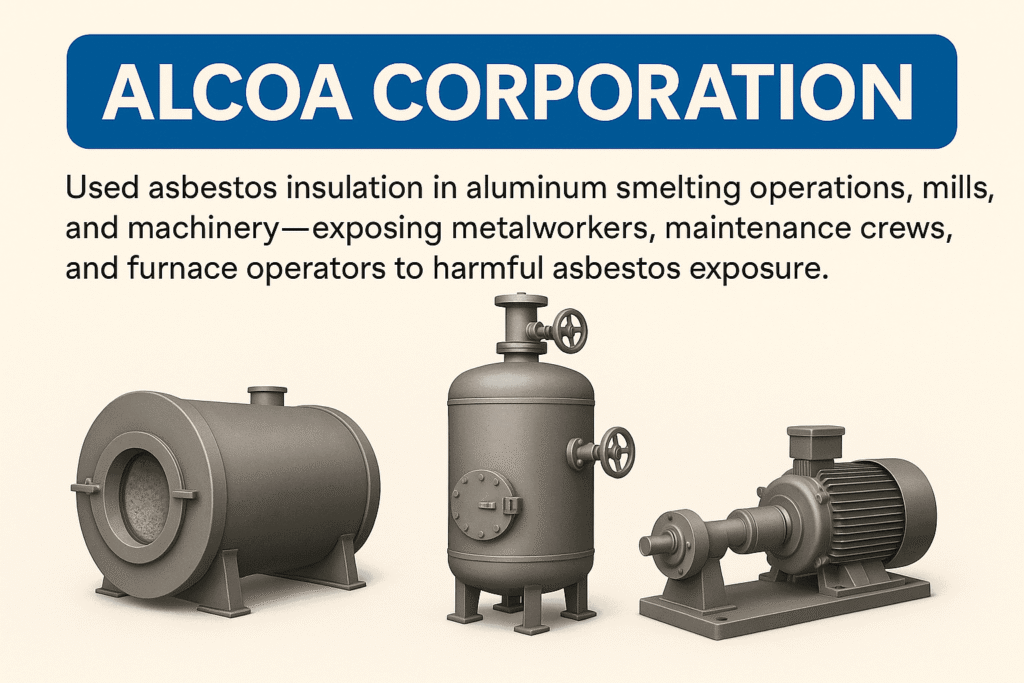
🏭 Alcoa Corporation – Asbestos Exposure & Lawsuit History
Alcoa Corporation, one of the world’s largest aluminum producers, used asbestos extensively throughout its smelting operations, rolling mills, foundries, and powerhouses for much of the 20th century. Asbestos was incorporated into insulation, fireproofing materials, gaskets, seals, and protective gear to control high temperatures and prevent fires. Unfortunately, these practices exposed metalworkers, maintenance technicians, furnace crews, and utility staff to dangerous asbestos fibers — leading to thousands of cases of mesothelioma, asbestos-related lung cancer, and asbestosis decades later.
Today, Alcoa continues to face asbestos lawsuits brought by former employees, contractors, and family members seeking compensation for occupational exposure that occurred in its plants and facilities nationwide.
🔥 Asbestos Use in Alcoa Facilities
Throughout much of the 20th century, Alcoa relied heavily on asbestos for its heat-resistant and fireproof qualities. The material was used extensively across smelting, casting, and fabrication operations, creating significant exposure risks.
-
High-Risk Areas: Smelting furnaces, casting pits, boiler rooms, powerhouses, and rolling mills
-
Common Materials: Pipe and duct insulation, furnace linings, fireproof wallboards, gaskets, cement, and asbestos gloves
-
Exposure Sources: Cutting insulation, repairing high-temperature machinery, and handling heat-resistant protective gear
-
Health Impact: Inhaled asbestos fibers can cause mesothelioma, lung cancer, and asbestosis decades after exposure
-
Legal Outcomes: Thousands of asbestos lawsuits have been filed against Alcoa for workplace exposure
🏢 Company Overview
| Category | Details |
|---|---|
| Founded | 1888 (as Pittsburgh Reduction Company) |
| Renamed | Became Aluminum Company of America (Alcoa) in 1907 |
| Headquarters | Pittsburgh, Pennsylvania, USA |
| Industry | Aluminum smelting, fabrication, aerospace, construction, packaging |
| Spinoff | Alcoa Inc. split into Alcoa Corporation and Arconic Inc. in 2016 |
| Asbestos Trust Fund | None – claims handled through litigation |
| Current Status | Active operations worldwide |
🏭 Asbestos-Containing Materials Used in Alcoa Facilities
-
Pipe and Duct Insulation – Wrapped around steam and chemical lines; cutting and removal released fibers
-
Furnace Linings and Casting Pits – Asbestos bricks and insulation shielded extreme heat sources
-
Boilers and Steam Systems – Lagging, block insulation, and cement used in powerhouses
-
Fireproof Wallboards and Blankets – Installed for safety near molten aluminum equipment
-
Gaskets, Seals, and Valve Covers – Provided high-pressure containment; removal created airborne dust
-
Asbestos Gloves and Clothing – Worn by furnace and casting crews, often shedding fibers during use
👷♂️ Occupations at Risk of Asbestos Exposure
-
Smelter and Furnace Operators – Worked near asbestos-lined equipment and wore asbestos gloves
-
Maintenance and Repair Crews – Removed and replaced asbestos insulation and sealing components
-
Pipefitters and Insulators – Installed and repaired asbestos-insulated piping and ducts
-
Millwrights and Equipment Technicians – Serviced furnaces, pumps, and casting systems lined with asbestos
-
Powerhouse Engineers – Maintained boilers, turbines, and steam systems with asbestos insulation
-
Fabrication and Rolling Mill Workers – Exposed to airborne fibers in enclosed work areas
🪖 Military & Government Exposure
-
Military Aluminum Production Sites: Asbestos used in WWII and Cold War facilities
-
Defense Manufacturing Facilities: Exposure during production of military-grade aluminum and components
-
Government-Owned Power Plants: Maintenance of asbestos-insulated systems
-
Shipyard Subcontracts: Alcoa-supplied materials used in naval ship construction and repair
🏘️ Environmental & Secondary Exposure
-
Routine Maintenance and Repairs: Released fibers into the air during insulation removal
-
Cutting and Handling Asbestos Sheets: Created dust in enclosed facilities
-
Replacing Gaskets and Pumps: Dislodged asbestos-containing seals
-
Heat-Resistant Clothing: Shed asbestos particles during daily use
-
Contaminated Dust: Settled on tools, work surfaces, and clothing, exposing family members through secondary contact
⚖️ Why Alcoa Was Sued
-
Prolonged Use: Extensive reliance on asbestos from the 1930s through the 1980s
-
Failure to Warn: Lack of adequate safety warnings or respiratory protection
-
Long-Term Health Consequences: Generations of workers developed mesothelioma, lung cancer, and other diseases
📊 Timeline of Asbestos Use in Alcoa Facilities
| Time Period | Application Area | Common Materials Used |
|---|---|---|
| 1930s–1950s | Smelting furnaces & boiler rooms | Pipe insulation, fireproof board |
| 1950s–1970s | Casting and rolling operations | Asbestos gloves, blankets |
| 1960s–1980s | Powerhouses and utility systems | Gaskets, pumps, cement products |
| 1980s–1990s | Equipment maintenance | Retrofitting non-asbestos parts |
🏭 Alcoa Corporation Mesothelioma Cases
From the 1930s through the late 1980s, Alcoa Corporation — one of the world’s largest aluminum producers — relied heavily on asbestos across its smelting plants, rolling mills, foundries, and manufacturing facilities. Asbestos was used extensively in furnaces, casting equipment, boilers, pipelines, insulation, gaskets, and heat-resistant panels due to its ability to withstand extreme temperatures. Workers involved in aluminum production, maintenance, equipment installation, and repair frequently encountered airborne asbestos fibers when handling or disturbing these materials. Over time, many Alcoa employees and contractors developed mesothelioma and other asbestos-related diseases decades after their exposure.
👥 Who Qualifies
Individuals diagnosed with mesothelioma who worked at Alcoa plants — including smelters, refineries, foundries, and fabrication sites — may qualify for compensation. Contractors, union members, and family members exposed secondhand through contaminated work clothing may also be eligible for asbestos-related claims.
📊 Statistics
-
Thousands of mesothelioma cases have been linked to asbestos exposure at Alcoa facilities across the United States
-
High-risk sites include Alcoa plants in Pennsylvania, Tennessee, Texas, Washington, and New York, where insulation, piping, and furnaces contained asbestos
-
Settlements for Alcoa-related mesothelioma claims often exceed six figures, with many victims receiving additional compensation through asbestos trust funds and legal settlements
🫧 Alcoa Corporation Asbestos Lung Cancer Cases
Alcoa’s widespread use of asbestos also caused asbestos-related lung cancer among industrial workers. Routine tasks such as replacing furnace linings, repairing steam pipes, overhauling boilers, and cleaning casting equipment released dangerous asbestos fibers into the air. These fibers were inhaled over years of daily exposure, significantly increasing workers’ risk of developing lung cancer decades later. Even today, older Alcoa facilities continue to pose risks during renovations, demolitions, or maintenance involving asbestos-laden materials.
👥 Who Qualifies
Individuals diagnosed with asbestos-related lung cancer who worked with or near asbestos-containing materials at Alcoa plants — including furnace operators, maintenance crews, machinists, and pipefitters — may qualify for compensation. Family members exposed secondhand through asbestos dust brought home on work clothing may also be eligible.
📊 Statistics
-
Thousands of asbestos-related lung cancer lawsuits have been linked to Alcoa’s manufacturing plants and foundries
-
Many cases result in six- or seven-figure settlements, as well as compensation from asbestos trust funds to help cover treatment costs and lost wages
📜 History of Mesothelioma and Asbestos Lung Cancer From Alcoa Corporation
-
1930s–1970s: Asbestos was widely used in furnaces, boilers, insulation, and casting equipment across Alcoa’s U.S. operations
-
1980s: Safety regulations reduced asbestos use, but older infrastructure continued to expose workers during repairs, upgrades, and maintenance work
-
Today: Many diagnosed individuals include furnace operators, smelter workers, machinists, maintenance technicians, and contractors exposed decades earlier while working with or around asbestos-containing materials at Alcoa facilities
📈 Estimated Exposure Numbers
| Category | Estimated Exposure | Description |
|---|---|---|
| Smelter and Furnace Workers | 40,000 | Daily exposure from asbestos-lined furnaces and casting pits |
| Maintenance and Insulation Crews | 30,000 | Frequent handling and removal of asbestos insulation |
| Pipefitters and Utility Technicians | 25,000 | Installed and repaired insulated piping and valves |
| Machine Operators and Millwrights | 20,000 | Worked near asbestos dust during fabrication and maintenance |
| Household Secondary Exposure Victims | 15,000 | Exposed from fibers brought home on contaminated clothing |
Estimated Total Exposure: ~200,000+ individuals
❓ Frequently Asked Questions (FAQ)
Can I file a claim if I worked at an Alcoa plant?
✅ Yes. If you were diagnosed with mesothelioma, asbestos lung cancer, or another asbestos-related disease after working at an Alcoa facility, you may be eligible for compensation. Even if decades have passed since your employment, you may still have legal rights.
What evidence is needed?
-
Medical documentation confirming an asbestos-related diagnosis
-
Employment or union records showing your time at an Alcoa facility
-
Witness statements or coworker affidavits
-
Proof linking your job duties to asbestos exposure (e.g., maintenance logs, product manuals, plant blueprints)
What types of compensation are available?
Victims and their families may be entitled to compensation for:
-
Medical treatment and ongoing care
-
Lost wages and future earnings
-
Disability payments
-
Pain and suffering damages
-
Wrongful death claims (for surviving family members)
Can family members file claims for secondary exposure?
✅ Yes. Family members exposed to asbestos secondhand — such as from dust brought home on contaminated work clothing — can often pursue compensation if they later developed mesothelioma or another asbestos-related illness.
Do I need to remember the specific product or brand?
No. Many successful asbestos lawsuits are based on your work history, the job site’s records, and expert testimony. Attorneys can investigate which asbestos-containing materials were present at the time you worked there.
What if the company no longer exists or has changed names?
Alcoa is still in operation and continues to defend asbestos claims through litigation. Even if the plant you worked at was sold, renamed, or closed, compensation may still be available through legal claims and insurance settlements.
🏛️ Current Company Status
| Category | Status |
|---|---|
| Bankruptcy Declared | ❌ No |
| Asbestos Trust Fund | ❌ No – claims handled through litigation |
| Lawsuits Filed | ✅ Thousands |
| Current Operations | ✅ Active worldwide |
| Defense Strategy | Handles asbestos claims through litigation and settlements with insurers |
| Legal Responsibility | Continues to pay out settlements and jury awards for asbestos exposure |
📊 Summary Snapshot – Alcoa Corporation & Asbestos Exposure
| Category | Details |
|---|---|
| Founded | 1888 |
| Industry | Aluminum smelting, rolling, fabrication, aerospace |
| Asbestos Use | Insulation, machinery components, fireproofing, protective gear |
| Exposed Workers | Metalworkers, pipefitters, maintenance crews, furnace operators |
| Lawsuits Filed | Thousands |
| Trust Fund | No – litigation only |
| Secondary Exposure | Yes – widespread exposure among families and nearby communities |
⚖️ How a Mesothelioma Lawyer Can Help
Pursuing compensation for asbestos exposure linked to Alcoa requires detailed documentation and legal expertise. An experienced asbestos attorney can:
-
Investigate Job Sites & Exposure Sources: Identify which asbestos-containing materials were used at the specific Alcoa plant where you worked.
-
Collect Historical Evidence: Obtain maintenance records, product lists, and testimony to strengthen your case.
-
File Lawsuits & Claims: Seek compensation through litigation against Alcoa and other responsible manufacturers.
-
Assist Veterans: Help veterans exposed at Alcoa facilities or military aluminum plants pursue VA benefits in addition to legal claims.
-
Represent Families: File wrongful death lawsuits on behalf of deceased loved ones.
-
Work on Contingency: No upfront costs — legal fees are only collected if compensation is successfully recovered.
📞 Free Legal Help for Alcoa Asbestos Exposure
If you or a loved one was exposed to asbestos while working for Alcoa Corporation — or through secondhand exposure from someone employed at one of its facilities — you may be eligible for significant financial compensation.
📞 Call Now: 800.291.0963
-
Free, no-obligation consultation
-
No fees unless we win
-
Assistance identifying exposure sources and products
-
Support for workers, veterans, contractors, and families
Or request help online 24/7.