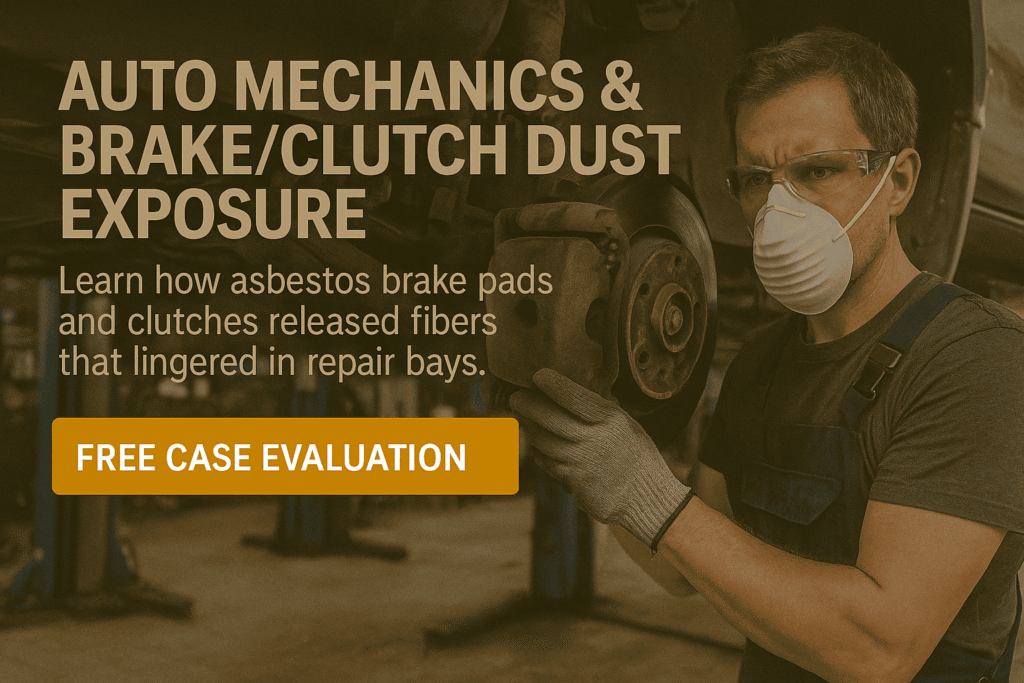
Auto Mechanics & Brake/Clutch Dust Exposure
For decades, auto mechanics faced dangerous levels of asbestos exposure while repairing brake systems, clutches, gaskets, and engine components. Asbestos was widely used in friction products because it could withstand extreme heat and pressure. During routine maintenance, grinding, cleaning, sanding, or blowing out brake assemblies produced clouds of asbestos dust—dust that lingered in repair bays long after the job was done.
Today, auto mechanics are among the largest groups of workers diagnosed with mesothelioma, lung cancer, and asbestosis.
If you worked with brakes or clutches at any point in your career, call 800.291.0963 for help documenting exposure and arranging medical screening.
🚗 Step 1: Why Asbestos Was Used in Brakes & Clutches
Auto manufacturers relied heavily on asbestos from the 1940s through the early 2000s, especially in imported or aftermarket parts.
📌 Why Asbestos Was Used in Vehicle Components
-
Exceptional heat resistance
-
High friction stability
-
Low cost for mass production
-
Durability under heavy wear
-
Ability to absorb shock and prevent warping
Many mechanics mistakenly believed the dust was just “normal brake dust,” not realizing it contained thousands of asbestos fibers per cubic centimeter.
🛠️ Step 2: Common Auto Parts That Contained Asbestos
Although brakes and clutches are best known for asbestos, many other components also contained it.
✔ Asbestos-Containing Auto Parts
-
Brake pads
-
Brake shoes
-
Clutch facings
-
Brake linings
-
Gaskets and exhaust gaskets
-
Heat shields
-
Hood liners
-
Engine compartment insulation
-
Valve rings
-
Transmission parts
Imported parts—especially from developing countries—continued to use asbestos long after U.S. manufacturers reduced usage.
🧰 Step 3: High-Risk Tasks Performed by Auto Mechanics
Auto shops became major asbestos hotspots because routine tasks disturbed friction components.
✔ Tasks That Released the Most Asbestos Fibers
-
Sanding and grinding brake shoes
-
Blowing out brake drums with air hoses
-
Using brake-cleaning machines
-
Removing old clutches
-
Scraping gaskets off engine blocks
-
Cleaning clutch housings
-
Sweeping garage floors covered in brake debris
-
Replacing old heat-resistant gaskets
-
Handling imported aftermarket brake pads
Even a single brake job could release millions of asbestos fibers.
🔧 Step 4: How Brake & Clutch Dust Exposure Happened
Mechanics were exposed through both direct and indirect contact.
✔ Direct Exposure
-
Handling worn friction materials
-
Working in confined repair bays
-
Grinding brake linings for proper fit
-
Using air hoses to blow out brake dust
✔ Indirect Exposure
-
Dust accumulating on clothing and hair
-
Contaminated shop rags
-
Dust settling on toolboxes and workbenches
-
Asbestos fibers circulating in shop ventilation systems
In many auto shops, dust settled everywhere—even lunch areas.
🏚️ Step 5: Why Auto Shops Created Long-Term Exposure Hazards
Unlike construction or shipyard environments, auto shops saw constant asbestos activity.
📌 Why Auto Shops Were Especially Dangerous
-
High turnover of brake jobs
-
Continuous release of fibers throughout the day
-
Poor ventilation
-
Repeated sweeping that re-aerosolized dust
-
Lack of PPE or awareness
-
Secondhand exposure for family members via work clothes
A mechanic sweeping the floor at the end of the shift often inhaled dust from hundreds of brake jobs.
🚫 Step 6: The Myth of “Low-Level Exposure”
Auto manufacturers often claimed brake dust posed only “minimal risk.”
Research now proves the opposite.
✔ The Truth:
-
Brake dust contains short, thin asbestos fibers that lodge deeply in lungs
-
Fiber concentrations spike during brake service
-
Fibers stay airborne for hours after work is completed
-
OSHA has repeatedly cited brake jobs as high-risk tasks
There is no safe level of asbestos exposure.
🔩 Step 7: Small Auto Shops vs. Dealerships — Different Risks, Same Danger
Exposure varied based on the type of workplace.
✔ Small Independent Auto Shops
-
Often lacked exhaust ventilation
-
Used air hoses to clean brakes
-
No mandatory PPE
-
Performed high volumes of brake jobs
✔ Dealerships / Fleet Garages
-
More frequent brake replacements
-
Enclosed repair bay areas
-
Larger volumes of dust and friction work
-
More exposure from warranty repairs and fleet maintenance
Regardless of facility type, mechanics breathed dangerous fiber levels.
⚠️ Step 8: OSHA Requirements for Brake & Clutch Work
OSHA has strict rules for mechanics working near asbestos-containing friction products.
✔ OSHA Requires Employers To:
-
Use HEPA vacuum systems for brake cleaning
-
Wet-wipe or low-pressure spray brakes before service
-
Provide respirators when dust may be present
-
Train workers about asbestos
-
Conduct air monitoring in automotive shops
-
Post hazard communication signage
-
Maintain exposure documentation
However, these standards were rarely enforced before the 1990s.
📁 Step 9: How Mechanics Can Document Exposure History
Many mechanics worked on thousands of brake and clutch systems over their careers.
✔ Keep Records Of:
-
Years worked in auto repair
-
Type of shop (dealership, independent, fleet)
-
Types of vehicles serviced
-
Use of imported aftermarket brake pads
-
Air hose usage in shop
-
PPE provided (or not provided)
-
Names of coworkers who can verify exposure
✔ Request Copies Of:
-
Repair orders
-
Training logs
-
MSDS sheets for brake products
-
Air quality test results
-
Shop manuals and service procedures
Documentation can greatly strengthen future medical or compensation claims.
🩺 Step 10: Medical Monitoring for Auto Mechanics
Because asbestos illnesses may develop 20–50 years after exposure, long-term medical vigilance is essential.
✔ Recommended Screening Includes:
-
Baseline chest X-ray
-
Pulmonary function testing
-
CT scans (especially for long-term mechanics)
-
Mesothelioma biomarker blood tests
-
Annual checkups with an occupational lung specialist
Early detection improves survival and treatment outcomes.
🧼 Step 11: How Mechanics Can Reduce Current Exposure Risks
Modern shops still encounter asbestos—especially from imported parts.
✔ Do:
-
Use HEPA-filtered brake-cleaning systems
-
Wear P100 respirators during brake work
-
Wet-clean brake assemblies before servicing
-
Use disposable coveralls
-
Keep work clothes separate from personal clothes
-
Shower and change before going home
❌ Avoid:
-
Blowing out brake dust with air hoses
-
Dry sweeping shop floors
-
Using outdated brake-cleaning machines
-
Wearing dusty clothes home
Safe habits protect both workers and their families.
🏥 Where to Get Help
If you or a loved one worked as an auto mechanic, we can help you:
-
Document decades of brake and clutch exposure
-
Identify asbestos-containing products you handled
-
Schedule medical screenings
-
Review occupational history
-
Connect with mesothelioma specialists
-
File compensation claims through trust funds
-
Understand OSHA violations and employer liabilities
📞 Call 800.291.0963 now to speak with an asbestos exposure advocate.
📝 Summary
Auto mechanics were heavily exposed to asbestos through brake dust, clutch repairs, gasket work, and general shop maintenance. These tasks released dangerous fiber levels that remained airborne long after each job was completed.
Key Takeaways
-
Brake pads, shoes, and clutches contained high amounts of asbestos
-
Dust from grinding, sanding, or blowing out brake drums was extremely dangerous
-
Auto shops often lacked proper ventilation and PPE
-
Mechanics should document their exposure history carefully
-
Medical monitoring is essential due to long-term disease risks
-
Compensation may be available for mechanics diagnosed with mesothelioma
If you handled brakes or clutches at any point in your career, call 800.291.0963 today for personalized guidance.