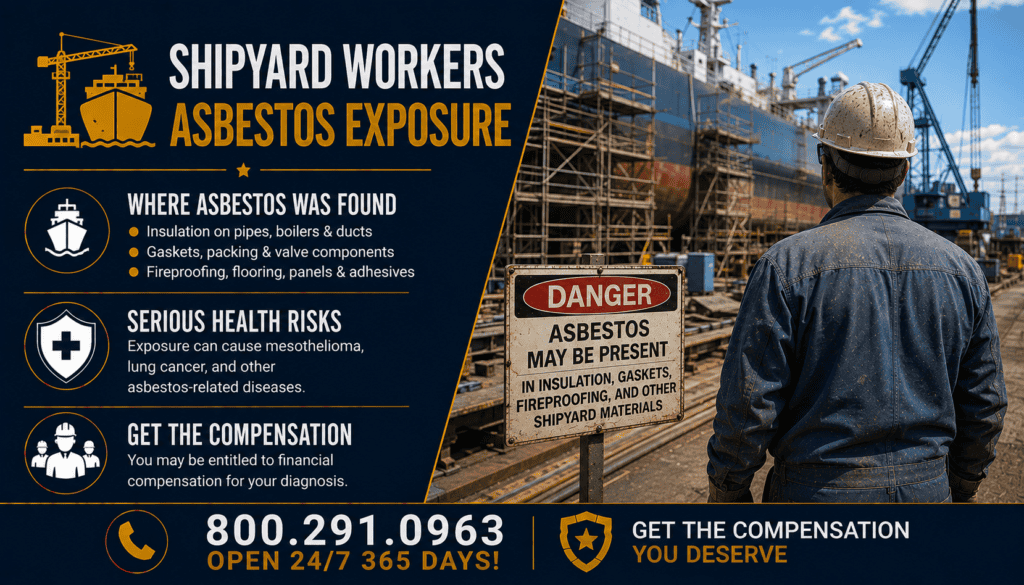
Shipyard Workers Asbestos Exposure
Shipyard workers build, repair, maintain and dismantle ships and may perform welding, cutting, machining, plumbing, electrical work, rigging, painting and cleanup. NIOSH specifically identifies asbestos as a chemical hazard in shipyards, while OSHA maintains a dedicated asbestos standard for shipbuilding, ship repair, shipbreaking and related shipyard employment.
Exposure was not identical for every shipyard worker. Risk depended on the vessel, shipyard, time period, trade, materials and work performed. Strong occupational histories identify the actual asbestos-containing material, where it was located, how it was disturbed and whether the worker performed the work directly or was close enough for airborne fibers to migrate into the work area.
Shipyard Workers and Asbestos Exposure
NIOSH describes shipyard employment as work involving the manufacture, repair, maintenance and dismantling of boats and ships. These operations can place many trades in the same vessel, compartment, shop or repair area at the same time.
OSHA’s shipyard asbestos standard applies to demolition or salvage where asbestos is present, removal or encapsulation of asbestos-containing material, construction and repair of vessels containing asbestos, installation of asbestos-containing products, asbestos cleanup, and transportation, disposal, storage, containment and housekeeping involving asbestos.
That broad regulatory scope reflects the many ways asbestos could become relevant during shipyard work. It does not mean every shipyard employee was exposed.
Related resources include shipyard, maritime and dock workers asbestos exposure, shipbuilders asbestos exposure and shipyard workers asbestos exposure lawsuits.
Where Asbestos Was Used in Shipyards
OSHA’s shipyard standard defines thermal-system insulation as asbestos-containing material applied to pipes, fittings, boilers, breeching, tanks, ducts and other structural components to control heat loss or gain. Its technical appendix also identifies asbestos use in fire-resistant and building materials.
Shipboard Materials Worth Investigating When Asbestos Is Confirmed
- Pipe and fitting insulation
- Boiler and thermal-system insulation
- Tank and duct insulation
- Surfacing and fireproofing materials
- Gaskets and packing
- Flooring and associated materials
- Wallboard and sheet materials
- Other installed vessel materials documented as asbestos-containing
OSHA requires vessel, building and facility owners covered by the shipyard standard to determine the presence, location and quantity of ACM or presumed ACM before covered work begins. The standard also contains notification duties for employers whose employees will work in or adjacent to those areas.
Historical records such as vessel specifications, repair files, asbestos surveys, maintenance documents and abatement records can help establish whether a particular material contained asbestos during a worker’s employment.
Shipyard Jobs and High-Risk Work
Shipyards employ multiple trades whose tasks can overlap. NIOSH lists welding, cutting, machining, plumbing, electrical work, rigging and cleanup among common shipyard activities. Asbestos risk was highest where a worker’s own task or nearby work disturbed confirmed asbestos-containing materials.
Trades and Activities That May Require Exposure Research
- Insulators and laggers
- Pipefitters and plumbers
- Boilermakers and boiler technicians
- Shipfitters and welders
- Electricians
- Machinists and mechanics
- Maintenance and repair workers
- Cleanup and material-handling personnel
For example, a welder’s metalwork alone does not prove asbestos exposure. Exposure evidence becomes stronger when records show welding or cutting occurred beside asbestos-insulated piping, during removal of thermal insulation, or in a compartment affected by asbestos work.
Related occupation pages include welders, pipefitters and shipfitters asbestos exposure, pipefitters asbestos exposure, boilermakers asbestos exposure and electricians asbestos exposure.
Ship Repair, Maintenance and Removal Work
Repair and maintenance can disturb materials that remained intact during normal vessel operation. OSHA classifies removal of thermal-system insulation or surfacing ACM as Class I asbestos work. Class III work includes repair and maintenance where ACM, including thermal-system insulation and surfacing material, is likely to be disturbed.
Work Activities to Document
- Removing insulation to reach piping or equipment
- Repairing boilers and steam systems
- Replacing valves, gaskets or packing
- Cutting or dismantling vessel sections
- Removing flooring, wallboard or other confirmed ACM
- Overhauling mechanical equipment
- Cleaning asbestos debris or contaminated areas
- Shipbreaking and salvage involving asbestos
OSHA requires engineering controls, regulated areas and work practices for covered asbestos operations. The current shipyard standard limits airborne exposure to 0.1 fiber per cubic centimeter as an eight-hour time-weighted average and also establishes a 30-minute excursion limit.
Need help now? Call 800.291.0963
Live chat available 24/7, 365 days a year.
Submit Your Case
Nearby Trades and Fiber Migration
A worker did not necessarily have to remove asbestos personally to have a potential occupational exposure pathway. OSHA’s shipyard standard specifically addresses employees working immediately adjacent to Class I asbestos jobs and requires employers on multi-employer worksites to take steps to prevent asbestos fibers from migrating into adjacent areas.
Factors That Can Help Evaluate Nearby Exposure
- Which trade disturbed the asbestos material
- Location of the worker relative to the regulated area
- Whether the work occurred in an enclosed compartment
- Duration and frequency of nearby asbestos work
- Containment and ventilation conditions
- Air-monitoring results
- Cleanup and housekeeping practices
- Coworker or supervisor observations
OSHA’s standard also imposes information-sharing duties on multi-employer shipyard worksites. Owners and employers must communicate the presence and location of ACM or presumed ACM to specified workers and employers before covered work begins.
These rules support investigation of bystander and adjacent-area pathways, but proximity alone does not establish an individual’s asbestos dose or disease causation.
Mesothelioma and Other Asbestos-Related Diseases
OSHA’s shipyard medical-surveillance guidance states that epidemiological studies of occupationally exposed workers show an association between asbestos exposure and increased incidence of lung cancer, pleural and peritoneal mesothelioma and asbestosis.
Asbestos-Related Conditions Include
- Mesothelioma
- Asbestos-related lung cancer
- Asbestosis
- Pleural abnormalities and other asbestos-related disease
NIOSH also reports excess cancer morbidity in groups of shipyard workers, particularly respiratory cancers, while recognizing that shipyards contain many other hazards such as welding fumes, metals, paints, solvents and fuels. A cancer diagnosis should therefore not be attributed to asbestos solely because a person worked in a shipyard.
Workers with health concerns should give a qualified healthcare professional a detailed occupational history, including shipyards, vessels, trades, dates and known asbestos work.
Documenting Shipyard Asbestos Exposure
Shipyard exposure histories are strongest when they identify the specific yard, vessel, trade, department, dates and asbestos-containing material. Because many trades can work simultaneously aboard a vessel, location and timing can be especially important.
Evidence That May Help
- Shipyard personnel and payroll records
- Social Security employment history
- Union membership and dispatch records when relevant
- Vessel repair and overhaul records
- Ship specifications and equipment documents
- Asbestos surveys and abatement files
- Exposure-monitoring and industrial-hygiene records
- Coworker and supervisor statements
The occupational exposure identification resource explains how to reconstruct where and when exposure may have occurred. The union documentation resource explains how union and coworker evidence may help establish historical work conditions.
Potential Legal and Compensation Options
Depending on the evidence and applicable law, a diagnosed shipyard worker may have potential claims involving asbestos products, premises, bankruptcy trusts, workers’ compensation or other legal pathways. Military or federal employment can introduce additional issues that require individualized review.
Shipyard employment does not automatically establish asbestos exposure, causation, liability, claim eligibility or compensation. Compensation is not guaranteed.
Related Shipyard and Maritime Resources
Shipyard workers: Shipyard Workers Asbestos Exposure Lawsuits
Shipbuilding: Shipbuilders Asbestos Exposure · Ship Engineers Asbestos Exposure
Maritime work: Maritime Workers Asbestos Exposure · Longshoremen Asbestos Exposure
Authoritative Sources
This page relies on OSHA’s dedicated shipyard asbestos standard and NIOSH maritime guidance. These primary government sources directly confirm asbestos as a shipyard hazard and identify covered vessel repair, maintenance, removal, demolition, housekeeping and adjacent-work exposures.
Shipyard Workers Asbestos Exposure FAQ
Were all shipyard workers exposed to asbestos?
No. Exposure depended on the vessel, shipyard, era, trade, asbestos-containing materials and work performed.
Where was asbestos used on ships?
OSHA identifies thermal-system insulation on pipes, fittings, boilers, tanks and ducts as one important category. Other confirmed asbestos-containing vessel and building materials may also be relevant.
Which shipyard jobs could involve asbestos exposure?
Potential exposure could affect insulators, pipefitters, boilermakers, mechanics, electricians, welders, maintenance workers and other employees when their work disturbed asbestos or occurred near asbestos operations.
Could shipyard workers be exposed without handling asbestos directly?
Potentially. OSHA specifically addresses adjacent employees and migration of asbestos fibers on multi-employer shipyard worksites.
Does ship repair create an asbestos exposure risk?
It can when repair, maintenance or overhaul disturbs confirmed asbestos-containing insulation, surfacing materials or other ACM.
Can asbestos exposure cause mesothelioma in shipyard workers?
Asbestos exposure is a recognized cause of mesothelioma. Whether an individual’s disease is connected to shipyard exposure requires medical and exposure-specific evaluation.
What records can help document shipyard asbestos exposure?
Personnel records, vessel repair files, asbestos surveys, monitoring records, union records when relevant, equipment documents and coworker testimony can help reconstruct exposure.
Does working in a shipyard guarantee asbestos compensation?
No. Exposure, medical causation, liability and claim-specific requirements must be established. Compensation is not guaranteed.
Get Help Reviewing Shipyard Asbestos Exposure
Call 800.291.0963
Live chat is available 24/7, 365 days a year.
Working in a shipyard, aboard a vessel or near ship repair does not automatically prove asbestos exposure, disease causation, liability, claim eligibility or compensation. Each situation depends on the shipyard, vessel, dates, trade, asbestos source, tasks, proximity, supporting records, medical evidence and applicable legal requirements. Compensation is not guaranteed.
⚕️ Legal & Medical Information Disclaimer
This page provides general educational information and is not medical or legal advice. The information does not establish asbestos exposure, diagnosis, causation, liability, claim eligibility or compensation. Medical concerns should be discussed with a qualified healthcare professional, and legal questions should be reviewed with a qualified attorney.