🔩Valve Workers Mesothelioma Lawsuits
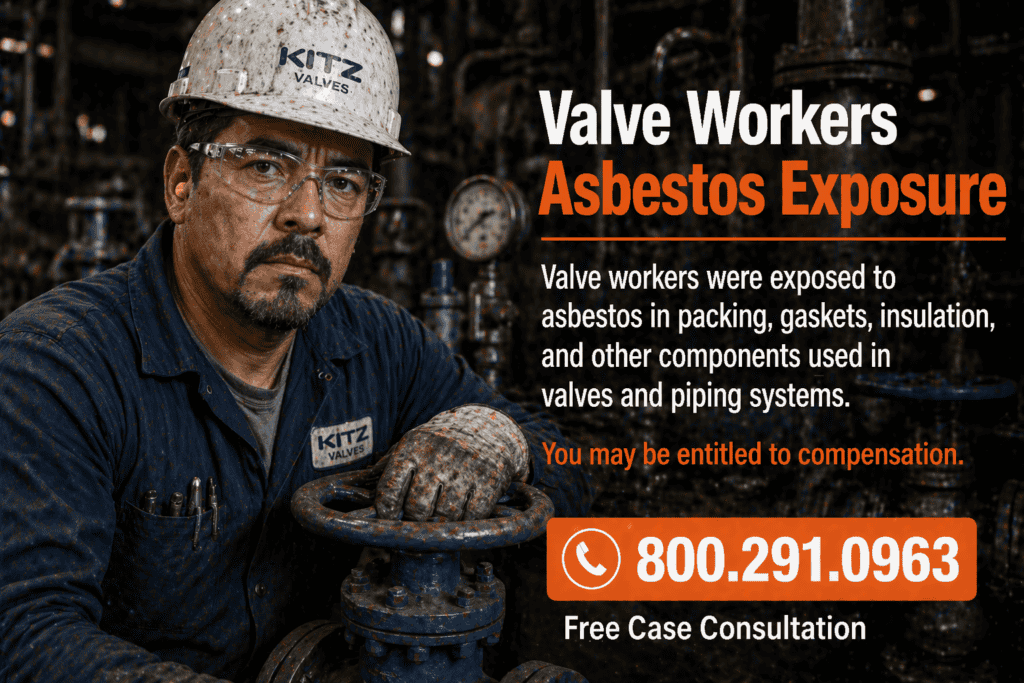
If you or a loved one worked as a valve mechanic, valve technician, pipefitter, millwright, or maintenance worker and were later diagnosed with mesothelioma or asbestos-related lung cancer, you may qualify to file a Valve Workers Mesothelioma Lawsuit. For decades, asbestos was used in nearly every type of industrial valve system—exposing hundreds of thousands of workers in power plants, refineries, chemical plants, shipyards, and military facilities.
Valve workers frequently handled asbestos-containing gaskets, packing, insulation, and seals. Repairing or rebuilding valves released dangerous airborne fibers into the work environment, creating extreme long-term exposure risks.
Our legal team helps valve workers and their families pursue financial compensation from asbestos manufacturers, employers, and the companies that supplied contaminated parts. We investigate your job sites, exposure points, union records, and product history to build the strongest possible claim—with no upfront fees and no payment unless we win.
What You’ll Learn on This Page
🔧 Valve workers suffered some of the highest asbestos exposure levels of any industrial occupation.
⚡ Most exposures occurred in power plants, refineries, chemical facilities, shipyards, and Navy engine rooms.
🧰 Millions of asbestos-containing valve products were sold between the 1930s and 1990s.
💰 Valve workers often qualify for settlements exceeding $1M+ and trust-fund payouts.
📚 Internal links help you explore related articles:
These internal links help strengthen topical authority for both Google and Bing indexing.
Why Valve Workers Faced Extremely High Asbestos Exposure
From the 1930s through the 1990s, asbestos was used in valve systems because it resisted:
• Extreme heat
• High-pressure steam
• Chemical corrosion
• Friction
• Thermal expansion
• Fire damage
Valve workers were exposed whenever they:
-
Removed old asbestos gaskets
-
Pulled valve packing from housings
-
Scraped flange surfaces
-
Repaired boiler or turbine valves
-
Cleaned deteriorated insulation
-
Ground or resurfaced valve faces
-
Opened sealed valve housings
-
Worked inside boiler rooms, pump rooms, and turbine halls
These tasks produced heavy visible dust clouds, especially in confined spaces.
Industries Where Valve Workers Were Exposed to Asbestos
⚡ Power Plants
Power-plant valve workers encountered asbestos in steam valves, boiler valves, turbine-control valves, insulation blankets, flange gaskets, and packing rings.
🛢️ Oil Refineries
Refinery turnarounds forced workers to remove asbestos gaskets and packing, contaminating entire units during critical maintenance cycles.
🧪 Chemical Factories
Process valves, reaction chambers, and steam/chemical lines used asbestos packing designed for high-temperature and corrosive environments.
⚓ Shipyards & U.S. Navy Vessels
Ships contained asbestos in every heated, pressurized, or lubricated valve system, especially inside:
Workers faced constant exposure while repairing:
Engine rooms
Engine rooms exposed sailors to intense asbestos dust from insulated valves, pumps, steam lines, and deteriorating high-heat machinery components.
Boiler rooms
Boiler rooms filled with asbestos-packed valves, pipe coverings, and furnace insulation created extreme fiber concentrations during daily operations.
Pump rooms
Pump rooms released asbestos fibers whenever workers serviced valves, pump seals, or deteriorating insulation surrounding high-pressure fluid systems.
Turbine rooms
Turbine rooms produced heavy asbestos dust as technicians maintained steam valves, turbine housings, and aging insulation around critical machinery.
Feedwater Valves
Feedwater valves contained asbestos insulation that released fibers during repairs, exposing Navy workers operating boilers and high-pressure systems.
Bilge Valves
Bilge valves used asbestos packing that crumbled during maintenance, contaminating tight engine-room spaces with hazardous airborne fibers.
Fuel Valves
Fuel valves relied on asbestos gaskets that deteriorated under heat, exposing Navy mechanics during routine cleaning, adjustments, and repairs.
Steam Valves
Steam valves contained high-temperature asbestos materials that released dust whenever workers replaced packing, seals, or flange gaskets.
Pump Valves
Pump valves used asbestos-based seals that shed fibers during removal, sanding, or resurfacing inside confined ship machinery areas.
Highest-Risk Navy Personnel
Navy boiler technicians, machinist’s mates, and pipefitters inhaled asbestos fibers daily while maintaining insulated valves inside cramped ship engine rooms.
🏢 Commercial & Institutional Buildings
Building maintenance crews encountered heavy asbestos dust when repairing radiator and control valves wrapped in deteriorating, decades-old insulation materials.
💧 Water Treatment Facilities
Water-plant employees faced asbestos exposure from aging valve chambers containing deteriorating packing, gaskets, seals, and insulation around pressurized lines.
📌 Common Asbestos-Containing Valve Components
Valve workers frequently handled asbestos materials including:
🧵 Rope Packing
Asbestos rope packing inside valve stems released dangerous fibers whenever workers pulled, scraped, or replaced aging packing material.
📄 Sheet Gaskets
Cutting, trimming, or scraping asbestos sheet gaskets created dense airborne dust that exposed valve mechanics during routine maintenance tasks.
🔩 Flange Gaskets
Breaking flange connections coated with asbestos gaskets released fiber clouds directly into valve workers’ breathing zones for many years.
🌀 Spiral-Wound Gaskets
Removing or grinding spiral-wound asbestos gaskets produced concentrated dust that contaminated pump rooms, turbine halls, and repair areas.
🧱 Insulation Lagging
Aged insulation lagging wrapped around valves shed asbestos fibers during shutdowns, equipment repairs, and high-temperature industrial operations.
⚙️ Bonnet Gaskets
Scraping worn bonnet gaskets from valve housings created intense asbestos exposure, especially inside boilers, refineries, and chemical plants.
🔥 Fireproof Valve Housings
Fireproof valve housings molded with asbestos insulation released hazardous fibers when workers drilled, chipped, or removed internal components.
💧 Pump-Valve Seals
Maintaining pump-valve seals containing asbestos exposed workers to dust from friction-worn packing, gaskets, and deteriorating sealing rings.
Asbestos Valve Materials
Valve workers handled asbestos rope packing, gaskets, insulation wraps, and bonnet seals that released dangerous fibers during routine maintenance tasks.
Even scraping one old gasket could release millions of asbestos fibers.
High-Risk Valve Occupations
Valve Mechanics & Technicians
Valve mechanics inhaled asbestos fibers while removing packing, scraping gaskets, resurfacing valves, and repairing insulated high-temperature components daily.
Steamfitters & Pipefitters
Steamfitters and pipefitters were exposed when cutting insulated piping, opening valve housings, replacing gaskets, and disturbing deteriorated asbestos materials.
Millwrights
Millwrights encountered asbestos dust during machinery alignments, valve rebuilds, gasket removals, and repairs involving heavily insulated industrial equipment.
Pump Mechanics
Pump mechanics inhaled asbestos from deteriorating seals, packing, insulation, and flange gaskets while maintaining and rebuilding high-pressure pump systems.
Boiler Operators
Boiler operators worked near insulated valves, steam lines, and high-heat equipment releasing asbestos fibers during adjustments, maintenance, and repairs.
Turbine Technicians
Turbine technicians encountered airborne asbestos from steam-control valves, insulation blankets, and worn gaskets while servicing high-temperature turbine systems.
Chemical-Plant Operators
Chemical-plant operators inhaled asbestos fibers from process valves, reaction-line insulation, and worn packing materials used throughout chemical manufacturing operations.
Refinery Workers
Refinery workers faced asbestos exposure during turnaround maintenance, valve rebuilds, insulation removal, and daily operations involving contaminated steam systems.
Navy Boiler Room Personnel
Navy boiler-room crews inhaled intense asbestos dust from insulated valves, steam systems, gaskets, and pump equipment inside confined engine spaces.
HVAC Technicians
HVAC technicians encountered asbestos fibers from boiler valves, insulation wraps, control valves, and aging mechanical systems during repairs and replacements.
Municipal Water Workers
Municipal water workers inhaled asbestos dust from deteriorating valve chambers, old gaskets, and packing materials used in older treatment systems.
Maintenance Mechanics
Maintenance mechanics routinely disturbed asbestos insulation, valve packing, gaskets, and equipment housings while repairing machinery across industrial job sites.
Asbestos Manufacturers Named in Valve Worker Lawsuits
Major companies that produced asbestos-containing valve materials include:
-
Crane Co. – gaskets, packing, industrial valves
-
Garlock Sealing Technologies – gaskets, packing, seals
-
Johns-Manville – insulation, packing
-
A.W. Chesterton – industrial gaskets and packing
-
Foster Wheeler – boiler valves, insulation
-
Armstrong International – steam traps, valve products
-
Babcock & Wilcox – boiler valves, industrial insulation
-
Durabla – gaskets and industrial seals
These companies are regularly named in lawsuits and trust-fund claims.
Health Conditions Linked to Valve Worker Asbestos Exposure
Valve workers face elevated risks for:
Mesothelioma
Valve workers inhaled asbestos fibers released during gasket scraping, packing removal, and valve repairs, allowing microscopic fibers to embed in the pleura and cause mesothelioma decades later.
Asbestos-Related Lung Cancer
Repeated exposure to airborne asbestos dust from deteriorating valve insulation, flange gaskets, and pump repairs significantly increases the risk of occupational asbestos-related lung cancer.
Asbestosis
Chronic inhalation of asbestos fibers during valve maintenance causes lung scarring, reduced lung capacity, and progressive breathing issues characteristic of asbestosis.
Pleural Plaques
Asbestos fibers lodged in the chest lining from decades of valve repair work lead to pleural plaque formation, often indicating long-term occupational exposure.
COPD Linked to Asbestos
Asbestos dust inhaled during valve servicing and industrial maintenance worsens airway inflammation, leading to COPD that is aggravated by asbestos fiber damage.
Symptoms often appear 20–50 years after exposure.
Why Valve Workers Should File a Mesothelioma Lawsuit
A lawsuit helps you recover compensation for:
-
Medical treatment and cancer care
-
Lost income
-
Pain and suffering
-
Long-term home or nursing care
-
Funeral and burial costs
-
Travel for mesothelioma specialists
Valve workers frequently qualify for multiple asbestos trust funds, often resulting in six- and seven-figure payouts.
Internal supportive pages:
Asbestos Trust Funds Available to Valve Workers
Over $30 billion remains available in asbestos trust funds.
Valve workers can file claims with:
Garlock Trust
Valve mechanics exposed to Garlock asbestos gaskets, packing, and flange materials can file claims for mesothelioma and asbestos cancers.
Owens Corning Trust
Workers handling Owens Corning insulation on valves, pumps, and steam lines inhaled asbestos fibers and may qualify for compensation.
Johns-Manville Trust
Extensive asbestos use in Johns-Manville valve insulation, pipe coverings, and industrial packing created high-risk exposure for maintenance crews.
Pittsburgh Corning Trust
Valve workers inhaled asbestos dust from Pittsburgh Corning insulation blocks used around high-temperature valves, pumps, and industrial systems.
WR Grace Trust
Zonolite insulation manufactured by WR Grace contaminated valve chambers, boiler rooms, and pump stations, exposing workers to toxic fibers.
Armstrong Trust
Armstrong asbestos gaskets, ceiling tiles, and mechanical insulation placed valve mechanics and millwrights at risk for asbestos disease.
Trust claims are not lawsuits — they are separate compensation channels and can be filed in addition to legal claims.
How a Mesothelioma Attorney Helps Valve Workers
Attorneys assist by:
🔍 Tracing job-site exposure
Reviewing valve work, shutdowns, maintenance logs, union records, and Navy service.
📝 Filing trust fund claims and lawsuits
Maximizing combined settlement and trust-fund payouts.
💼 Handling everything on contingency
No payment unless compensation is recovered.
👨👩👧 Helping surviving families file wrongful death claims
For spouses, children, or estate representatives.
Free Valve Worker Case Evaluation
Time is limited. Most states allow 1–3 years from diagnosis to file a claim.
📞 Call 800.291.0963 Today
✓ Free case review
✓ Exposure investigation
✓ No fees unless we win
✓ Experienced valve-worker asbestos team
⚙️ Valve Workers Mesothelioma Lawsuits
Workers who installed, repaired, or maintained industrial valves are among the highest-risk groups for asbestos exposure. For decades, valve manufacturers used asbestos in gaskets, packing, insulation wraps, flange materials, and high-heat valve housings, exposing millions of workers across the U.S.
If you or a family member worked as a valve technician, pipefitter, millwright, boiler operator, refinery mechanic, Navy machinist mate, or industrial maintenance worker, you may qualify to file a Valve Worker Mesothelioma Lawsuit for compensation.
🔧 Why Valve Workers Face Some of the Highest Asbestos Exposure Levels
From the 1930s–1990s, asbestos was ideal for valve systems because it resisted:
-
Extreme heat
-
Pressure changes
-
Chemical corrosion
-
Friction and steam leaks
Valve workers were exposed whenever they:
-
Removed old asbestos gaskets
-
Pulled valve packing from housings
-
Scraped flange residue
-
Repaired boiler or turbine valves
-
Cut or ground valve surfaces
-
Removed deteriorating insulation
-
Worked near crumbling pipe coverings
This work produced heavy airborne asbestos dust, especially in:
-
Boiler rooms
-
Engine rooms
-
Pump rooms
-
Turbine halls
-
Chemical process lines
-
Refineries
-
Navy ships
🏭 Industries Where Valve Workers Were Exposed to Asbestos
⚡ Power Plants
Workers maintaining steam valves, boilers, and turbines faced the highest exposures due to:
-
High-temperature gaskets
-
Insulation blankets
-
Packing rings
-
Turbine control valves
🛢️ Oil Refineries
Valve overhauls during turnarounds spread asbestos dust across entire units.
🧪 Chemical Plants
Process valves, reaction chambers, and steam lines used asbestos packing and gasket materials.
⚓ Shipyards & U.S. Navy Vessels
Engine room valves contained asbestos in:
-
Feedwater valves
-
Bilge valves
-
Fuel and steam valves
-
Pump valves
Navy machinist mates, boiler technicians, and pipefitters are among the highest-risk military groups.
🏢 Commercial & Institutional Buildings
Schools, hospitals, and government buildings used asbestos around:
-
Radiator valves
-
Control valves
-
Hot-water systems
💧 Water Treatment Facilities
Older municipal valve chambers contained asbestos seals, packing, and gaskets.
📌 Common Asbestos-Containing Valve Components
Valve workers repeatedly handled materials containing asbestos, including:
Rope packing
Asbestos rope packing inside valve stems released hazardous fibers whenever workers pulled, scraped, or replaced deteriorated packing material.
Sheet gaskets
Cutting, trimming, or removing asbestos sheet gaskets created airborne dust that exposed valve mechanics during routine maintenance tasks.
Flange gaskets
Breaking flange connections coated in asbestos gaskets released dense fiber clouds directly into valve workers’ breathing zones for decades.
Spiral-wound gaskets
Grinding or removing spiral-wound asbestos gaskets produced concentrated dust, heavily contaminating turbine rooms and pump stations.
Insulation lagging
Aged insulation lagging wrapped around valves shed asbestos fibers during repairs, shutdowns, and high-temperature industrial operations.
Bonnet gaskets
Scraping bonnet gaskets from valve housings created intense asbestos exposures, especially in boilers, refineries, and chemical plants.
Fireproof valve housings
Fireproof valve housings molded with asbestos insulation released fibers when workers chipped, drilled, or inspected internal components.
Pump valve seals
Maintenance on pump valve seals containing asbestos exposed workers to dust from friction-worn packing, gaskets, and sealing rings.
Just scraping one old gasket could release millions of fibers.
🧑🏭 Occupations at Highest Risk
Workers with the highest valve-related asbestos exposure include:
Valve mechanics & technicians
Valve mechanics removing gaskets, packing, and insulation inhaled concentrated asbestos dust during daily maintenance, repairs, and overhaul work.
Pipefitters & steamfitters
Pipefitters disturbing asbestos-insulated valves and steam lines inhaled airborne fibers released during cutting, grinding, and flange disassembly.
Millwrights
Millwrights repairing industrial valves and pumps encountered asbestos dust from deteriorating gaskets, packing, and high-temperature insulation.
Maintenance mechanics
Maintenance mechanics routinely scraped asbestos gaskets and insulation from valves, exposing themselves to fibers during repair and shutdown cycles.
Boiler operators
Boiler operators breathed asbestos fibers released from valve packing, insulation, and thermal systems inside high-heat boiler environments.
Turbine technicians
Turbine technicians experienced heavy asbestos exposure while handling steam valves, control lines, and insulated turbine housings in power facilities.
Pump mechanics
Pump mechanics encountered asbestos debris from valve seals, gaskets, and insulation during pump repair, rebuilds, and system maintenance.
Refinery workers
Refinery workers faced high asbestos exposure from valves wrapped in insulation that deteriorated during turnarounds, shutdowns, and line repairs.
Navy boiler/engine room personnel
Navy engine-room crews inhaled asbestos dust from countless valves, pumps, and pipe systems aboard older vessels during constant maintenance.
HVAC technicians
HVAC technicians disturbed asbestos-insulated control valves, heating lines, and pump systems while performing repairs inside older buildings and facilities.
Chemical-plant operators
Chemical-plant operators worked near valve systems lined with asbestos packing and insulation that released fibers during equipment adjustments.
Municipal water workers
Water-plant workers inhaled asbestos while servicing aging valve chambers containing deteriorating packing, seals, and high-pressure gaskets.
These workers often inhaled fibers daily for decades.
⚠️ Health Conditions Caused by Valve Asbestos Exposure
Valve workers are at increased risk of:
-
Mesothelioma
-
Asbestos lung cancer
-
Asbestosis
-
Pleural thickening
Symptoms often appear 20–50 years after exposure, meaning many workers diagnosed today were exposed during the 1960s–1990s.
💰 Valve Worker Mesothelioma Compensation Options
Valve workers typically qualify for:
1. Mesothelioma Lawsuits
Lawsuits may provide compensation for:
-
Medical bills
-
Travel for treatment
-
Lost wages
-
Pain and suffering
-
Family support
Payouts for valve-worker cases are often higher than average because exposure was prolonged and well-documented.
2. Asbestos Trust Fund Claims
More than $32 billion remains available in asbestos trust funds.
Many valve manufacturers have active trust funds, including companies that made:
-
Packing
-
Gaskets
-
Insulation
-
Pipe coverings
-
Boiler and turbine valves
3. VA Claims for Navy Veterans
Navy mechanics, boiler techs, and machinist mates almost always qualify because valve work on ships involved heavy asbestos exposure.
🏛️ Companies Commonly Named in Valve Worker Asbestos Lawsuits
Valve workers often handled products from:
🏭 Crane Co.
Crane Co. manufactured asbestos-containing valves and gaskets that released fibers during maintenance, flange breaks, and packing removal.
⚙️ Crosby Valve
Crosby pressure-relief valves used asbestos packing and seals that exposed workers to dust during testing, adjustments, and overhaul work.
🔧 Jenkins Bros.
Jenkins Bros. valves contained asbestos components that released hazardous fibers when mechanics scraped gaskets or replaced worn packing.
🔩 Powell Valves
Powell industrial valves used asbestos gaskets and insulation that contaminated repair shops whenever valves were opened or disassembled.
🛠️ Velan
Velan steam and process valves used asbestos materials that exposed workers during high-heat service, insulation removal, and valve rebuilds.
🧵 Garlock (gaskets & packing)
Garlock asbestos gaskets and packing created dense airborne dust whenever valve mechanics cut, scraped, or removed deteriorated sealing materials.
🧰 John Crane
John Crane asbestos packing, seal rings, and gasket products released fibers during valve servicing, pump maintenance, and flange disassembly.
🔥 Foster Wheeler (boilers & valves)
Foster Wheeler boilers and valve systems used asbestos insulation that contaminated boiler rooms and maintenance crews during routine repairs.
⚡ Ingersoll Rand
Ingersoll Rand compressors and valve assemblies used asbestos gaskets that released fibers when workers opened housings or serviced equipment.
🔨 Rockwell
Rockwell industrial valves and control systems used asbestos insulation that exposed mechanics to dust during inspections and gasket removal.
🏗️ Honeywell (formerly Allied)
Honeywell’s older Allied-branded valves and gaskets contained asbestos, releasing fibers during valve teardown, packing work, and plant repairs.
Many of these companies knew their valve products contained asbestos yet failed to warn workers.
📁 How Attorneys Prove Valve Worker Asbestos Exposure
Your legal team will use:
-
Job-site records
-
Valve maintenance logs
-
Plant blueprints
-
Navy ship schematics
-
Coworker testimony
-
Manufacturer product catalogs
-
Exposure affidavits
-
Union and apprenticeship records
This is the same strategy used on your Alabama Mesothelioma Lawsuits page and aligns with top-ranking competitor techniques.
🔗 Internal Links Added for Maximum SEO Boost
These internal links follow your Alabama page’s SEO interlinking strategy:
Key Internal Links
High-Authority Silo Link
-
Alabama Example (for silo reinforcement):
Alabama Mesothelioma Lawsuits
These links target Google’s 2025 semantic clustering algorithm, strengthening authority and relevance.
📞 Get Legal Help for Valve Worker Asbestos Exposure
If you or a loved one developed mesothelioma after working with industrial valves, you may be entitled to significant financial compensation.
Free Case Review (24/7)
Call 800.291.0963