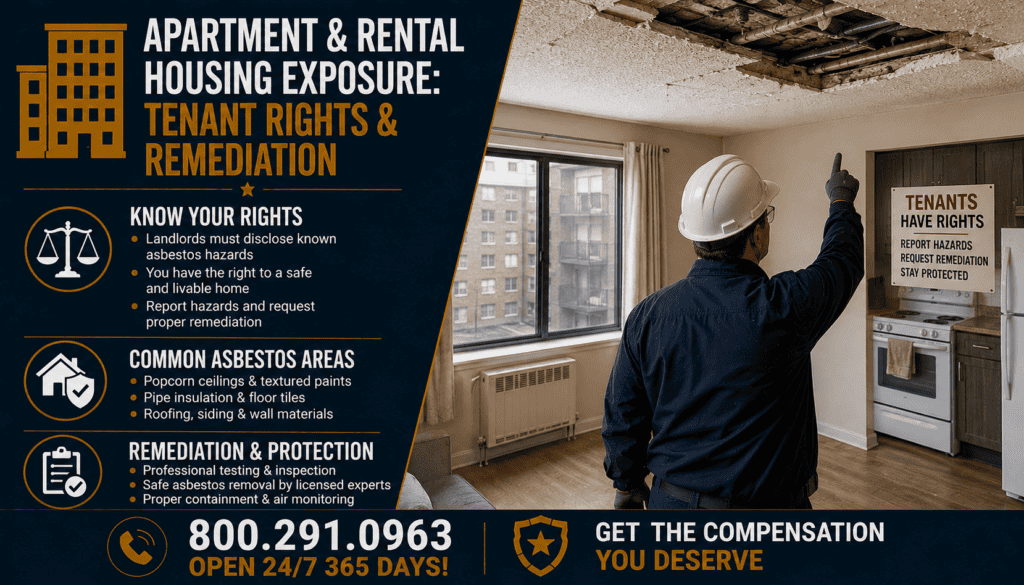
Apartment & Rental Housing Exposure: Tenant Rights & Remediation
Renters in older apartment buildings, duplexes, and multi-unit housing often face hidden asbestos dangers. Many properties built before 1980 contain asbestos in flooring, ceilings, insulation, HVAC systems, wallboard, and even decorative finishes. When these materials deteriorate or are disturbed during repairs, they can release microscopic fibers that endanger tenants.
Thankfully, both federal and state housing laws require landlords to provide safe, habitable living conditions. This means addressing asbestos hazards quickly, performing proper testing, and hiring certified professionals for remediation.
If you believe your rental unit contains asbestos or unsafe repair practices, call 800.291.0963 for guidance on tenant rights and proper testing.
🏚️ Step 1: Why Asbestos Is Common in Rental Housing
Many rental properties were constructed between the 1940s and 1980s — peak decades of asbestos use.
📌 Why Landlords Should Expect Asbestos in Older Units
-
It was used in low-cost construction materials
-
Apartments often contained vinyl flooring and textured ceilings
-
Multi-unit buildings relied on asbestos for fireproofing
-
Maintenance staff frequently disturbed materials during repairs
-
Older HVAC systems used asbestos insulation
Any apartment built before 1980 should be assumed to contain asbestos unless professionally tested.
🏠 Step 2: Where Asbestos Is Usually Found Inside Rentals
Tenants commonly encounter asbestos materials in everyday living spaces.
✔ Common Asbestos-Containing Materials (ACMs)
-
Popcorn ceilings and acoustic spray texture
-
Vinyl floor tiles (especially 9×9) and mastic adhesive
-
Drywall joint compound
-
Ceiling tiles
-
Heating duct insulation
-
Boiler rooms in basements
-
Fiber cement panels
-
Old caulking, plaster, and joint coatings
-
Pipe wrap under sinks or behind walls
📌 High-Risk Locations in Apartment Buildings
-
Laundry rooms
-
Storage spaces
-
Utility closets
-
Stairwells
-
Attics and basements
-
Hallway ceilings
-
HVAC rooms
Renters may not realize how many building components still contain ACMs.
⚠️ Step 3: When Rental Asbestos Becomes Dangerous
Asbestos is safest when completely intact and undisturbed.
It becomes dangerous when:
-
Crumbling
-
Water-damaged
-
Scraped during repairs
-
Disturbed by contractors
-
Broken during renovation
-
Torn by leaks or flooding
🚨 Warning Signs Tenants Should Look For
-
Cracked or peeling popcorn ceilings
-
Loose or lifting floor tiles
-
White dust on vents or ceiling edges
-
Damaged insulation around pipes
-
Debris from maintenance work
-
Water leaks affecting old walls or ceilings
These conditions require immediate investigation.
📜 Step 4: Landlord Legal Obligations Under Housing Law
Federal, state, and local housing laws require landlords to provide safe, habitable, and sanitary living conditions.
✔ Key Legal Responsibilities
-
Identify asbestos-containing materials
-
Maintain ACMs in good condition
-
Repair damaged materials immediately
-
Use certified asbestos professionals for removal
-
Provide notice to tenants when asbestos is present
-
Ensure safety during renovations or maintenance
-
Follow EPA and OSHA regulations
A Landlord Cannot:
-
Paint over damaged asbestos
-
Allow maintenance workers to disturb materials
-
Ignore tenant reports of deterioration
-
Perform DIY asbestos removal
-
Force tenants to stay in unsafe conditions
Asbestos hazards qualify as violations of the “Warranty of Habitability.”
🔍 Step 5: Tenant Rights When Asbestos Is Suspected
Tenants have strong legal protections when exposure is suspected.
✔ You Have the Right To:
-
Request asbestos testing
-
Receive written documentation of findings
-
Ask for professional air monitoring
-
Temporary relocation during remediation
-
A safe, habitable living environment
-
Break a lease if the unit is unsafe
-
Report landlords who refuse remediation
-
Seek compensation if exposure caused harm
📌 You Can Request Local Housing Inspectors
City or county code enforcement can legally require the landlord to fix unsafe conditions.
🧪 Step 6: Professional Testing — What Tenants Should Expect
If asbestos is suspected, landlords must hire certified inspectors.
🏷️ Proper Testing Includes:
-
Visual inspection
-
Safe sample collection
-
Air monitoring (PCM or TEM)
-
Lab analysis with chain-of-custody
-
A written asbestos report
Results Should Answer:
-
Where asbestos is located
-
Whether fibers are airborne
-
Whether removal or encapsulation is required
-
Whether tenants must vacate the unit temporarily
Testing must meet EPA, OSHA, and state health department standards.
🚧 Step 7: Renovations in Rental Units — The Highest Risk
Renovations that disturb walls, ceilings, or flooring can release asbestos fibers.
⚠️ Risky Maintenance Practices Include:
-
Scraping popcorn ceilings
-
Pulling up vinyl tile
-
Grinding or sanding flooring
-
Cutting into drywall
-
Replacing old HVAC insulation
-
Removing pipes or ductwork
-
Bathroom or kitchen remodels
Landlords must ensure contractors follow asbestos-safe protocols before any renovation begins.
🧼 Step 8: Remediation Options for Rental Housing
If asbestos is found, landlords must use licensed abatement professionals.
✔ Remediation May Include:
-
Encapsulation: Sealing fibers into the material
-
Enclosure: Covering with drywall, panels, or flooring
-
Full abatement: Removing the material entirely
-
Air filtration & HEPA cleanup
-
Clearance testing after work is complete
Tenants Must Be Notified Before Work Begins
You may also be entitled to:
-
Temporary relocation
-
Rent suspension
-
Reimbursement for hotel stays
-
Written clearance results
Landlords cannot allow tenants to return without passing clearance standards.
🌬️ Step 9: Air Monitoring After Repairs
After remediation or renovation, certified air monitoring must verify safe re-entry.
📌 Acceptable Air Levels
-
EPA clearance level: 0.01 f/cc
-
Schools and some states require TEM testing for higher accuracy
If levels are higher, the unit cannot be re-occupied.
🧑⚖️ Step 10: How Tenants Can Take Action When Landlords Don’t Cooperate
If a landlord refuses to investigate or remediate asbestos, tenants can take legal steps.
✔ Options Available
-
File a complaint with local housing authorities
-
Request a health department inspection
-
Contact building code enforcement
-
Withhold rent (state-dependent)
-
Break the lease without penalty
-
Seek legal representation
-
Sue for damages, relocation, or exposure health risks
Evidence Tenants Should Keep
-
Photos of damaged areas
-
Medical records (if symptoms arise)
-
Emails or messages to/from landlord
-
Notices given to management
-
Copies of maintenance work orders
Documentation strengthens your case.
👨👩👧 Step 11: Protecting Your Family While Waiting for Inspection
If you suspect asbestos:
✔ Do NOT:
-
Scrape or break any materials
-
Sand floors or walls
-
Vacuum debris (unless using HEPA)
-
Let children near damaged surfaces
-
Attempt DIY repairs
✔ Do:
-
Close off the damaged area
-
Turn off HVAC systems
-
Keep windows closed
-
Document the condition
-
Request professional testing in writing
Prevention is essential until professionals evaluate the unit.
🏥 Where to Get Help
If you’re dealing with suspected asbestos in your rental unit, we can help you:
-
Understand tenant rights under housing law
-
Request proper testing from the landlord
-
Connect with certified asbestos inspectors
-
Navigate relocation options
-
Review abatement and clearance documents
-
File necessary complaints or legal claims
-
Protect your family from unsafe conditions
📞 Call 800.291.0963 today for tenant-asbestos safety support.
📝 Summary
Asbestos exposure in rental housing is a serious safety issue — but tenants have strong legal protections.
Key Takeaways
-
Landlords must identify, repair, or remove asbestos hazards
-
Tenants can request certified testing and documentation
-
Damaged ACMs require immediate action
-
Renovation without testing is dangerous and illegal
-
Tenants can demand relocation, rent relief, or remediation
-
Clearance testing must confirm the unit is safe before re-entry
If you suspect asbestos in your apartment, take action today.
📞 Call 800.291.0963 for immediate guidance and support.