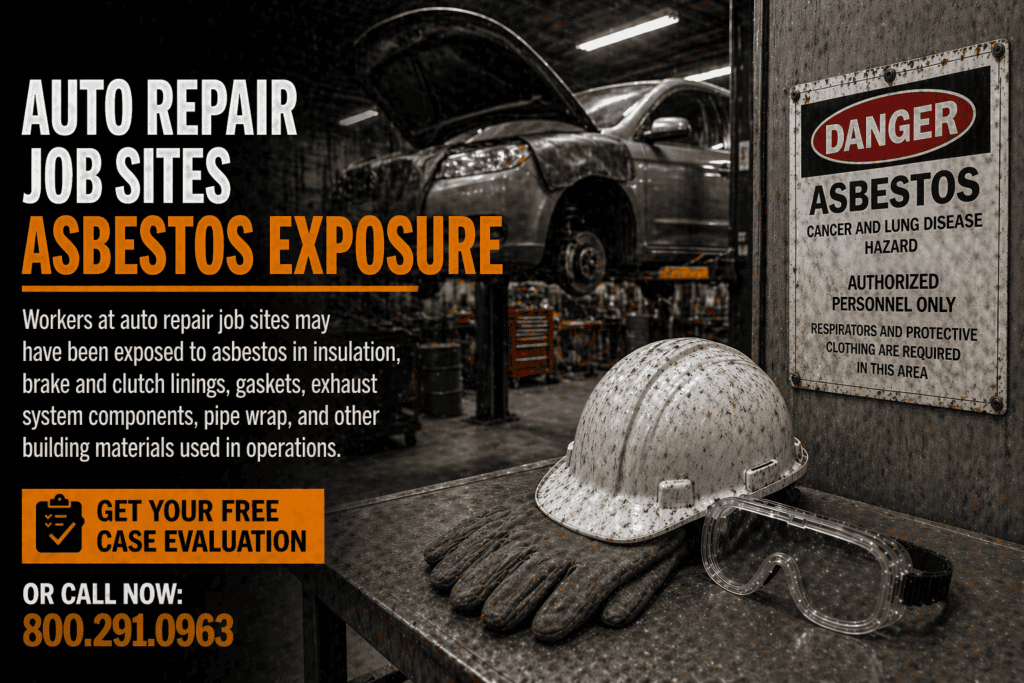
🚗 Auto Repair Shops Asbestos Exposure Lawsuit
Auto repair shops across the U.S. were high-risk environments for asbestos exposure, especially between the 1940s and the 1990s. Asbestos was widely used in vehicle brakes, clutches, gaskets, and engine components due to its heat resistance and durability. During routine vehicle maintenance, mechanics unknowingly released toxic asbestos fibers into the air.
Brake changes, clutch repairs, engine rebuilds, and gasket replacements often disturbed worn asbestos materials. Shops lacked adequate ventilation or protective gear, making exposure common among both full-time mechanics and apprentices.
Today, thousands of former auto shop workers suffer from:
• Mesothelioma
• Asbestos-related lung cancer
• Asbestosis
Read or list of Auto Repair Shops Asbestos Exposure Articles.
🔧 Auto Repair Shop Job Sites – What You’ll Learn From This Page:
🚘 Mechanics working on brakes, clutches, and head gaskets disturbed asbestos components during routine servicing.
🛠️ Compressed air, sanding, and grinding released microscopic fibers into the shop environment.
👨🔧 Older brake pads and linings were especially dangerous, releasing clouds of asbestos dust.
🧰 Many shops lacked proper exhaust systems or protective gear, increasing inhalation risks.
💰 Mechanics and technicians with asbestos illness may qualify for trust fund payouts or lawsuits.
Estimated Number of People Exposed to Asbestos in U.S. Auto Shops
| Exposure Category | Estimated Number of People Exposed |
|---|---|
| Occupational Exposure (mechanics, techs, shop workers) | Around 1,800,000 workers exposed |
| Secondary Exposure (customers, staff, family from clothes) | Estimated 500,000 exposed |
| Environmental Exposure (shops, garages, small bays) | Around 700,000 people exposed |
👉 Total Estimated Exposure:
Over 3 million people were exposed to asbestos in auto repair shops.
📊 Facts About Auto Mechanics and Asbestos
• Over 750,000 auto mechanics worked in U.S. shops during peak asbestos use from 1950–1990.
• Asbestos Exposure: Extremely common during brake, clutch, and engine service.
• Asbestos-Related Disease Risk: High, especially in enclosed shops without ventilation.
• Exposure occurred even from boxed brake pads labeled “dustless.”
• Similar Occupations: Diesel mechanics, fleet techs, machinists, parts rebuilders, shop supervisors
🏗️ History of Asbestos in Auto Repair Shops
Auto manufacturers used asbestos in friction products like brake shoes and clutches to withstand intense heat. As these parts wore down, they released asbestos dust into surrounding air and shop surfaces. Mechanics also encountered asbestos in gaskets, mufflers, and heat shields.
Shops lacked awareness and proper protection for decades. Workers routinely cleaned parts with air hoses or blew brake dust into the air, unknowingly putting themselves at risk.
⚠️ Mesothelioma Risk for Auto Shop Workers
Auto shop workers were exposed to asbestos almost daily through common tasks:
• Sanding or grinding brake drums
• Replacing worn-out gaskets
• Removing clutches or brake shoes from older vehicles
• Rebuilding engines or resurfacing heads
Symptoms of exposure may take 20–50 years to appear, leaving many retired workers at risk today.
🧪 Asbestos Products Used in Auto Repair Shops
🛞 Brake Pads and Shoes
Worn parts released fibers during removal, sanding, or cleaning.
🌀 Clutch Facings
Asbestos-based friction materials released dust during replacements.
🔧 Engine Gaskets
Used between metal surfaces; scraping or replacing released airborne particles.
🔥 Heat Shields and Insulators
Wrapped around exhaust manifolds or engine bays; degraded with age.
🪛 Mufflers and Exhaust Wraps
Lined with asbestos insulation to control heat and vibration.
🧴 Adhesives and Sealants
Used on engine and transmission parts; disturbed during rebuilds.
🧰 Valve Packing and Flange Gaskets
Found in commercial trucks and diesel engines; scraped or cut during service.
💨 Air Filters (older models)
Some included asbestos; exposure occurred when replacing or blowing out dust.
🪚 Insulated Panels in Shop Equipment
Old brake lathes and ovens were lined with asbestos.
📦 Parts Packaging
New brake and clutch parts sometimes arrived with asbestos dust inside boxes.
👷 How Auto Repair Workers Were Exposed
Many common job roles faced daily asbestos contact:
🔧 Auto Mechanics
Handled brake, clutch, and gasket parts; constant exposure during repairs.
🛞 Brake and Suspension Techs
Removed and resurfaced asbestos-laden brake systems.
🔩 Diesel and Fleet Mechanics
Worked on older trucks and buses with asbestos-lined gaskets and clutches.
🪛 Transmission Rebuilders
Faced exposure from asbestos clutch linings and sealants.
⚙️ Engine Technicians
Replaced gaskets and resurfaced heads; scraping released asbestos.
💨 Shop Assistants and Apprentices
Cleaned workspaces with air hoses; inhaled settled brake dust.
🧽 Parts Cleaners
Used solvents or brushes on dusty parts; exposure occurred while wiping or soaking.
🛠 Machine Operators
Worked with shop equipment containing asbestos insulation.
🪜 Supervisors and Shop Owners
Faced secondhand exposure by overseeing daily repairs in dusty environments.
🏢 Types of Auto Repair Shops With Asbestos Exposure
🧰 Independent Repair Shops
Handled older cars with asbestos parts well into the 1990s.
🚛 Fleet Maintenance Garages
Worked on commercial vehicles and buses with asbestos brake and clutch systems.
🏫 Vocational Schools and Training Centers
Trainees practiced on older cars and brake systems with asbestos.
🏢 Dealership Service Centers
Exposure occurred when servicing older trade-ins or warranty repairs.
🏍 Motorcycle and ATV Shops
Some brake systems and gaskets included asbestos in earlier models.
🛻 Truck Stops and Diesel Shops
High exposure from large trucks with asbestos engine and brake components.
🏎 Race Car Garages
Used high-performance asbestos brake and clutch parts for heat resistance.
🛠 Salvage Yards and Used Part Shops
Handled old asbestos-laden parts; exposure occurred during removal and resale.
❓ Common Questions About Auto Shop Asbestos Claims
Can I file a claim if I worked in a private garage?
Yes — claims are based on exposure, not employer size.
What if I was exposed decades ago?
You can still file. Most states allow 1–3 years from the date of diagnosis to act.
Do I need to prove the exact part I worked on?
No — legal teams can match product types to known asbestos suppliers.
Can apprentices or part-time workers qualify?
Yes — even short-term exposure can cause disease.
Is compensation still available?
Yes — lawsuits and trust funds still cover auto industry exposures.
⚖️ How a Mesothelioma Attorney Can Help Auto Shop Workers
An experienced asbestos attorney will:
• Identify the parts and products you were exposed to
• Gather job history and witness statements
• File lawsuits or trust fund claims
• Meet legal deadlines for your state
• Represent family members in wrongful death cases
• Charge no legal fees unless compensation is awarded
📞 Free Legal Help for Auto Mechanics & Families
If you or a loved one worked in an auto repair shop and now face mesothelioma, lung cancer, or asbestosis—help is available.
Whether you were a full-time mechanic, apprentice, or part-time worker, you may qualify for compensation.
Call Now: 800.291.0963
• No-cost case review
• No fees unless we win
• Lawsuit and trust fund support
• Help for shop owners, retirees, and surviving spouses
Or request help online 24/7