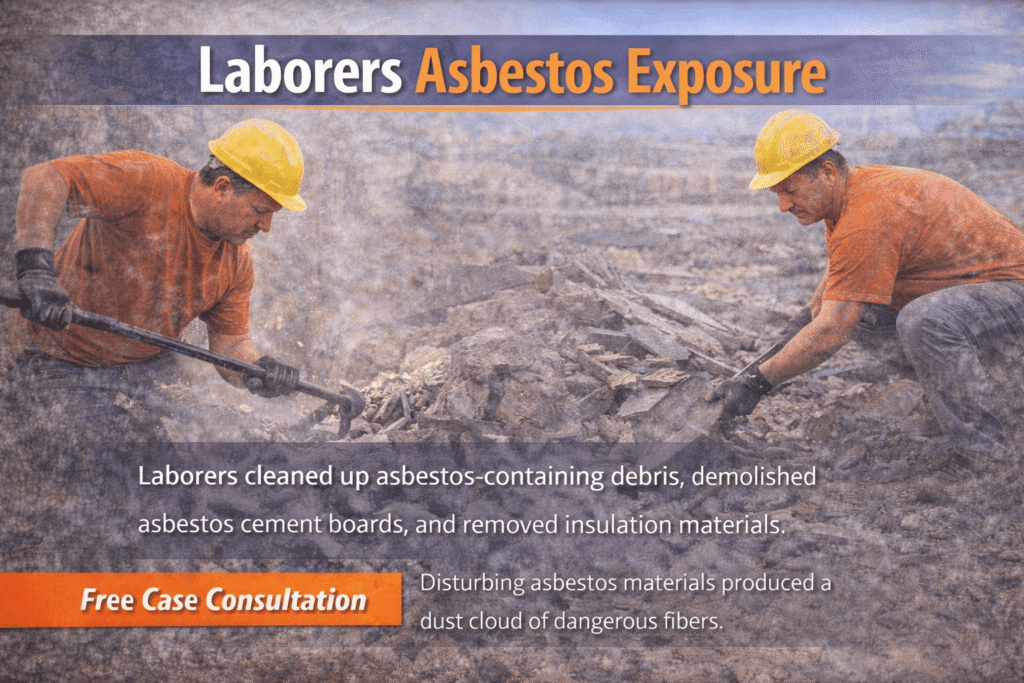
🧱 Construction Laborers Asbestos Exposure
Laborers working in construction, demolition, renovation, infrastructure, and industrial projects were among the most heavily exposed workers during the asbestos era.
For most of the 20th century, asbestos was used in thousands of building materials because it resisted heat, fire, and corrosion. Laborers handled these materials daily—cutting, breaking, removing, hauling, and cleaning them—often without any protective equipment or safety warnings.
Asbestos fibers are microscopic and easily become airborne when disturbed. Once inhaled, they lodge in the lungs and body tissues permanently. Many laborers did not feel sick at the time of exposure. Instead, serious illnesses appeared 20 to 50 years later, including mesothelioma, lung cancer, and asbestosis.
Laborers were especially vulnerable because they worked in the dustiest and most physically demanding areas of job sites. They cleaned debris, demolished old buildings, removed insulation, tore up floors, broke concrete, and transported contaminated materials. These tasks created thick clouds of dust that often contained asbestos fibers.
📊 How Many Laborers Were Exposed to Asbestos
From the 1930s through the 1980s, asbestos was used in nearly all types of construction and industrial work. During this time, hundreds of thousands of laborers worked around asbestos materials every year.
| Work Setting | Estimated Number Exposed |
|---|---|
| Construction Sites | 500,000+ |
| Demolition Projects | 300,000+ |
| Renovation & Remodeling | 250,000+ |
| Industrial Facilities | 150,000+ |
| Public Infrastructure | 200,000+ |
Laborers worked in homes, schools, factories, power plants, hospitals, military bases, and government buildings—many of which contained asbestos in walls, ceilings, floors, pipes, and machinery.
🧰 Where Laborers Encountered Asbestos
Laborers encountered asbestos in almost every part of older job sites. Common asbestos-containing materials included:
-
🧱 Insulation – Pipe wrap, boiler insulation, attic insulation, duct coverings
-
🧩 Cement Products – Asbestos cement boards, wall panels, siding
-
🪟 Flooring Systems – Vinyl tiles, linoleum backing, floor adhesives
-
🏠 Roofing Materials – Shingles, felt paper, roof coatings
-
🚿 Piping Systems – Steam and hot water pipes wrapped in asbestos
-
🔥 Fireproofing – Spray-on ceilings, steel beams, fire barriers
-
🧱 Joint Compounds – Used to seal drywall seams
-
🧰 Gaskets & Sealants – Found in mechanical and building systems
Laborers often handled these materials without knowing they contained asbestos. Warning labels were rare, and training about asbestos dangers was minimal or nonexistent.
🔨 Job Tasks That Released Asbestos
Daily labor work regularly disturbed asbestos materials and released fibers into the air.
-
🧨 Demolition Work – Tearing down walls, ceilings, and structures released friable asbestos dust.
-
🧹 Debris Cleanup – Sweeping and hauling rubble stirred up settled asbestos fibers.
-
🪚 Cutting Materials – Sawing asbestos boards, tiles, and cement sent fibers airborne.
-
🧱 Concrete & Cement Work – Chipping, drilling, and breaking asbestos-reinforced concrete.
-
🏚️ Renovation Projects – Disturbing hidden asbestos during remodeling.
-
🚧 Infrastructure Repair – Working on bridges, tunnels, and public buildings.
-
🧰 Insulation Removal – Stripping pipe and boiler insulation released heavy fiber clouds.
Laborers were rarely given masks or respirators. Many worked in enclosed areas where asbestos dust lingered in the air for hours.
🫁 Diseases Linked to Laborer Asbestos Exposure
Asbestos diseases develop slowly. Symptoms often appear decades after exposure.
🎗️ Mesothelioma
A rare and aggressive cancer that affects the lining of the lungs, abdomen, or heart. Almost all mesothelioma cases are caused by asbestos exposure.
🚬 Lung Cancer
Asbestos greatly increases lung cancer risk, especially in workers who also smoked.
🌫️ Asbestosis
A chronic lung disease caused by scarring of lung tissue from asbestos fibers, leading to shortness of breath and permanent breathing problems.
🫀 Pleural Disease
Thickening and scarring around the lungs that restrict breathing.
⏳ Why Symptoms Appear Decades Later
Asbestos fibers never leave the body. Once inhaled, they remain embedded in lung tissue or organs. Over time, these fibers cause:
-
Chronic inflammation
-
Tissue scarring
-
DNA damage
-
Tumor formation
Because this process is slow, many laborers felt healthy for decades after exposure. Diagnosis often occurs 20 to 50 years later, long after retirement.
🧠 Signs and Symptoms to Watch For
Laborers who worked around asbestos should watch for:
-
Persistent cough
-
Shortness of breath
-
Chest or abdominal pain
-
Fatigue
-
Weight loss
-
Fluid around lungs or abdomen
-
Hoarseness or swallowing problems
Anyone with a history of labor work in older buildings should tell their doctor about possible asbestos exposure.
⚖️ Legal Options for Exposed Laborers
Many companies knew asbestos was dangerous but continued using it without proper warnings. Because of this, legal compensation is available to many exposed workers.
📄 Mesothelioma and Personal Injury Lawsuits
Laborers can file lawsuits against companies that made, sold, or used asbestos products. Compensation may cover:
-
Medical bills
-
Lost wages
-
Pain and suffering
-
Travel for treatment
-
Home care
🏦 Asbestos Trust Fund Claims
Many asbestos companies went bankrupt and were required to create trust funds to pay victims. Laborers may qualify for payments without filing a lawsuit.
🎖️ Veterans VA Benefits
Laborers who were exposed while working on military bases or during service may qualify for:
-
VA disability compensation
-
VA healthcare
-
Survivor benefits for families
👨👩👧 Family Members at Risk
Laborers often brought asbestos home on their clothes, shoes, and tools. Family members were exposed through:
-
Washing dusty work clothes
-
Hugging workers after shifts
-
Cleaning vehicles used for work
This “secondary exposure” has caused mesothelioma and lung disease in many spouses and children of laborers.
🏗️ Types of Job Sites Where Laborers Faced Exposure
Laborers worked in many high-risk locations:
-
🏠 Residential homes built before 1980
-
🏫 Schools and universities
-
🏭 Factories and plants
-
⚡ Power stations
-
🏥 Hospitals
-
🚢 Shipyards
-
🪖 Military bases
-
🏛️ Government buildings
Any building constructed before the 1980s may contain asbestos.
📋 What Makes a Strong Exposure Case
Laborers do not need to remember specific product names. Strong cases are built using:
-
Job history
-
Work locations
-
Job duties
-
Coworker statements
-
Old construction records
-
Company documents
Legal teams use these records to identify which asbestos products were present.
❓ Common Questions
Can retired laborers still file claims?
Yes. Claims are based on disease diagnosis, not current employment.
What if my company no longer exists?
Many bankrupt companies created trust funds that still pay victims.
Do I need proof of asbestos exposure?
Exposure can be proven through job history and worksite records.
Is there a deadline to file?
Yes. Each state has a statute of limitations, usually starting at diagnosis.
Can family members file claims?
Yes. Families can file wrongful death claims after losing a loved one.
⚰️ Wrongful Death Claims for Families
When a laborer dies from an asbestos disease, families may file wrongful death claims. These can provide compensation for:
-
Funeral and burial costs
-
Lost income and benefits
-
Medical expenses
-
Loss of companionship
Families do not need to know exact product names—work history is often enough.
🛡️ Preventing Exposure Today
Modern safety rules require:
-
Testing for asbestos before renovations
-
Protective clothing and respirators
-
Sealed containment areas
-
Professional asbestos removal teams
However, exposure still happens during illegal or unsafe work. Anyone working in older buildings should insist on safety testing.
📌 Why Laborers Were Among the Most Affected
Laborers:
-
Worked in the dustiest areas
-
Did the most physical demolition work
-
Cleaned contaminated debris
-
Had little safety training
-
Were rarely given protection
Because of this, laborers have some of the highest rates of asbestos disease among all trades.
📞 What to Do If You Were Exposed
If you worked as a laborer and now have breathing problems or a cancer diagnosis:
-
Tell your doctor about your work history
-
Get proper testing
-
Gather job records
-
Speak with an asbestos legal team
-
Protect your family
Early action can help with treatment options and financial security.
📞 Free Case Review for Laborers Exposed to Asbestos
If you worked as a laborer and were later diagnosed with mesothelioma, lung cancer, asbestosis, or another asbestos-related disease, you may be entitled to financial compensation.
You could qualify for:
-
Mesothelioma or personal injury lawsuits
-
Asbestos trust fund claims
-
Wrongful death claims for families
-
VA benefits for military-related exposure
You do not need to remember exact product names. Your work history is often enough to prove exposure.
Call now for a free, confidential case review:
📱 800.291.0963
There is no cost to call, and no obligation. Deadlines apply in many states, so acting sooner can protect your rights and your family’s future.