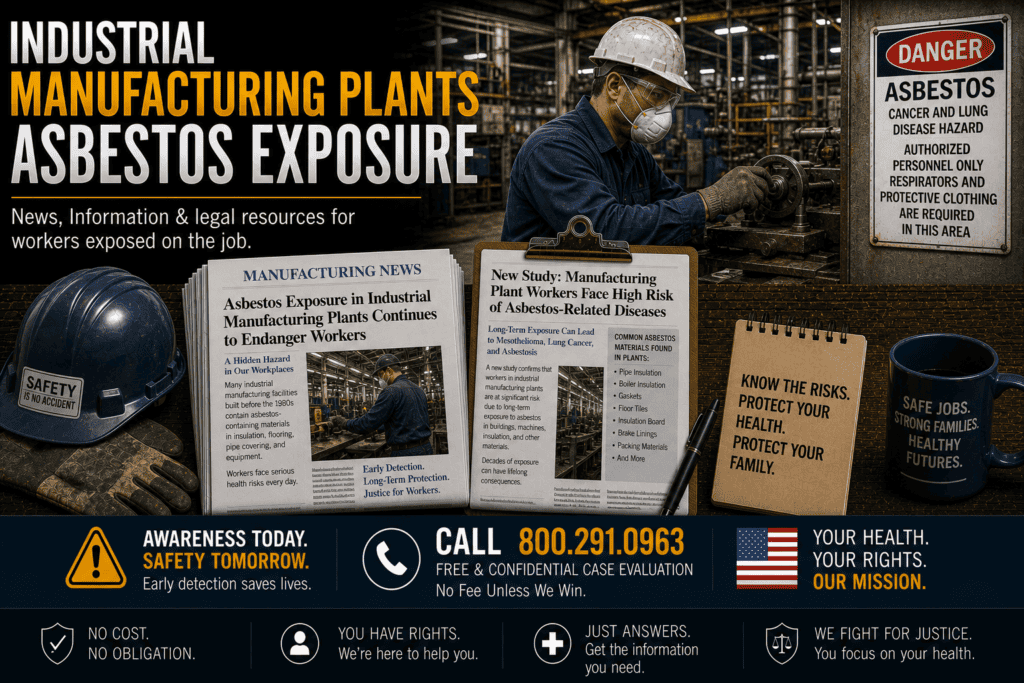
🏭 Industrial Manufacturing Plants Asbestos Exposure
Industrial manufacturing plants were among the heaviest users of asbestos in the United States throughout much of the 20th century. Asbestos was widely installed in insulation, fireproofing, and machinery components across production areas where heat, friction, and fire hazards were constant concerns. Workers inside these facilities were frequently exposed to airborne asbestos fibers during daily operations, maintenance, repairs, renovations, and equipment failures—often without warning or protective measures.
Because asbestos-related diseases can take decades to develop, many former manufacturing workers are only now learning that illnesses such as mesothelioma and asbestos-related lung cancer are linked to exposures that occurred years earlier inside industrial plants.
🔍 Why Asbestos Was Used in Industrial Manufacturing Plants
Asbestos became a standard industrial material because of its unique physical properties. Manufacturing environments demanded materials that could withstand extreme operating conditions, and asbestos met those needs at a low cost.
🔧 Key reasons asbestos was used
-
🔥 High resistance to heat and flame
-
⚙️ Durability under vibration and pressure
-
🧱 Fireproofing for large enclosed structures
-
🛠️ Insulation for machinery and utilities
Because of these advantages, asbestos was integrated into nearly every major system inside industrial manufacturing facilities.
🧱 Common Asbestos-Containing Materials in Industrial Plants
Asbestos appeared in both obvious and hidden locations throughout manufacturing plants, including:
⚙️ Machinery & Production Equipment
-
Presses, furnaces, kilns, and mixers
-
Heat shields and friction components
-
Seals, gaskets, and packing materials
🔥 Insulation & Fireproofing
-
Boiler and pipe insulation
-
Spray-on fireproofing for ceilings and beams
-
Thermal blankets and insulation cement
⚡ Electrical & Utility Systems
-
Control panels and switchgear boards
-
Wiring insulation and motor housings
-
Generators and transformers
🏗️ Structural & Building Materials
-
Ceiling tiles and wall panels
-
Flooring, mastics, and adhesives
-
Fire-rated doors and partitions
Many of these materials were installed during original construction and remained in place for decades.
💨 How Asbestos Exposure Occurred in Industrial Manufacturing Plants
Asbestos exposure does not require direct handling. In industrial manufacturing environments, fibers were released into the air through multiple everyday activities.
🔧 Routine Operations
Heat, vibration, and mechanical movement caused asbestos materials to degrade over time, releasing fibers during normal production.
🛠️ Maintenance & Repairs
Repairing boilers, pipes, machinery, and electrical systems disturbed asbestos insulation and components.
🏗️ Renovations & Upgrades
Drilling, cutting, and dismantling older systems exposed asbestos hidden behind walls, ceilings, and equipment housings.
🧨 Demolition & Decommissioning
Partial or full demolition released large amounts of asbestos dust into enclosed plant environments.
Once airborne, asbestos fibers could remain suspended for long periods, spreading throughout large production areas via air currents and ventilation systems.
👷 Workers Most Commonly Exposed
Certain job roles inside industrial manufacturing plants faced especially high exposure risks due to their proximity to asbestos-containing systems.
👷 High-risk occupations included
-
Machine and equipment operators
-
Maintenance and repair workers
-
Electricians and mechanics
-
Boilermakers and pipefitters
-
Supervisors and production managers
-
Construction and renovation crews
Even office staff and support personnel working inside manufacturing facilities could inhale asbestos fibers circulating through shared airspace.
⚠️ Health Risks Linked to Industrial Manufacturing Asbestos Exposure
Inhalation of asbestos fibers has been medically linked to serious and often fatal diseases. These illnesses typically develop 20 to 50 years after exposure, making early detection difficult.
🩺 Common asbestos-related cancers include
-
Mesothelioma (pleural or peritoneal)
-
Lung cancer caused by asbestos exposure
Symptoms may include chest pain, shortness of breath, persistent coughing, unexplained weight loss, and fatigue. Because symptoms often appear decades later, many workers do not initially associate their illness with past manufacturing plant exposure.
🧠 Frequently Asked Questions
❓ Can manufacturing workers be exposed without handling asbestos?
Yes. Workers can inhale airborne fibers released during normal operations, maintenance, or deterioration of asbestos materials.
❓ How long does it take for asbestos diseases to appear?
Most asbestos-related cancers develop decades after initial exposure.
❓ Can exposure occur even after safety regulations were introduced?
Yes. Many industrial plants still contained legacy asbestos materials long after regulations limited new use.
❓ Can family members be affected?
Yes. Fibers carried home on clothing, shoes, or hair can expose household members through secondary exposure.
⚖️ Legal Options for Industrial Manufacturing Workers
Workers diagnosed with asbestos-related illnesses may have legal options for compensation, even if exposure occurred many years ago.
🛡️ Industrial Manufacturing Asbestos Lawsuits
Lawsuits may be filed against manufacturers of asbestos-containing products, equipment suppliers, contractors, and other responsible parties. Compensation may include:
-
Medical expenses
-
Lost wages and reduced earning capacity
-
Pain and suffering
Most cases are resolved through settlements, though some proceed to trial when necessary.
💰 Industrial Manufacturing Asbestos Trust Funds
Many companies that manufactured or supplied asbestos products filed for bankruptcy and established asbestos trust funds. These trusts exist specifically to compensate workers harmed by asbestos exposure.
✔ Claims can often be filed without a lawsuit
✔ Multiple trust claims may be possible
✔ Payments depend on exposure history and diagnosis
Trust fund claims are commonly pursued alongside lawsuits when multiple companies contributed to exposure.
👨👩👧 Industrial Manufacturing Wrongful Death Claims
Families who lost loved ones to asbestos-related cancers may pursue wrongful death claims. These claims seek compensation for:
-
Funeral and burial expenses
-
Loss of income and benefits
-
Loss of companionship and support
Wrongful death claims help families recover financially while holding responsible parties accountable.
🧾 How an Asbestos Attorney Can Help
Experienced asbestos attorneys assist manufacturing workers and families by:
🔍 Investigating work and exposure history
📁 Identifying asbestos products used in plants
🧠 Coordinating medical documentation
⚖️ Filing lawsuits and trust fund claims
💬 Negotiating settlements
Most asbestos cases are handled on a contingency basis, meaning no upfront legal costs.
📞 Free Case Consultation
If you or a loved one worked in an industrial manufacturing plant and were later diagnosed with an asbestos-related cancer, help may be available.
🟧 Free Case Consultation
📞 Call 800-291-0963 to speak with an experienced asbestos professional today.
There is no obligation, and you pay nothing unless compensation is recovered.
📌 Key Takeaways
-
🏭 Industrial manufacturing plants used asbestos extensively across production areas
-
💨 Exposure occurred during operations, maintenance, renovations, and demolition
-
⚠️ Asbestos exposure is linked to serious cancers decades later
-
⚖️ Legal options include lawsuits, trust funds, and wrongful death claims
-
📞 Help is available through a free case consultation