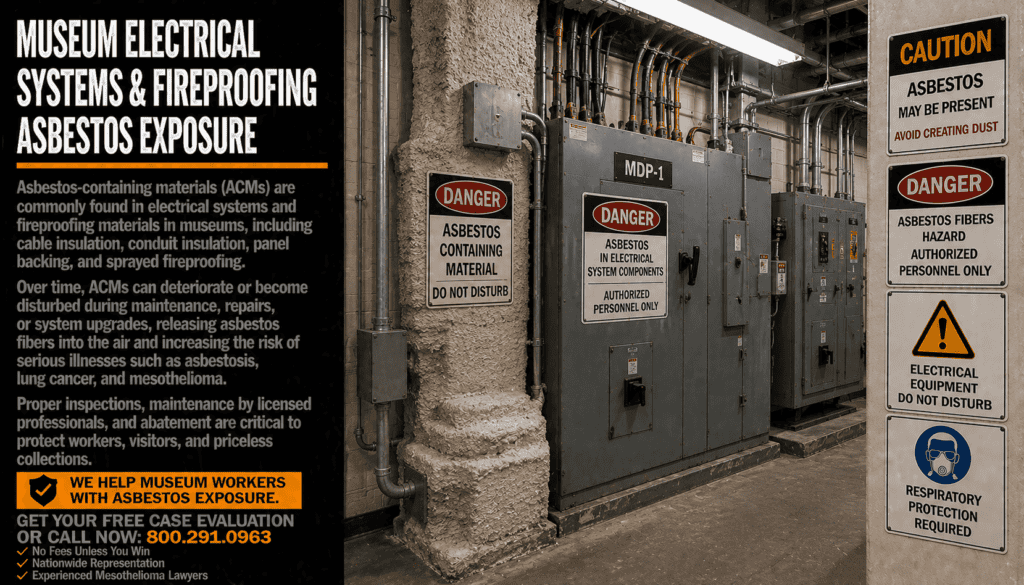
⚡ Museum Electrical Systems & Fireproofing Asbestos Exposure
Electrical panels, wiring insulation, fireproofing sprays, and heat-resistant components in older museums contained asbestos that exposed electricians, maintenance staff, contractors, and nearby workers during daily operation, repairs, and upgrades.
Museum electrical systems were designed to support lighting, climate control, security, and preservation equipment—often inside historic buildings not originally built for modern electrical loads. To protect against fire and heat, asbestos was widely used in electrical insulation, panel boards, conduit coverings, and fireproofing materials. As systems aged or were modified, asbestos fibers were released into confined electrical rooms, wall cavities, ceilings, and adjacent workspaces.
Because electrical infrastructure runs throughout museum buildings, asbestos exposure from these systems was often building-wide, affecting workers far beyond electricians alone.
🏛️ Why Museum Electrical Systems Used Asbestos
Asbestos was commonly incorporated into museum electrical systems because it provided:
-
🔥 Fire resistance around high-voltage equipment
-
⚡ Electrical insulation for wiring and panels
-
🌡️ Heat resistance near lighting and control systems
-
🧱 Durability inside walls, ceilings, and chases
-
🧯 Fireproofing to protect historic structures
These properties made asbestos standard in public-building electrical design for decades.
🧪 Asbestos-Containing Electrical & Fireproofing Materials in Museums
Asbestos was often found in:
⚡ Electrical Panels & Components
-
Panel board insulation
-
Asbestos backing boards
-
Arc shields and barriers
🔌 Wiring & Conduit Systems
-
Cloth-wrapped asbestos wiring
-
Insulated conduit coverings
-
Junction box linings
🔥 Fireproofing & Heat Shields
-
Spray-on fireproofing on walls and ceilings
-
Fire-resistant boards behind panels
-
Heat shields around lighting systems
🧱 Building Cavities
-
Asbestos insulation inside walls and ceilings
-
Fireproofed shafts and chases
When disturbed, these materials released asbestos fibers into occupied spaces.
⚠️ How Asbestos Exposure Occurred During Electrical Work
Exposure commonly occurred during:
-
Installing or upgrading electrical systems
-
Repairing panels, wiring, and controls
-
Drilling through walls and ceilings
-
Removing old fireproofing materials
-
Retrofitting lighting and security systems
-
Emergency electrical repairs
-
Cleanup of debris and dust
Because electrical work often occurred above ceilings or inside walls, fiber release frequently went unnoticed.
🌫️ Airborne Asbestos from Electrical Systems
Electrical-related asbestos exposure spread because:
-
🌬️ HVAC systems circulated fibers released from wall cavities
-
🧹 Cleaning and maintenance re-aerosolized dust
-
🚪 Access panels and ceiling openings allowed fiber migration
-
🧱 Vibrations loosened aging fireproofing materials
This resulted in indirect exposure for museum staff working nearby.
🧑🏭 Museum Workers Most at Risk
⚡ Electricians & Electrical Technicians
Handled asbestos-containing panels, wiring, and insulation.
🛠️ Maintenance & Facilities Staff
Assisted with electrical repairs and cleanup.
👷 Contractors & Trades
Disturbed asbestos during upgrades and renovations.
🧑🎨 Curators & Conservators
Worked near electrical chases and equipment rooms.
🚨 Security & Operations Personnel
Spent time in electrical closets and control areas.
Exposure often occurred repeatedly over many years, increasing cumulative risk.
🧬 Secondary (Take-Home) Asbestos Exposure
Electrical and maintenance workers often carried asbestos fibers home on clothing and tools. Family members were exposed when fibers:
-
Settled on work clothes and shoes
-
Transferred to vehicles
-
Became airborne during laundering
Many mesothelioma cases among spouses and children trace back to take-home exposure.
🫁 Health Risks Linked to Electrical System Asbestos Exposure
Long-term asbestos exposure from electrical systems and fireproofing is associated with:
🧠 Mesothelioma
A rare, aggressive cancer caused almost exclusively by asbestos exposure.
🫁 Asbestosis
A chronic lung disease from prolonged fiber inhalation.
🫁 Lung Cancer
Elevated risk following long-term exposure.
Because electrical work often involved disturbing hidden asbestos, disease risk was significant.
📜 Safety Failures in Museum Electrical Systems
Many museums and governing authorities failed to:
-
Identify asbestos in electrical and fireproofing materials
-
Warn electricians and staff of exposure risks
-
Perform asbestos abatement before upgrades
-
Restrict access to contaminated areas
-
Monitor airborne fiber levels
These failures form the basis for many asbestos claims involving museum electrical systems.
❓ Frequently Asked Questions (FAQs)
1️⃣ Did museum electrical systems really contain asbestos?
Yes. Panels, wiring insulation, and fireproofing often did.
2️⃣ Could non-electricians be exposed?
Yes. Fibers spread beyond electrical work areas.
3️⃣ Did lighting upgrades increase exposure?
Yes. Drilling and rewiring disturbed hidden asbestos.
4️⃣ Can family members file secondary exposure claims?
Yes. Take-home asbestos exposure is legally recognized.
5️⃣ Can claims still be filed decades later?
Yes. Asbestos diseases have long latency periods.
⚖️ How a Lawyer Can Help Get Compensation
An experienced asbestos lawyer can help museum workers and families by:
-
Investigating museum electrical systems and upgrade history
-
Identifying asbestos-containing electrical materials
-
Tracing responsible asbestos product manufacturers
-
Documenting exposure timelines and job duties
-
Filing mesothelioma lawsuits
-
Submitting asbestos trust fund claims
-
Maximizing total compensation available
Because electrical exposure often involved hidden asbestos, detailed investigation is essential.
📞 Free Case Evaluation – Get Help Today
If you worked on or near museum electrical systems and later developed mesothelioma or another asbestos-related illness—or were exposed through a family member—help is available.
📞 Call Now for a FREE Case Evaluation: 800-291-0963
There is no obligation, and compensation may be available.
📌 Key Takeaways
-
Museum electrical systems frequently used asbestos
-
Fireproofing and insulation released fibers during upgrades
-
Exposure spread beyond electrical rooms
-
Families faced secondary exposure risks
-
Legal options may still be available