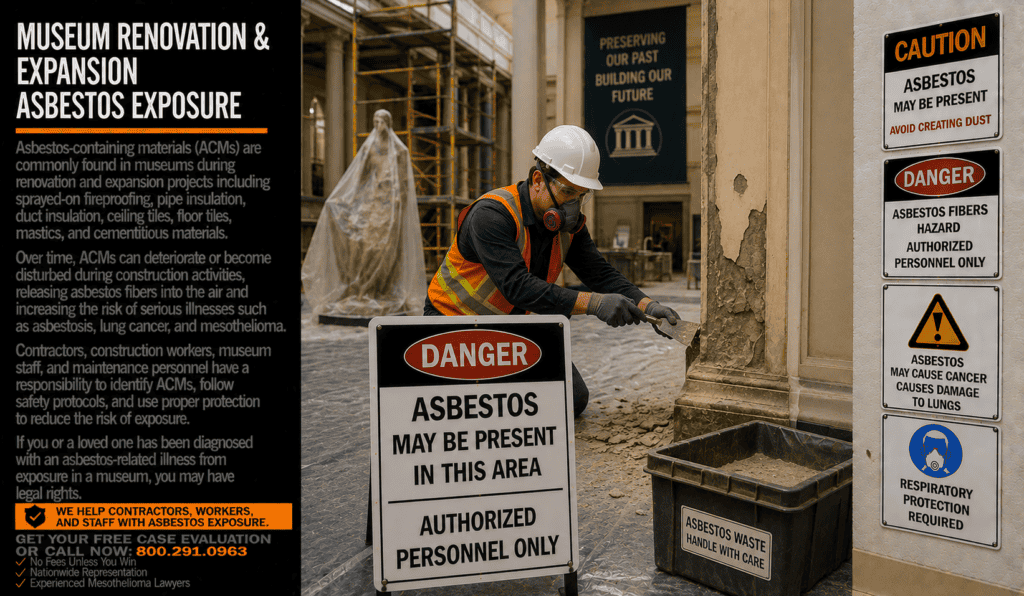
🏗️ Museum Renovation & Expansion Asbestos Exposure
Museum renovation and expansion projects disturbed asbestos in walls, ceilings, ductwork, flooring, and mechanical systems, exposing workers, staff, and nearby occupants during construction and modernization efforts.
Museum renovation and expansion projects are often large, multi-year undertakings designed to modernize facilities, expand gallery space, improve climate control, and accommodate new exhibits or visitors. Unfortunately, many museums were built or renovated during decades when asbestos was widely used in construction materials. When expansion projects cut into existing structures, asbestos hidden for decades was disturbed and released into the air.
Unlike routine maintenance, expansion projects typically involve structural demolition, wall removal, floor penetration, and system rerouting—activities that generate significant dust. Because museums often remain partially occupied during phased expansions, asbestos exposure frequently extended beyond construction zones to museum employees and contractors working nearby.
🏛️ Why Museum Expansion Projects Created Asbestos Risks
Museum renovation and expansion projects were especially hazardous because:
-
🧱 Existing buildings contained undocumented asbestos
-
🔨 Structural demolition disturbed friable materials
-
🌫️ Large-scale dust generation occurred
-
🌬️ HVAC systems spread fibers beyond work areas
-
🏗️ Projects were conducted in occupied buildings
-
⚠️ Abatement was sometimes delayed to meet schedules
Many workers experienced repeated asbestos exposure across multiple expansion phases.
🧪 Asbestos-Containing Materials Disturbed During Expansions
Expansion projects frequently disturbed asbestos in:
🧱 Structural Components
-
Plaster walls and joint compound
-
Fireproofed beams and columns
-
Decorative ceilings and moldings
🪵 Flooring & Subflooring
-
Vinyl asbestos tiles
-
Mastics and adhesives
-
Concrete underlayment
🌬️ HVAC & Utility Systems
-
Insulated ducts and plenums
-
Pipe insulation and lagging
⚡ Electrical & Fireproofing
-
Fireproofed electrical rooms
-
Insulated wiring and panels
🔥 Mechanical Systems
-
Boiler and equipment insulation
Cutting into these systems released large volumes of asbestos fibers.
⚠️ How Asbestos Exposure Occurred During Expansion Work
Exposure commonly occurred during:
-
Demolition of walls, ceilings, and floors
-
Core drilling and saw cutting
-
Rerouting HVAC, plumbing, and electrical systems
-
Removing old fireproofing and insulation
-
Emergency repairs during construction
-
Cleanup of dust and debris
Because expansion work often involved power tools and heavy demolition, airborne fiber levels could be extremely high.
🌫️ Airborne Asbestos Spread Beyond Construction Zones
Asbestos exposure spread beyond expansion areas because:
-
🌬️ HVAC systems circulated fibers throughout buildings
-
🚪 Open corridors and access points allowed migration
-
🧹 Cleaning re-aerosolized settled dust
-
🧱 Vibrations loosened asbestos in adjacent areas
This placed museum staff, curators, conservators, and administrative workers at risk—even if they were not part of construction crews.
🧑🏭 Workers Most at Risk During Museum Expansions
👷 Construction & Renovation Crews
Performed demolition and rebuild work involving asbestos materials.
🛠️ Maintenance & Facilities Staff
Assisted with system shutdowns, repairs, and cleanup.
🧑🎨 Curators & Conservators
Worked near expansion zones and contaminated spaces.
🧾 Administrative & Office Staff
Remained in buildings during phased construction.
🚨 Security & Operations Personnel
Patrolled affected areas daily.
Exposure often occurred over extended project timelines, increasing cumulative risk.
🧬 Secondary (Take-Home) Asbestos Exposure
Expansion workers and museum staff often carried asbestos fibers home when dust:
-
Settled on clothing and shoes
-
Contaminated tools and personal items
Family members were exposed during laundering, cleaning, and routine household contact, leading to secondary exposure cases.
🫁 Health Risks Linked to Expansion-Related Asbestos Exposure
Long-term asbestos exposure from renovation and expansion projects is associated with:
🧠 Mesothelioma
A rare, aggressive cancer caused almost exclusively by asbestos exposure.
🫁 Asbestosis
A progressive lung disease from chronic fiber inhalation.
🫁 Lung Cancer
Increased risk following prolonged exposure.
Because expansion exposure was often intense but unrecognized, diagnosis frequently occurred decades later.
📜 Knowledge & Safety Failures During Museum Expansions
Many museums and project managers failed to:
-
Conduct thorough pre-expansion asbestos surveys
-
Warn workers and staff of asbestos risks
-
Fully abate asbestos before demolition
-
Seal off construction zones properly
-
Monitor airborne fiber levels
These failures form the basis for many asbestos claims related to museum expansion projects.
❓ Frequently Asked Questions (FAQs)
1️⃣ Are museum expansion projects higher risk than routine renovations?
Yes. Structural demolition releases more asbestos.
2️⃣ Can museum staff be exposed even if not in construction?
Yes. Airborne fibers migrate beyond work zones.
3️⃣ Do phased expansions increase exposure risk?
Yes. Occupied buildings heighten exposure potential.
4️⃣ Can family members file secondary exposure claims?
Yes. Take-home asbestos exposure is legally recognized.
5️⃣ Can claims still be filed decades later?
Yes. Asbestos diseases have long latency periods.
⚖️ How a Lawyer Can Help Get Compensation
An experienced asbestos lawyer can help expansion-exposed workers and families by:
-
Investigating museum expansion timelines and locations
-
Identifying asbestos-containing materials disturbed
-
Tracing responsible asbestos product manufacturers
-
Documenting exposure duration and job duties
-
Filing mesothelioma lawsuits
-
Submitting asbestos trust fund claims
-
Maximizing compensation across all available legal avenues
Because expansion exposure often involved multiple contractors and materials, detailed legal investigation is essential.
📞 Free Case Evaluation – Get Help Today
If you worked on or near a museum renovation or expansion project and later developed mesothelioma or another asbestos-related illness—or were exposed through a family member—help is available.
📞 Call Now for a FREE Case Evaluation: 800-291-0963
There is no obligation, and compensation may be available.
📌 Key Takeaways
-
Museum expansions disturbed hidden asbestos
-
Structural demolition released airborne fibers
-
Exposure spread beyond construction zones
-
Families experienced secondary exposure risks
-
Legal options may still be available