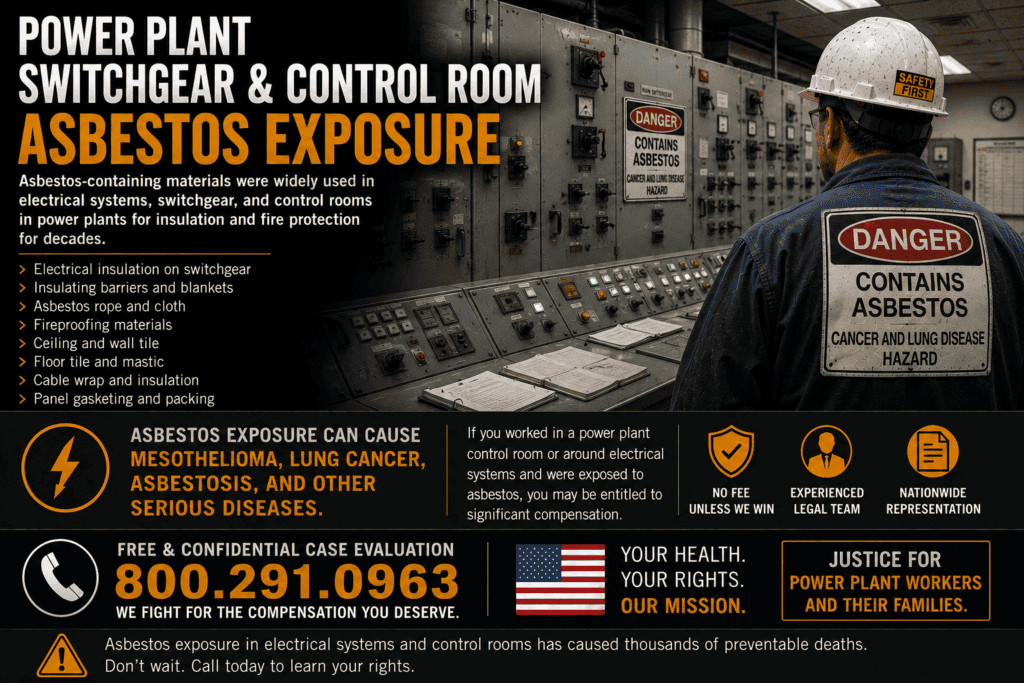
🏭 Power Plant Switchgear & Control Room Asbestos Exposure
Electrical enclosures and insulating blankets held asbestos fibers released during servicing.
Switchgear rooms and control rooms are critical nerve centers within power plants. These areas house electrical panels, breakers, transformers, control boards, relays, and monitoring systems that regulate power generation and distribution. To reduce fire risk and manage heat, asbestos-containing materials were widely used in switchgear enclosures, insulating blankets, wiring insulation, wall panels, and fireproofing.
Workers assigned to electrical maintenance, instrumentation, and plant operations were frequently exposed to asbestos during routine servicing, troubleshooting, upgrades, and emergency repairs. Opening electrical cabinets, replacing breakers, rewiring panels, or removing insulating barriers disturbed asbestos materials and released fibers into enclosed control spaces. Because control rooms are often confined and continuously occupied, airborne asbestos fibers could accumulate and circulate through ventilation systems.
Many power plant workers spent years working in these environments without being warned about asbestos hazards. Decades later, former electricians, operators, engineers, and supervisors have developed mesothelioma, lung cancer, and asbestosis linked to exposure in switchgear and control room areas.
🔥 Why Asbestos Was Used in Switchgear & Control Rooms
Electrical systems generate heat and pose serious fire risks. Asbestos was widely used in switchgear and control rooms because it offered:
-
Fire resistance around high-voltage equipment
-
Thermal insulation for electrical enclosures
-
Arc-flash protection materials
-
Durability in continuous-operation environments
-
Electrical insulation for wiring and panels
Asbestos insulating boards, cloths, and blankets were commonly installed inside switchgear cabinets and behind control panels. Fireproof wall panels and ceiling materials also contained asbestos to slow fire spread. At the time, asbestos was considered essential for electrical safety, despite mounting evidence of its long-term health dangers.
🧱 Where Asbestos Was Found in Switchgear & Control Room Areas
Asbestos-containing materials were present throughout electrical and control spaces, particularly in power plants built before the late 1970s.
🔧 Switchgear Cabinets & Electrical Enclosures
Metal switchgear cabinets often contained asbestos insulation panels, arc barriers, and heat shields. Servicing breakers or relays disturbed these materials.
🔩 Insulating Blankets & Arc Barriers
Asbestos blankets and cloths were used to shield workers from heat and arc flashes during electrical work. Over time, these materials degraded and released fibers.
🧰 Control Panels & Instrumentation Boards
Control panels, gauges, and instrumentation boards frequently used asbestos backing boards and insulation materials.
🛡️ Wiring, Conduits & Cable Trays
Electrical wiring insulation, conduit wraps, and cable tray fireproofing often contained asbestos, especially near high-temperature equipment.
🧱 Fireproofing & Structural Materials
Sprayed fireproofing, ceiling tiles, wall panels, and flooring in control rooms commonly contained asbestos, particularly in older plants.
🫁 How Switchgear & Control Room Workers Were Exposed
Exposure occurred during everyday electrical and operational tasks.
🛠️ Electrical Maintenance & Repairs
Replacing breakers, servicing transformers, rewiring panels, and troubleshooting faults disturbed asbestos insulation inside enclosures.
🧼 Panel Upgrades & Modernization
Upgrading control systems or retrofitting older equipment required removing asbestos-containing panels and insulation.
🏗️ Emergency Repairs & Shutdowns
Unplanned outages and emergency repairs increased exposure risk as workers rapidly opened cabinets and removed insulation.
🏠 Secondary (Take-Home) Exposure
Electrical workers carried asbestos fibers home on clothing, gloves, and tools, exposing family members during routine contact.
🧪 Diseases Linked to Switchgear & Control Room Asbestos Exposure
Asbestos-related diseases often develop decades after exposure, making workplace links difficult to recognize.
💀 Mesothelioma
A rare, aggressive cancer of the lung, abdominal, or heart lining. Occupational asbestos exposure is the only known cause.
🫁 Lung Cancer
Long-term asbestos exposure increases lung cancer risk, even in non-smokers.
📉 Asbestosis
A chronic lung disease caused by scarring from inhaled asbestos fibers, leading to progressive breathing impairment.
👷 Jobs at Highest Risk in Switchgear & Control Rooms
Workers most commonly exposed included:
-
Power plant electricians
-
Instrumentation technicians
-
Control room operators
-
Electrical engineers
-
Maintenance mechanics
-
Supervisors and shift managers
-
Contractors and upgrade crews
-
Utility technicians
Because control rooms are shared spaces, even non-electrical personnel could be exposed to airborne fibers.
⏱️ When Exposure Was Most Common
Asbestos use in electrical systems peaked from the 1940s through the late 1970s. Many switchgear systems and control rooms installed during this period remained in use for decades with original asbestos materials intact.
Plant modernization projects in the 1980s–2000s often disturbed legacy asbestos, exposing a new generation of workers.
⚖️ Power Plant Switchgear & Control Room Asbestos Lawsuits & Compensation
Asbestos exposure involving switchgear and control rooms has resulted in numerous lawsuits and asbestos trust fund claims nationwide. Workers were exposed through electrical enclosures, insulating blankets, wiring insulation, and fireproofing materials.
Manufacturers of electrical equipment, insulation products, and fireproofing materials often failed to warn workers about asbestos risks. Legal responsibility may fall on product manufacturers, contractors, and plant operators.
Workers and families may qualify for:
-
Personal injury asbestos lawsuits
-
Asbestos trust fund claims
-
Wrongful death lawsuits
-
Veterans benefits (for military-connected power facilities)
🧑⚖️ Legal & Claims Options for Switchgear & Control Room Workers
Power Plant Switchgear & Control Room Mesothelioma Lawsuit
Workers diagnosed with mesothelioma, lung cancer, or asbestosis may pursue lawsuits against manufacturers of asbestos electrical insulation, switchgear components, and fireproofing materials.
Switchgear & Control Room Asbestos Trust Fund Claims
Many asbestos product suppliers established trust funds. Eligible claimants may recover compensation without filing a lawsuit.
Switchgear & Control Room Wrongful Death Lawsuits
Families may pursue compensation after fatal asbestos-related illnesses caused by electrical system exposure.
Switchgear & Control Room Statute of Limitations
Deadlines vary by state and diagnosis date. Early legal review is critical to protect eligibility.
Switchgear & Control Room Settlement & Verdict History
Significant settlements and verdicts have resulted from asbestos exposure cases involving power plant electrical systems.
📞 Legal Help for Power Plant Switchgear & Control Room Asbestos Exposure
If you or a loved one worked in power plant switchgear or control rooms and were later diagnosed with mesothelioma, asbestos-related lung cancer, or asbestosis, legal help may be available.
📞 Call 800-291-0963 for a free case review
✔ No upfront costs
✔ Nationwide representation
✔ Full electrical-system exposure investigation
✔ Assistance with lawsuits and asbestos trust fund claims