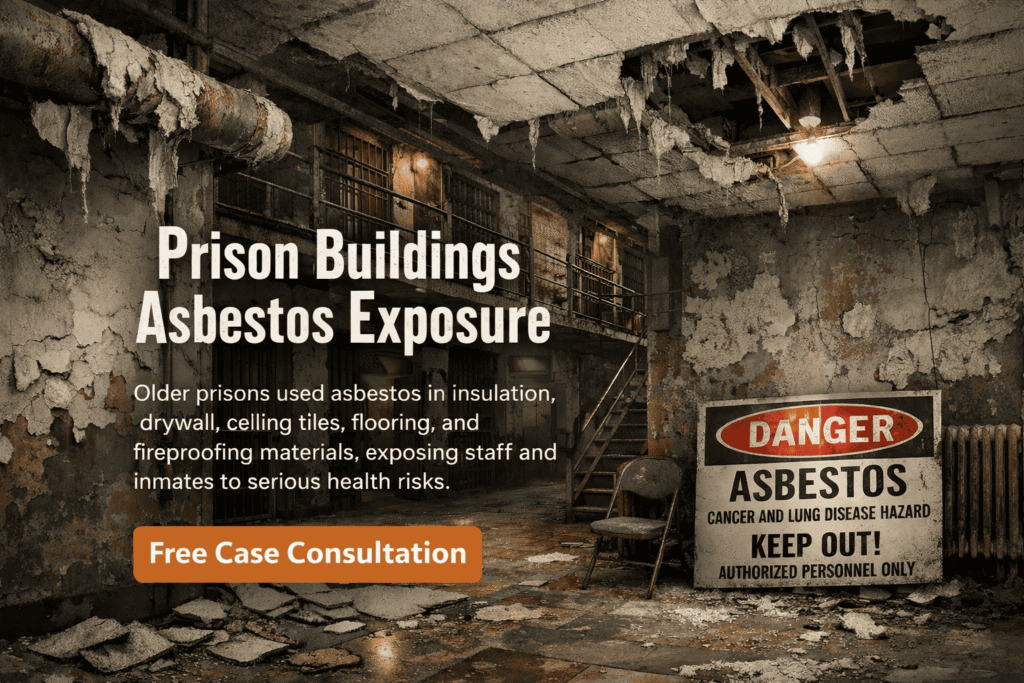
🏛️ Prison Buildings Asbestos Exposure
Older prison buildings exposed correctional officers, maintenance staff, contractors, incarcerated individuals, and visitors to asbestos for decades—especially in facilities constructed or expanded before 1980. During much of the 20th century, asbestos was a standard construction material in correctional institutions due to its fire resistance, durability, and low cost. As a result, asbestos was installed throughout prison structures, from foundational components to interior finishes.
As these buildings aged, asbestos-containing materials deteriorated, cracked, or were disturbed during routine operations, repairs, and renovations. Fibers became airborne inside enclosed housing units, corridors, offices, and common areas where people spent long periods of time. Many individuals connected to older prison buildings are now being diagnosed with asbestos-related cancers decades after their exposure occurred.
🔍 Why Asbestos Was Widely Used in Prison Buildings
Correctional facilities required materials that could withstand heavy use, resist fire, and last for decades with minimal maintenance.
🔥 Key reasons asbestos was used
-
Fire resistance in high-occupancy facilities
-
Durability under constant wear and tear
-
Sound dampening in housing units
-
Low construction and maintenance costs
Asbestos met institutional building standards long before its dangers were fully acknowledged.
🧱 Common Asbestos-Containing Materials in Prison Buildings
Asbestos was embedded throughout prison construction materials.
🏢 Structural & Interior Components
-
Wall insulation and drywall compounds
-
Plaster and joint materials
-
Fireproof coatings on beams and columns
🧱 Ceilings & Floors
-
Ceiling tiles and acoustic panels
-
Vinyl floor tiles and backing
-
Adhesives and mastics
🔥 Fireproofing & Safety Materials
-
Spray-applied fireproofing
-
Fire-rated wall boards
-
Door and access panel insulation
🌬️ Integrated Building Systems
-
Insulated duct chases
-
Utility corridors
-
Mechanical shafts
Many of these materials released asbestos fibers as they aged or were disturbed.
💨 How Asbestos Exposure Occurred in Prison Buildings
Exposure occurred during normal daily operations as well as maintenance activities.
🏚️ Material Deterioration
Aging insulation and fireproofing slowly released fibers over time.
🛠️ Routine Maintenance
Repairs to walls, ceilings, and floors disturbed asbestos materials.
🏗️ Renovations & Modifications
Upgrades released asbestos hidden behind finished surfaces.
🌬️ Air Circulation
Ventilation systems distributed fibers throughout buildings.
Because prisons are enclosed environments, fibers accumulated rather than dissipated.
👥 Individuals Most Commonly Exposed
Prison building asbestos exposure affected multiple populations.
👮 Correctional officers
-
Officers assigned to housing units and corridors
-
Staff working long shifts inside aging buildings
🧰 Maintenance & facilities staff
-
Workers repairing walls, ceilings, and floors
-
Custodial staff cleaning deteriorating materials
👤 Incarcerated individuals
-
Residents housed for extended periods
-
Individuals living near deteriorating asbestos materials
👷 Contractors
-
Renovation and repair crews
-
Construction and demolition workers
Long-term exposure was common due to prolonged occupancy.
⚠️ Health Risks Linked to Prison Building Asbestos Exposure
Medical research confirms that inhalation of asbestos fibers can cause serious cancers that often develop 20 to 50 years after exposure.
🩺 Asbestos-related cancers include
-
Mesothelioma (pleural or peritoneal)
-
Lung cancer caused by asbestos exposure
Symptoms may include chest pain, breathing difficulty, persistent coughing, fatigue, and unexplained weight loss. Because exposure often occurred gradually and unnoticed, diagnosis is frequently delayed.
🧠 Frequently Asked Questions
❓ Were all prison buildings affected?
Most facilities built before 1980 used asbestos materials.
❓ Could daily occupancy cause exposure?
Yes. Deterioration alone released fibers.
❓ Did renovations increase risk?
Yes. Hidden asbestos was often disturbed.
❓ Were inmates exposed long-term?
Yes. Extended housing increased cumulative exposure.
⚖️ Legal Options After Prison Building Asbestos Exposure
Individuals diagnosed with asbestos-related cancers may have legal options.
🛡️ Prison Asbestos Lawsuits
Claims may be filed against manufacturers of asbestos-containing construction materials—not correctional agencies. Compensation may include:
-
Medical expenses
-
Lost wages and reduced earning capacity
-
Pain and suffering
Many cases are resolved through settlements.
💰 Prison Asbestos Trust Fund Claims
Manufacturers that supplied asbestos construction materials later established trust funds following bankruptcy.
✔ Claims handled outside court
✔ Multiple trusts may apply
✔ Payments depend on diagnosis and exposure history
Trust fund claims are often combined with lawsuits.
👨👩👧 Prison Wrongful Death Claims
Families who lost loved ones to asbestos-related cancers linked to prison building exposure may pursue wrongful death claims. Compensation may include:
-
Funeral and burial expenses
-
Lost income and benefits
-
Loss of companionship and support
🧾 How an Asbestos Attorney Can Help
Asbestos attorneys assist by:
-
Investigating prison construction histories
-
Identifying asbestos-containing materials
-
Linking exposure to responsible manufacturers
-
Filing lawsuits and trust fund claims
-
Managing all legal deadlines
Most cases are handled on a contingency fee basis.
📞 Free Case Consultation
If you or a loved one lived or worked in an older prison building and were later diagnosed with an asbestos-related cancer, help may be available.
🟧 Free Case Consultation
📞 Call 800-291-0963 to speak with an experienced asbestos professional.
There is no obligation, and no fees unless compensation is recovered.
📌 Key Takeaways
-
🏛️ Older prison buildings widely used asbestos
-
💨 Exposure occurred through deterioration and repairs
-
⚠️ Asbestos exposure is linked to serious cancers decades later
-
⚖️ Legal options include lawsuits and trust fund claims
-
📞 Help is available through a free case consultation