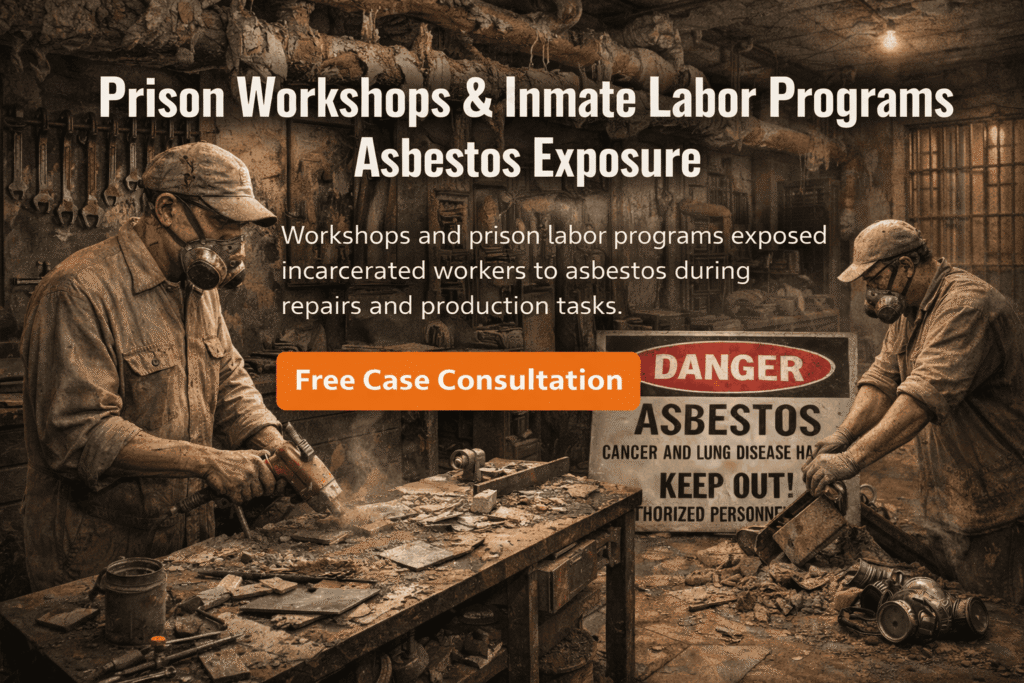
🛠️ Prison Workshops & Inmate Labor Programs Asbestos Exposure
Prison workshops and inmate labor programs exposed incarcerated individuals, correctional officers, supervisors, maintenance staff, and contractors to asbestos for decades—particularly in correctional facilities operating before 1980. Many prisons relied on inmate labor to reduce operating costs and maintain aging infrastructure. These programs placed incarcerated workers directly inside workshops, maintenance areas, and production spaces where asbestos-containing materials were present in equipment, building materials, and mechanical systems.
Asbestos was widely used in older prison workshops because of its resistance to heat, friction, and fire. Inmate labor programs frequently involved repairing machinery, refurbishing prison buildings, maintaining utilities, and producing goods using older equipment. Cutting insulation, sanding surfaces, repairing motors, handling debris, and dismantling components released asbestos fibers into enclosed workspaces. Because ventilation was often limited and protective equipment was rarely provided, exposure levels were significant. Many individuals connected to prison labor programs are now being diagnosed with asbestos-related cancers decades after their exposure.
🔍 Why Asbestos Was Present in Prison Workshops
Prison workshops were designed to support industrial-style labor inside institutional buildings.
🔥 Key reasons asbestos was used
-
Heat resistance in machinery and tools
-
Fireproofing of workshop walls and ceilings
-
Insulation for motors, furnaces, and piping
-
Durability in high-use labor environments
Asbestos was commonly embedded in both the equipment and the structures housing inmate labor programs.
🧱 Common Asbestos-Containing Materials in Prison Labor Programs
Asbestos was embedded throughout prison workshop environments.
🏭 Machinery & Equipment
-
Insulated motors and housings
-
Heat-resistant gaskets and seals
-
Friction components in presses and tools
🧱 Building & Structural Materials
-
Asbestos cement boards and wall panels
-
Fireproof coatings on beams and ceilings
-
Ceiling tiles and wall insulation
🔧 Utilities & Mechanical Systems
-
Pipe insulation and valve packing
-
Electrical wiring insulation
-
HVAC duct insulation in workshop areas
🧹 Maintenance & Repair Materials
-
Replacement parts containing asbestos
-
Grinding and sanding activities disturbing asbestos surfaces
As these materials deteriorated or were disturbed, asbestos fibers became airborne.
💨 How Asbestos Exposure Occurred in Prison Workshops
Exposure occurred during routine inmate labor activities.
🛠️ Equipment Repair & Rebuilding
Fixing machinery disturbed asbestos insulation and components.
🏗️ Facility Maintenance Tasks
Inmate labor was often used for repairs and renovations.
🧹 Cleanup & Debris Handling
Sweeping and handling waste re-aerosolized asbestos fibers.
🌬️ Poor Ventilation
Confined workshops allowed fibers to accumulate in the air.
Because labor programs operated daily, exposure was repeated and cumulative.
👥 Individuals Most Commonly Exposed
Workshop-related asbestos exposure affected multiple groups.
👤 Incarcerated individuals
-
Inmate laborers assigned to workshops
-
Vocational training participants
-
Maintenance and production crews
👮 Correctional officers
-
Officers supervising inmate labor
-
Staff assigned to workshop security
🧰 Maintenance & facilities staff
-
Workers supporting inmate labor tasks
-
Electricians and mechanics
👷 Contractors
-
Contractors overseeing or assisting labor projects
Extended participation in labor programs significantly increased exposure risk.
⚠️ Health Risks Linked to Prison Workshop Asbestos Exposure
Medical research confirms that inhalation of asbestos fibers can cause serious cancers that often develop 20 to 50 years after exposure.
🩺 Asbestos-related cancers include
-
Mesothelioma (pleural or peritoneal)
-
Lung cancer caused by asbestos exposure
Symptoms may include chest pain, breathing difficulty, persistent coughing, fatigue, and unexplained weight loss. Because inmate labor exposure was rarely documented or disclosed, diagnosis is often delayed.
🧠 Frequently Asked Questions
❓ Were inmate labor programs regulated for asbestos safety?
Historically, no. Protective standards were minimal or absent.
❓ Could incarcerated individuals pursue claims?
Yes. Exposure during incarceration may still support legal claims.
❓ Did staff experience secondary exposure?
Yes. Fibers spread from workshops into adjacent areas.
❓ Does length of participation matter?
Yes. Longer labor assignments increased cumulative exposure.
⚖️ Legal Options After Prison Workshop Asbestos Exposure
Individuals diagnosed with asbestos-related cancers may have legal options.
🛡️ Prison Asbestos Lawsuits
Claims may be filed against manufacturers of asbestos-containing machinery, tools, and building materials—not correctional agencies. Compensation may include:
-
Medical expenses
-
Lost wages and reduced earning capacity
-
Pain and suffering
Many cases resolve through settlements.
💰 Prison Asbestos Trust Fund Claims
Manufacturers that supplied asbestos materials used in prison workshops established trust funds following bankruptcy.
✔ Claims handled outside court
✔ Multiple trust funds may apply
✔ Payments depend on diagnosis and exposure history
Trust fund claims are often combined with lawsuits.
👨👩👧 Prison Wrongful Death Claims
Families who lost loved ones to asbestos-related cancers linked to prison labor exposure may pursue wrongful death claims. Compensation may include:
-
Funeral and burial expenses
-
Lost income and benefits
-
Loss of companionship and support
🧾 How an Asbestos Attorney Can Help
Asbestos attorneys assist by:
-
Investigating prison labor program histories
-
Identifying asbestos-containing materials and equipment
-
Linking exposure to responsible manufacturers
-
Filing lawsuits and trust fund claims
-
Managing all legal deadlines
Most cases are handled on a contingency fee basis.
📞 Free Case Consultation
If you or a loved one participated in prison workshops or inmate labor programs and were later diagnosed with an asbestos-related cancer, help may be available.
🟧 Free Case Consultation
📞 Call 800-291-0963 to speak with an experienced asbestos professional.
There is no obligation, and no fees unless compensation is recovered.
📌 Key Takeaways
-
🛠️ Prison workshops commonly used asbestos materials
-
💨 Exposure occurred during repairs, production, and cleanup
-
⚠️ Asbestos exposure is linked to serious cancers decades later
-
⚖️ Legal options include lawsuits and trust fund claims
-
📞 Help is available through a free case consultation