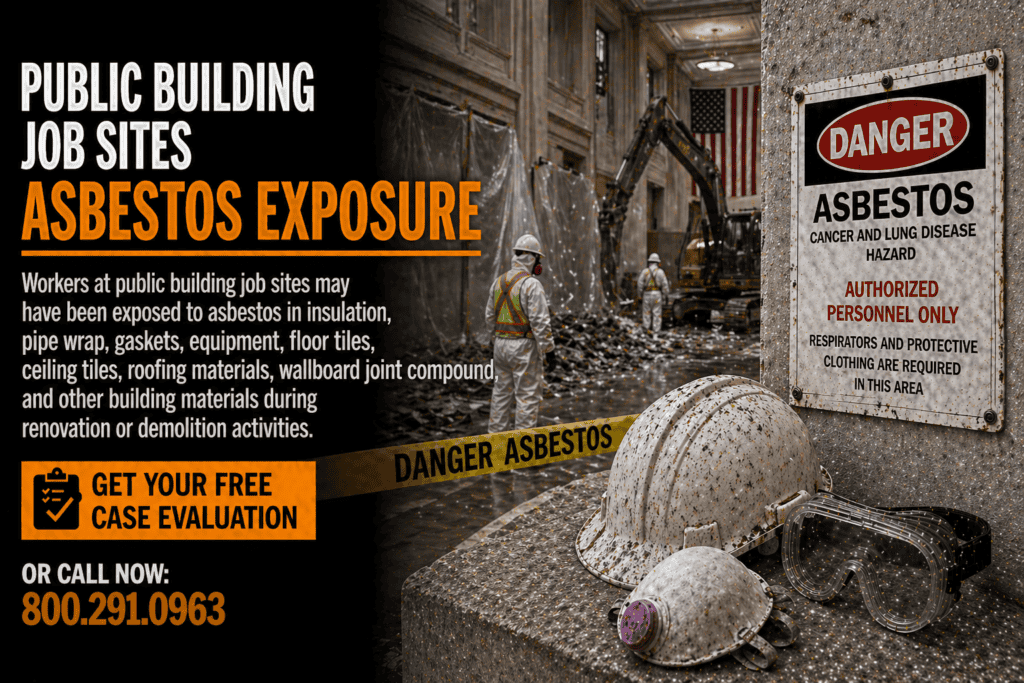
🏛️ Public Buildings Asbestos Exposure
For decades, public buildings across the United States—such as courthouses, post offices, libraries, and town halls—were constructed using asbestos-containing materials. Asbestos was prized for its durability, fire resistance, and insulation properties, making it a common choice in flooring, ceiling tiles, pipe insulation, and wall boards.
Unfortunately, repairs and renovations in these buildings often disturbed aging asbestos, releasing microscopic fibers into the air. Government maintenance crews, contract workers, and public visitors were all at risk of inhaling these fibers, sometimes without warning or protection.
🏛 Public Buildings Asbestos Exposure – What You’ll Learn From This Page:
🏢 Schools, courthouses, libraries, and municipal offices built before 1980 often contained asbestos insulation, flooring, ceiling tiles, and pipe coverings.
🛠️ Maintenance workers and contractors disturbed asbestos during renovations, HVAC repairs, and pipe replacements—releasing dangerous fibers into the air.
🧹 Janitors and custodial staff were exposed during cleaning, stripping waxed asbestos tile, or sweeping dust in contaminated zones.
👨👩👧 Visitors, office staff, and children faced secondary exposure, especially when materials were damaged or improperly handled during repairs.
💰 Individuals diagnosed with mesothelioma or asbestos disease after working or visiting public buildings may qualify for compensation from asbestos trust funds or lawsuits.
Estimated Number of People Exposed to Asbestos in U.S. Public Buildings
Asbestos remained in many public buildings long after its use was banned.
| Exposure Category | Estimated Number of People Exposed |
|---|---|
| Occupational Exposure (custodians, maintenance, renovation workers) | Over 1,200,000 workers exposed |
| Secondary Exposure (office staff, educators, government employees) | Estimated 400,000 exposed |
| Environmental Exposure (students, visitors, building occupants) | Around 900,000 people exposed |
👉 Total Estimated Exposure:
Over 2.5 million people in the U.S. were exposed to asbestos in public buildings.
📄 Facts About Public Building Exposure
• Thousands of municipal and federal properties built before 1980 contained asbestos materials.
• Asbestos Exposure: High during maintenance, plumbing, HVAC, and repair work.
• Asbestos-Related Disease Risk: Elevated for janitors, maintenance staff, and contractors.
• Federal reports confirm exposure risks in older public buildings.
• Similar Occupations: Custodians, electricians, HVAC workers, inspectors, general contractors
🏢 History of Asbestos Use in Public Buildings
Public buildings built from the 1930s through the early 1980s often included asbestos-based materials in their construction. These materials lined HVAC systems, walls, ceilings, and floors. Many buildings have not undergone full abatement.
When these materials deteriorated or were disturbed during renovations, asbestos fibers were released into the air. Workers frequently lacked personal protective equipment and were unaware of the health dangers.
⚠️ Mesothelioma Risk in Government Facilities
Medical studies and occupational reports show heightened asbestos-related illness among public building maintenance personnel:
• CDC and EPA records highlight recurring asbestos exposure in schools, courthouses, and federal buildings.
• Maintenance staff and tradespeople frequently worked around disturbed asbestos.
• Symptoms from exposure may take 20–50 years to develop.
Many workers and building occupants are only now discovering their illnesses stem from asbestos exposure in public facilities decades ago.
🔧 Asbestos Materials in Public Buildings
❄️ Pipe & Boiler Insulation
Lined mechanical rooms and crawl spaces; disturbed during repairs or replacement procedures.
🛋 Vinyl Floor Tiles
Contained asbestos filler; breaking or cutting tiles released airborne fibers.
🏛 Drop Ceilings
Included asbestos-laced panels; impacted during removal, renovation, or reinstallation work.
⚡ Electrical Insulation Boards
Backed with asbestos; disturbed during upgrades, repairs, or access to panels.
🧰 Drywall & Joint Compounds
Used asbestos materials that released dust during sanding, demo, or retrofitting.
🧼 Fireproof Coatings
Sprayed on steel beams and ceilings; crumbled over time with vibration exposure.
🛠️ HVAC Linings
Insulated ducts and blowers; exposed during maintenance, inspection, and replacement procedures.
🚨 Roofing Felt & Adhesives
Asbestos used in layers; degraded with time, heat, or construction work.
🏠 Wall Insulation Boards
Common in basements and utility areas; disturbed during remodels or upgrades.
💨 Cement Panels & Siding
Exterior asbestos cement boards cracked and released dust during material removal.
🛠️ How Workers Were Exposed in Public Buildings
🛋 Janitors & Custodians
Swept, mopped, or vacuumed floors and areas where asbestos dust had settled extensively.
⚡ Electricians
Drilled through asbestos-containing panels and insulation during rewiring and installations.
🌡 HVAC Technicians
Serviced ductwork and units lined with asbestos; exposure occurred during component access.
🚨 General Contractors
Exposed while cutting, replacing, or remodeling older structures containing asbestos materials.
🏠 Maintenance Crews
Handled routine building upkeep that disturbed asbestos materials frequently and severely.
🪖 Painters & Plasterers
Scraped and sanded walls and ceilings containing asbestos-laced compounds and dust.
💼 Inspectors & Engineers
Assessed facilities while walking through high-risk areas during evaluation visits.
🚩 Plumbers
Repaired piping wrapped in asbestos insulation during maintenance or emergency response.
🛂 Elevator Mechanics
Worked near asbestos-lined control rooms and shafts requiring frequent access.
🏛️ Public Buildings Where Asbestos Exposure Occurred
📚 Libraries
Insulation, ceiling tiles, and floor materials often contained asbestos. Renovations or HVAC servicing released fibers into poorly ventilated reading rooms, archives, and public hallways.
🏫 Schools
Classroom ceilings, pipe insulation, and floor tiles used asbestos. Custodians and teachers were exposed during maintenance, remodeling, and classroom equipment installation.
🏢 Town Halls
Original construction included asbestos insulation in walls, attics, and basements. Workers faced exposure during routine electrical, HVAC, and structural repair tasks.
🏣 Post Offices
Many post offices built before 1980 contained asbestos-lined ceilings and ductwork. Exposure occurred during upgrades, roof repairs, or mechanical system servicing.
🏥 County Hospitals
Mechanical rooms, operating suites, and HVAC ducts featured asbestos insulation. Maintenance workers were often exposed during emergency repairs or system retrofits.
⚖️ Courthouses
Asbestos was used in insulation and fireproofing. Workers and staff were exposed during courtroom renovations, ceiling replacements, and electrical system overhauls.
🎓 University Buildings
Dormitories, labs, and auditoriums contained asbestos in flooring and pipes. Exposure happened during construction upgrades, plumbing replacements, or lab equipment installation.
🏘️ Housing Authority Offices
Included asbestos in heating systems and ceiling materials. Crews were exposed during repairs, remodeling public housing, or managing tenant complaints.
🕍 City Auditoriums
Stage lighting systems and wall insulation often used asbestos. Technicians and contractors faced exposure while upgrading sound systems or repairing backstage areas.
🚔 Police Stations
Ceiling tiles, boiler rooms, and fireproofing materials used asbestos. Exposure occurred during HVAC servicing, jail cell upgrades, or evidence room remodels.
🚒 Fire Departments
Asbestos-lined boiler rooms and garages exposed firefighters and maintenance staff during station upgrades, vehicle bay repairs, and heating system checks.
🕌 Community Centers
Asbestos was in wall panels, duct linings, and kitchens. Staff and volunteers were exposed during equipment changes or janitorial cleanup.
🏛️ Government Archives
Asbestos was used in climate control systems and insulation. Workers encountered exposure during file room expansion and retrofitting air circulation systems.
🏬 Civic Centers
Large-scale HVAC and lighting systems contained asbestos. Events staff and contractors were exposed while prepping for functions or upgrading infrastructure.
🕍 Museums
Older exhibits, insulation behind display walls, and storage areas used asbestos. Staff and curators faced exposure during exhibit construction or storage moves.
🖥️ Data Centers
Many government computer centers had asbestos in wiring insulation and HVAC. Exposure occurred during rewiring projects and ventilation repairs.
📠 Government Print Shops
Printing machines were housed near asbestos insulation. Workers faced exposure while repairing presses or updating electrical components in confined spaces.
🏫 School District Offices
Located in older buildings with asbestos insulation. Administrative and IT staff were exposed during remodeling or ceiling maintenance.
🏛️ Capitol Buildings
Historic buildings used asbestos in fireproofing and mechanical rooms. Workers and visitors alike were at risk during ongoing preservation work.
🖼️ Cultural Heritage Centers
Often housed in historic structures. Exposure risks emerged during restoration of building materials or HVAC duct work.
🏗️ Public Works Facilities
Used asbestos in mechanical shops and breakrooms. Exposure occurred during plumbing or electrical system maintenance.
🧑⚖️ Probation & Parole Offices
Older buildings included asbestos insulation and tiling. Maintenance staff encountered fibers during restroom repairs and lighting upgrades.
🏦 Treasury Buildings
Electrical insulation and ceiling tiles often contained asbestos. Janitors and electricians faced exposure during renovations and energy efficiency upgrades.
🪖 Veteran Services Offices
Asbestos present in walls, boiler rooms, and file storage areas. Workers and visitors risked inhalation during facility improvement projects.
🗃️ Social Security Offices
Many older branch offices had asbestos in ceilings and HVAC systems. Contractors and federal employees were exposed during regular maintenance.
❓ Common Questions About Public Building Asbestos Claims
Can I file a claim if I worked in a courthouse or federal building?
Yes. Any job-related exposure in a public building qualifies for legal action.
Do I need to identify the specific materials?
No. Attorneys use records and building plans to confirm asbestos sources.
What if exposure happened decades ago?
Most states allow claims within 1–3 years after diagnosis.
Can families file if the worker has passed?
Yes. Surviving relatives can file wrongful death claims.
What kind of compensation is available?
Claimants often receive trust fund payments or legal settlements.
Do I pay any legal fees up front?
No. Most mesothelioma attorneys work on contingency.
⚖️ How a Mesothelioma Lawyer Can Help
An experienced asbestos attorney can assist by:
• Gathering work and building records to prove exposure
• Filing claims against asbestos manufacturers or trust funds
• Managing all deadlines and paperwork
• Helping families pursue compensation for loss or illness
• Working with no upfront fees or hourly rates
📞 Free Legal Help for Public Building Workers
If you or a loved one worked in a public building and developed an asbestos illness, legal help is available.
Call Now: 800.291.0963
• No cost to start your claim
• Only pay if we win
• Support for workers and their families
• Fast legal review and claim filing
Or request assistance online 24/7.