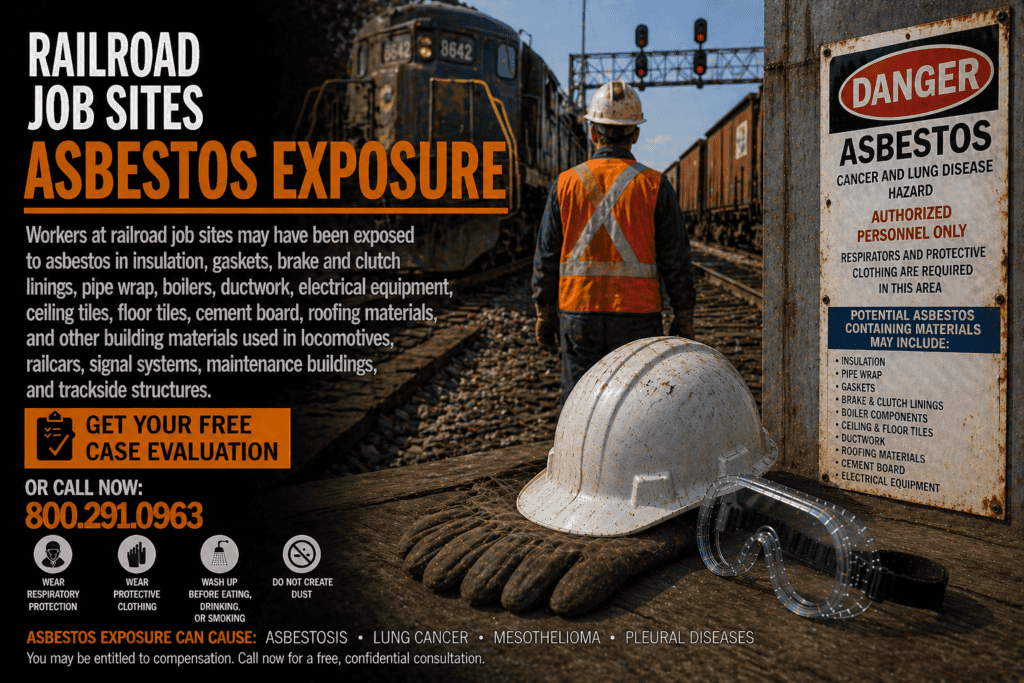
🚉 Railroad Stations Asbestos Exposure
Many railroad stations built before the 1980s contained asbestos throughout their structures—used in insulation, wallboard, ceiling panels, and floor tiles. This durable, fire-resistant material was common in high-traffic public buildings. However, its presence created major health risks. During daily operations, maintenance, or remodeling, asbestos fibers were released into the air—exposing station workers, contractors, and even passengers.
Decades later, those exposed may face serious diseases, including:
• Mesothelioma
• Asbestos-related lung cancer
• Asbestosis
Read More Articles About Railroad Asbestos Exposure
🚉 Railroad Station Job Sites – What You’ll Learn From This Page:
🚂 Train stations built before 1980 used asbestos in ceiling tiles, floor coverings, pipe insulation, and signal equipment.
🛠️ Renovation crews, maintenance staff, and custodians disturbed fibers during facility updates or repair work.
👨🔧 Conductors, ticket clerks, and commuters were exposed during daily operations and building deterioration.
🌫️ Dust was released during tile replacement, boiler repairs, or HVAC overhauls in high-traffic areas.
💰 Railroad workers with asbestos-related illnesses may qualify for legal compensation or asbestos trust fund payouts.
Estimated Number of People Exposed to Asbestos in U.S. Train Stations
| Exposure Category | Estimated Number of People Exposed |
|---|---|
| Occupational Exposure (maintenance, station staff, trades) | Around 600,000 workers exposed |
| Secondary Exposure (passengers, cleaning crews, vendors) | Estimated 400,000 exposed |
| Environmental Exposure (waiting rooms, platforms, offices) | Around 500,000 people exposed |
👉 Total Estimated Exposure:
Over 1.5 million people were exposed at railroad station job sites.
📊 Facts About Asbestos in Railroad Stations
• Most major U.S. train stations built before 1980 used asbestos in insulation, plaster, and flooring.
• Asbestos Exposure: High during routine maintenance, flooring replacement, and HVAC repair.
• Asbestos-Related Disease Risk: Elevated for custodians, tradespeople, and contractors.
• Travelers and staff were unknowingly exposed in enclosed waiting areas or mechanical rooms.
• Similar Occupations: Electricians, janitors, HVAC techs, maintenance crews, security guards
🏗️ History of Asbestos Use in Train Station Construction
To ensure fire safety and long-term durability, construction crews used asbestos-containing materials throughout railroad stations—especially in walls, floors, and mechanical systems. These materials degraded with age. Any renovation, repair, or system upgrade often disturbed friable asbestos, releasing toxic fibers into the air. Poor ventilation in older stations made the danger even worse.
⚠️ Mesothelioma Risk in Railroad Facilities
Exposure risks included:
• Repairing or replacing asbestos floor tiles in waiting rooms
• Accessing ductwork and ceiling panels with asbestos backing
• Servicing boilers, steam lines, and heating systems
• Cleaning or sweeping areas where degraded asbestos dust had settled
• Renovating walls, signage, and ticket counters made with asbestos adhesives
• Electrical work in walls or ceilings lined with asbestos insulation
Even short-term work in these areas could lead to long-term health consequences.
🧪 Asbestos Materials Found in Railroad Stations
🧱 Floor Tiles and Adhesives
Installed in waiting rooms, restrooms, and ticket areas; sanding or removal released fibers.
💨 HVAC Duct and Pipe Insulation
Wrapped around heating and cooling systems; disturbed during repairs.
🪵 Ceiling Panels
Used to insulate and reduce noise; broke down over time or during access work.
🔥 Boiler and Furnace Wraps
Contained asbestos to manage high heat; released fibers during maintenance.
🧯 Spray-On Fireproofing
Coated beams and walls in older terminals; flaked off as it aged.
🧰 Wallboard and Joint Compounds
Used in ticket counters, bathrooms, and back offices; released dust when cut or drilled.
🚪 Door and Window Caulking
Asbestos-containing sealants degraded or were disturbed during retrofits.
🧪 Electrical Insulation
Panels and wiring lined with asbestos; exposure occurred during upgrades or rewiring.
👷 Who Was Exposed in Railroad Stations
🧹 Custodians and Janitors
Swept or mopped asbestos tiles and cleaned around deteriorating insulation.
🛠️ Maintenance Workers
Repaired mechanical systems lined with asbestos insulation.
🔥 Boiler Technicians
Serviced steam heat units in station basements or sublevels.
🔌 Electricians
Worked in panels and ceilings lined with asbestos insulation or tiles.
💨 HVAC Technicians
Maintained air systems wrapped in asbestos materials.
🧰 Contractors and Remodelers
Removed or replaced asbestos-containing walls, ceilings, or flooring.
👮 Security and Staff
Spent long hours in contaminated stations without protective gear.
🚶 Commuters and Travelers
Exposed indirectly in confined areas where asbestos dust settled.
🏢 Types of Railroad Facilities With Asbestos Risk
🏛 Historic Terminals
Large hubs used asbestos throughout; exposure occurred during retrofits and cleaning.
🏚 Small-Town Stations
Often built with asbestos panels and tile; risk rose during updates or storm damage repairs.
🚉 Subway and Elevated Platforms
Asbestos found in support structures, signal boxes, and equipment sheds.
🔧 Maintenance Buildings
Hosted boilers and compressors lined with asbestos wrap; high exposure for staff.
🪟 Ticket Offices and Lounges
Used asbestos ceiling and wall panels; disturbed during wiring or lighting work.
🌉 Underground Station Facilities
Poor ventilation led to prolonged fiber suspension after insulation repairs.
❓ Common Questions About Railroad Station Asbestos Exposure
Can train station workers file a claim?
Yes — exposure in station environments qualifies for legal compensation.
What if I was a contractor or part-time worker?
You may still be eligible if exposure led to mesothelioma or another illness.
Do I need records of the exact asbestos products?
No — building history and job roles help determine probable exposure.
Can travelers or bystanders develop asbestos illness?
Yes — though rare, long-term exposure in enclosed spaces can affect non-workers.
Can family members file a claim if a worker passed away?
Yes — wrongful death claims or asbestos trust fund claims are available to survivors.
⚖️ How a Mesothelioma Attorney Can Help
A trusted asbestos attorney can:
• Investigate your job duties and station assignments
• Identify asbestos use in station construction
• File lawsuits or trust claims
• Support family members filing on behalf of a loved one
• Charge no fee unless compensation is secured
📞 Free Legal Help for Railroad Station Workers and Families
If you or a loved one worked in a railroad station and now face a diagnosis of mesothelioma or another asbestos disease, legal help is available.
Call Now: 800.291.0963
• No upfront cost
• No fee unless we win
• Full exposure investigation
• Help for retirees, part-time workers, and families
Or request help online 24/7