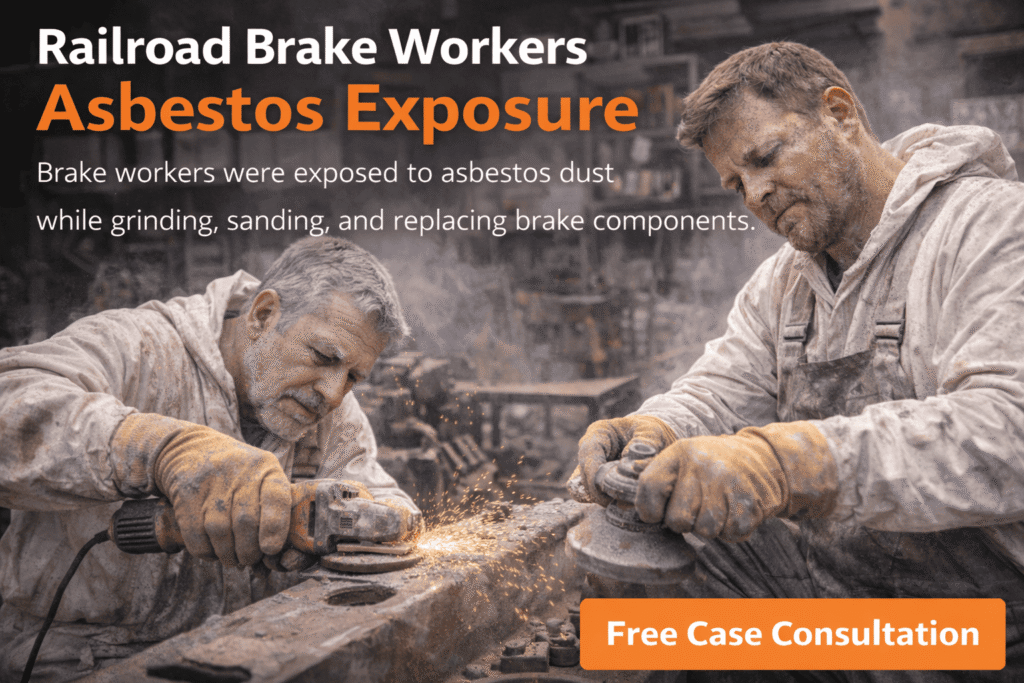
⚠️ Railroad Brake Workers Asbestos Exposure
Brake workers faced intense asbestos exposure from grinding, fitting, and replacing asbestos brake components daily.
🚆 Overview of Railroad Brake Workers Asbestos Exposure
Railroad brake workers experienced some of the most concentrated asbestos exposure in the railroad industry. For decades, asbestos was a primary ingredient in brake shoes, pads, and linings because of its ability to withstand extreme heat and friction. Brake workers were responsible for inspecting, grinding, fitting, removing, and replacing these components on locomotives and railcars.
Exposure occurred whenever brake components were handled. Grinding and sanding brake shoes released dense clouds of asbestos dust, often in enclosed brake shops, roundhouses, and rail yards. Sweeping floors and cleaning brake assemblies further disturbed settled fibers, allowing asbestos to remain airborne for extended periods.
Because brake servicing was frequent and repetitive, workers inhaled asbestos fibers daily over long careers. Many railroad brake workers were later diagnosed with mesothelioma, asbestos-related lung cancer, or asbestosis decades after exposure.
🔥 Why Asbestos Was Used in Railroad Brake Systems
Railroad braking systems operate under intense mechanical stress. Asbestos was widely used because it provided:
-
High heat resistance during heavy braking
-
Durable friction control for long service life
-
Fire resistance around wheels and axles
-
Reduced brake wear under extreme loads
-
Cost-effective mass production
Even after health risks were known, asbestos brake components remained in use for decades, continuing exposure into the late 20th century.
🧱 Where Asbestos Was Found in Brake Workers’ Jobs
Asbestos-containing materials were central to brake work.
🔧 Brake Shoes, Pads & Linings
Asbestos was mixed directly into brake materials, releasing fibers during wear and removal.
🔩 Wheel Assemblies & Brake Drums
Dust accumulated around wheels, axles, and brake housings where workers performed repairs.
🧰 Brake Shops & Maintenance Areas
Indoor brake shops trapped asbestos dust from grinding and sanding operations.
🛡️ Locomotives & Railcars
Brake components on engines and cars released asbestos during routine servicing.
🧱 Yard Surfaces & Cleanup Areas
Asbestos dust settled on floors, tools, and clothing, creating ongoing exposure.
🫁 How Railroad Brake Workers Were Exposed
Exposure occurred during nearly every brake-related task.
🛠️ Brake Removal & Installation
Removing worn brakes and installing new ones released asbestos directly into breathing zones.
🧼 Grinding, Sanding & Fitting
Grinding asbestos brake materials produced extremely high airborne fiber levels.
🏗️ Inspection & Maintenance
Routine inspections disturbed accumulated brake dust on components and surfaces.
🏠 Secondary (Take-Home) Exposure
Asbestos fibers clung to clothing and boots, exposing family members at home.
🧪 Diseases Linked to Railroad Brake Worker Asbestos Exposure
Asbestos-related diseases often appear 20–50 years after exposure.
💀 Mesothelioma
A rare, aggressive cancer caused almost exclusively by asbestos exposure. Brake workers face elevated risk due to heavy dust exposure.
🫁 Lung Cancer
Long-term asbestos inhalation significantly increases lung cancer risk.
📉 Asbestosis
A chronic lung disease caused by scarring from inhaled asbestos fibers, leading to progressive breathing impairment.
👷 Why Railroad Brake Workers Face Extreme Risk
Risk factors include:
-
Direct handling of asbestos brake materials
-
Frequent grinding and sanding tasks
-
Long shifts in enclosed brake shops
-
Daily exposure over many years
-
Lack of respiratory protection or warnings
Brake workers often experienced higher exposure levels than many other railroad jobs.
⏱️ When Railroad Brake Worker Asbestos Exposure Was Most Common
Exposure peaked from the 1920s through the late 1970s, especially during periods of heavy rail traffic and steam-era operations.
Many asbestos brake components remained in service into the 1980s and 1990s, continuing exposure long after new asbestos use declined.
⚖️ Railroad Brake Workers Asbestos Lawsuits & Compensation
Railroad brake worker asbestos exposure has resulted in thousands of lawsuits and asbestos trust fund claims nationwide. Claims typically target manufacturers of asbestos brake shoes, pads, and linings—not railroad employers directly.
Depending on employment status, claims may be pursued under:
-
Federal Employers’ Liability Act (FELA)
-
Asbestos personal injury lawsuits
-
Asbestos trust fund claims
-
Wrongful death lawsuits
Brake workers and families may qualify for:
-
Personal injury asbestos lawsuits
-
Asbestos trust fund compensation
-
Wrongful death claims
🧑⚖️ Legal & Claims Options for Railroad Brake Workers
Railroad Brake Worker Mesothelioma Lawsuit
Workers diagnosed with mesothelioma may pursue claims against asbestos brake manufacturers and, in some cases, under FELA.
Railroad Brake Worker Asbestos Trust Fund Claims
Many brake manufacturers established trust funds that continue paying claims today.
Railroad Brake Worker Wrongful Death Lawsuits
Families may seek compensation after fatal asbestos-related illness.
Railroad Brake Worker Statute of Limitations
Strict filing deadlines apply based on diagnosis date, death date, and state or federal law. Early legal review is critical.
Railroad Brake Worker Settlement & Verdict History
Brake-related asbestos cases have produced substantial settlements and jury verdicts nationwide.
📞 Legal Help for Railroad Brake Workers Asbestos Exposure
If you or a loved one worked as a railroad brake worker and were later diagnosed with mesothelioma, asbestos-related lung cancer, or asbestosis, legal help may be available.
📞 Call 800-291-0963 for a free case review
✔ No upfront costs
✔ Nationwide representation
✔ Full brake worker exposure investigation
✔ Assistance with lawsuits and asbestos trust fund claims