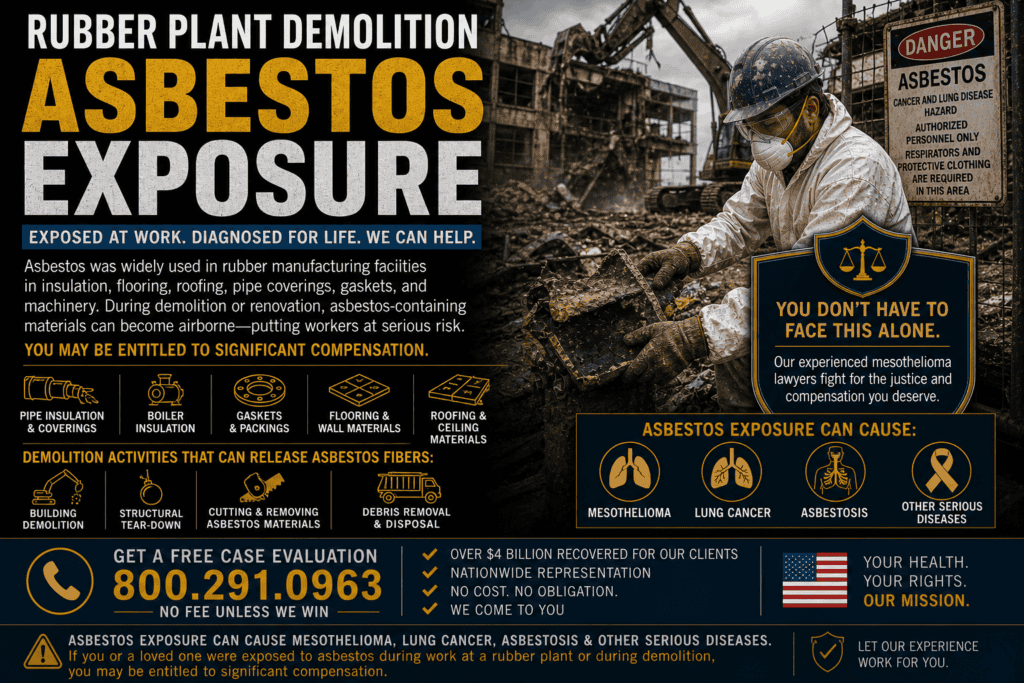
🧨 Rubber Plant Demolition Asbestos Exposure
Demolition of rubber manufacturing buildings, equipment, and infrastructure released massive amounts of asbestos dust into the air.
Rubber plant demolition created some of the most extreme asbestos exposure conditions faced by industrial workers. Facilities built during peak asbestos-use decades contained asbestos throughout nearly every structure and system—insulation, fireproofing, flooring, piping, boilers, electrical rooms, and production equipment. When these plants were partially dismantled, shut down, or completely demolished, decades of asbestos-containing materials were suddenly disturbed all at once.
Unlike routine maintenance or renovations, demolition involved mechanical destruction—cutting steel, crushing concrete, tearing out insulated equipment, and collapsing structures. These actions pulverized asbestos materials, releasing dense clouds of airborne fibers that spread across demolition sites and into surrounding areas.
🧱 Why Rubber Plant Demolition Released Extreme Asbestos Levels
Rubber plants were asbestos-intensive environments. Demolition released extreme fiber levels because:
-
🧱 Asbestos was embedded throughout entire buildings
-
🔥 High-heat systems used thick asbestos insulation
-
⚙️ Production equipment contained asbestos components
-
🚧 Mechanical demolition shattered asbestos materials
-
🌬️ Open-air demolition allowed fibers to travel long distances
Even facilities that had been idle for years still contained intact asbestos until demolition disturbed it.
🧪 Common Asbestos Sources Disturbed During Rubber Plant Demolition
Demolition crews and nearby workers were exposed to asbestos from:
🏭 Production Buildings & Equipment
-
Vulcanizing presses and curing ovens
-
Mixers, mills, and calenders
-
Conveyor systems and drive housings
🔥 Boilers, Powerhouses & Utility Systems
-
Boiler insulation and refractory
-
Steam piping and valve packing
-
Turbines, pumps, and generators
🧱 Structural & Architectural Materials
-
Sprayed-on fireproofing
-
Floor tiles, ceiling panels, and adhesives
-
Roofing materials and siding
⚡ Electrical & Control Areas
-
Panel liners and switchgear insulation
-
Fireproofed electrical rooms
-
Conduit insulation
When crushed or dismantled, these materials released heavy asbestos dust clouds.
⚠️ How Asbestos Exposure Occurred During Demolition
Asbestos exposure commonly occurred during:
-
Mechanical demolition of buildings
-
Torch cutting insulated steel beams
-
Crushing concrete and fireproofed materials
-
Removing and loading insulated machinery
-
Transporting debris to disposal sites
-
Site cleanup and grading after demolition
Because demolition sites were often open-air, asbestos fibers spread beyond the immediate work zone—exposing workers, truck drivers, and nearby personnel.
🧑🏭 Workers Most at Risk During Rubber Plant Demolition
🧨 Demolition Crews
Workers dismantling structures experienced the highest exposure.
🚧 Heavy Equipment Operators
Operators inhaled fibers released during crushing and material handling.
🛠️ Scrap & Salvage Workers
Workers removing reusable materials disturbed asbestos during dismantling.
🧹 Cleanup & Hauling Workers
Workers loading and transporting debris were exposed to airborne asbestos dust.
🧬 Health Risks Linked to Demolition-Related Asbestos Exposure
High-intensity asbestos exposure during rubber plant demolition has been linked to severe and often fatal diseases, including:
🧠 Mesothelioma
A rare and aggressive cancer affecting the lining of the lungs or abdomen, almost exclusively caused by asbestos exposure.
🫁 Asbestosis
A chronic lung disease caused by heavy asbestos scarring, leading to progressive respiratory failure.
🫁 Lung Cancer
Extended asbestos exposure significantly increases lung cancer risk, particularly after high-dose exposure.
Because asbestos-related diseases have latency periods of 20–50 years, many demolition workers are diagnosed long after exposure occurred.
📜 Legal & Safety Responsibilities During Demolition
Plant owners and demolition contractors were required to:
-
Conduct asbestos surveys before demolition
-
Remove or contain asbestos materials
-
Protect workers and surrounding communities
-
Follow regulated demolition and abatement procedures
Despite these requirements, many demolitions proceeded without full asbestos removal, exposing workers and nearby residents.
❓ Frequently Asked Questions (FAQs)
1️⃣ Is rubber plant demolition more dangerous than renovation?
Yes. Demolition releases far greater amounts of asbestos dust.
2️⃣ Can asbestos exposure affect nearby workers or residents?
Yes. Airborne fibers can travel significant distances.
3️⃣ Were demolition workers warned about asbestos risks?
Often no. Warnings and protections were frequently inadequate.
4️⃣ Can short-term demolition exposure cause illness?
Yes. High-dose exposure can still lead to asbestos-related disease.
5️⃣ Can illness develop decades later?
Yes. Asbestos-related diseases often appear many years after exposure.
⚖️ How a Lawyer Can Help Get Compensation
Workers exposed to asbestos during rubber plant demolition may have legal options. An experienced asbestos lawyer can help by:
-
Identifying demolition projects and job sites linked to exposure
-
Tracing asbestos-containing materials released during demolition
-
Filing claims against asbestos manufacturers and responsible contractors
-
Pursuing compensation for medical expenses, lost income, and suffering
-
Assisting families with wrongful death claims
Because demolition exposure is often severe and well-documented, legal claims may be substantial.
📞 Free Case Evaluation – Get Help Today
If you or a loved one worked on rubber plant demolition projects and later developed mesothelioma or another asbestos-related illness, help is available.
📞 Call Now for a FREE Case Evaluation: 800-291-0963
There is no obligation, and compensation may be available.
📌 Key Takeaways
-
Rubber plant demolition released massive asbestos dust
-
Buildings and equipment contained heavy asbestos
-
Open-air demolition spread fibers widely
-
Health effects may appear decades later
-
Legal options may be available for exposed workers