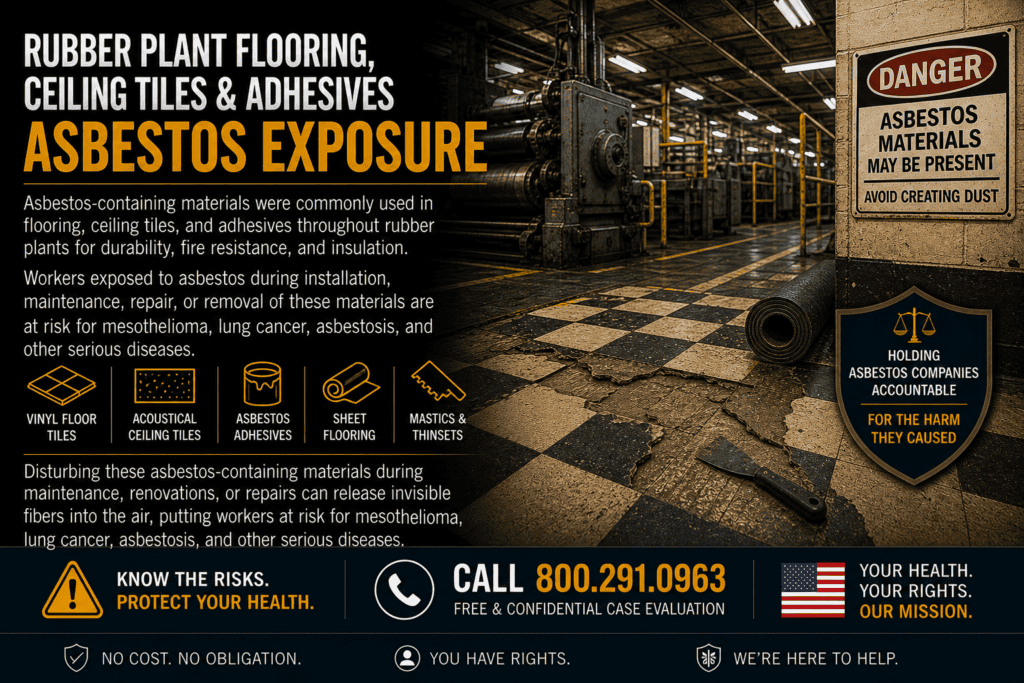
🧱 Rubber Plant Flooring, Ceiling Tiles & Adhesives Asbestos Exposure
Floor tiles, ceiling panels, mastics, and adhesives contained asbestos that released fibers during installation, wear, and replacement.
Rubber manufacturing plants built or renovated before the 1980s commonly used asbestos-containing flooring systems and ceiling materials throughout production areas, offices, locker rooms, control rooms, and maintenance spaces. These materials were selected for their durability, fire resistance, and ability to withstand heavy foot traffic, vibration, and chemical exposure.
Over time, normal wear, moisture, vibration from machinery, and frequent renovations caused these materials to crack, crumble, and release asbestos fibers. Workers performing maintenance, cleaning, and renovation tasks were often exposed when disturbing floor tiles, scraping adhesives, or removing ceiling panels—frequently without knowing asbestos was present.
🧱 Why Asbestos Was Used in Flooring & Ceiling Materials
Asbestos was widely used in rubber plant flooring and ceiling systems because it offered key industrial advantages:
-
🔥 Fire resistance in high-risk industrial environments
-
🧱 Durability under heavy equipment and foot traffic
-
⚙️ Resistance to chemicals and oils common in rubber plants
-
🌫️ Sound and thermal insulation in large facilities
-
💲 Low cost for wide-area installation
These properties made asbestos tiles, mastics, and panels standard in rubber plants constructed during peak asbestos-use decades.
🧪 Common Asbestos-Containing Flooring & Ceiling Materials
Workers commonly encountered asbestos in:
🧱 Flooring Systems
-
Vinyl asbestos floor tiles (VAT)
-
Asphalt tiles
-
Floor mastics and adhesives
🧱 Ceiling Materials
-
Acoustic ceiling tiles
-
Fire-resistant ceiling panels
-
Insulated drop ceilings
🧱 Supporting Materials
-
Joint compounds and patching materials
-
Underlayment boards
-
Fireproofed substructures
As these materials aged or were disturbed, asbestos fibers became airborne—especially during removal and surface preparation.
⚠️ How Asbestos Exposure Occurred During Flooring & Ceiling Work
Asbestos exposure commonly occurred during:
-
Cutting or breaking floor tiles
-
Scraping and grinding adhesive mastics
-
Removing ceiling panels and tiles
-
Drilling into ceilings for wiring or piping
-
Cleaning dust and debris after renovations
-
Demolition of older rooms or buildings
Because flooring and ceiling materials were spread across large areas, exposure was widespread and often affected workers not directly involved in removal.
🧑🏭 Rubber Plant Workers Most at Risk from Flooring & Ceiling Exposure
🛠️ Maintenance & Renovation Workers
Workers removing tiles and ceilings experienced direct asbestos exposure.
🧹 Janitorial & Custodial Staff
Cleaning cracked tiles and ceiling debris re-aerosolized asbestos fibers.
⚡ Electricians & Pipefitters
Tradespeople cutting through ceilings or floors disturbed asbestos materials.
👷 Production Workers
Workers stationed near deteriorating tiles inhaled fibers released by vibration.
🧬 Health Risks Linked to Flooring & Ceiling Asbestos Exposure
Long-term asbestos exposure from flooring and ceiling materials has been linked to serious illnesses, including:
🧠 Mesothelioma
A rare and aggressive cancer affecting the lining of the lungs or abdomen, almost exclusively caused by asbestos exposure.
🫁 Asbestosis
A chronic lung disease caused by asbestos scarring, leading to progressive breathing impairment.
🫁 Lung Cancer
Extended asbestos exposure significantly increases lung cancer risk, particularly in enclosed workspaces.
Because asbestos-related diseases often develop 20–50 years after exposure, many former rubber plant workers are diagnosed long after leaving the plant.
📜 Employer Responsibilities for Flooring & Ceiling Safety
Rubber plant owners were required to:
-
Identify asbestos-containing building materials
-
Implement safe removal and abatement procedures
-
Warn workers about asbestos hazards
-
Provide training and protective equipment
Despite these responsibilities, many workers report never being informed that asbestos was present in flooring and ceiling materials.
❓ Frequently Asked Questions (FAQs)
1️⃣ Did rubber plant floor tiles contain asbestos?
Yes. Vinyl and asphalt tiles commonly contained asbestos.
2️⃣ Is scraping floor adhesive dangerous?
Yes. It released concentrated asbestos fibers into the air.
3️⃣ Can ceiling tiles release asbestos without removal?
Yes. Aging or damaged panels released fibers over time.
4️⃣ Were custodial workers at risk?
Yes. Cleaning activities disturbed asbestos dust daily.
5️⃣ Can illness appear decades later?
Yes. Asbestos-related diseases often surface many years after exposure.
⚖️ How a Lawyer Can Help Get Compensation
Rubber plant workers exposed to asbestos through flooring, ceiling tiles, and adhesives may have legal options. An experienced asbestos lawyer can help by:
-
Identifying rubber plants and building materials linked to exposure
-
Tracing asbestos-containing flooring and ceiling product manufacturers
-
Filing claims against asbestos product manufacturers
-
Pursuing compensation for medical expenses, lost income, and pain and suffering
-
Assisting families with wrongful death claims
Because building materials exposure often affected many departments, experienced legal representation is essential.
📞 Free Case Evaluation – Get Help Today
If you or a loved one worked in a rubber manufacturing plant and were exposed to asbestos through flooring or ceiling materials, help is available.
📞 Call Now for a FREE Case Evaluation: 800-291-0963
There is no obligation, and compensation may be available.
📌 Key Takeaways
-
Rubber plant flooring and ceiling materials commonly contained asbestos
-
Adhesive scraping and tile removal released fibers
-
Custodial and maintenance staff faced daily exposure
-
Health effects may appear decades later
-
Legal options may be available for exposed workers