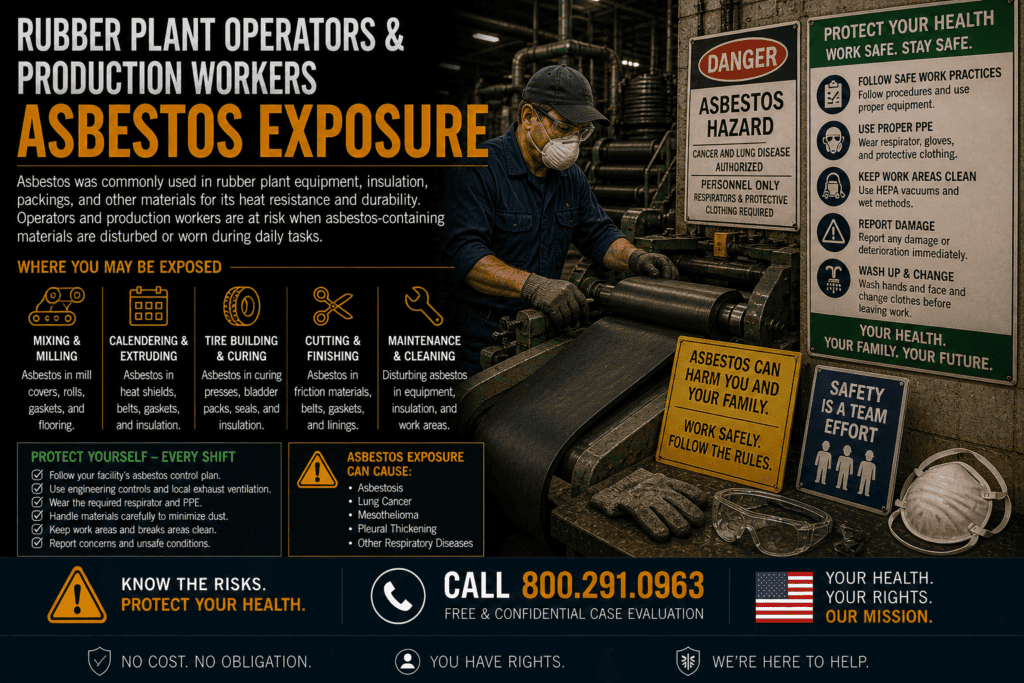
🛠️ Rubber Plant Machinists Asbestos Exposure
Rubber plant machinists were routinely exposed to asbestos while repairing, rebuilding, machining, and modifying asbestos-containing equipment—including mixers, presses, curing systems, steam components, brakes, clutches, and insulation—releasing airborne asbestos fibers during cutting, grinding, drilling, scraping, and cleanup operations.
Machinists played a critical role in keeping rubber manufacturing facilities operational. When production equipment failed or required precision rebuilding, machinists were responsible for disassembling machinery, fabricating replacement parts, resurfacing components, and restoring tolerances. In rubber plants built or modernized before the 1980s, nearly every major system machinists worked on incorporated asbestos materials.
Unlike operators who worked near asbestos, machinists handled it directly. Their work routinely disturbed friable asbestos insulation, gaskets, packing, friction materials, and fireproofing—often in enclosed machine shops or maintenance bays with limited ventilation. Over years or decades, machinists accumulated heavy, repeated exposure without adequate warnings or protection.
🏭 Why Rubber Plant Machinists Faced High Asbestos Exposure
Machinists experienced elevated asbestos exposure because their work involved:
-
🔧 Direct disassembly of asbestos-containing equipment
-
🪚 Cutting, drilling, and grinding contaminated components
-
⚙️ Rebuilding presses, mixers, and steam systems
-
🧱 Machining parts coated with asbestos dust
-
🧹 Cleaning debris after repairs
Because rubber plants operated continuously, machinists were frequently called to perform emergency repairs—often while equipment was still hot and insulation brittle.
🧪 Asbestos-Containing Materials Machinists Encountered
Rubber plant machinists routinely worked with equipment and materials that contained asbestos, including:
⚙️ Mixers, Presses & Curing Equipment
-
Asbestos-insulated housings
-
Gaskets and seals
-
Heat shields and liners
🚰 Steam Systems & Piping
-
Pipe insulation and lagging
-
Valve packing and flange gaskets
-
Boiler and heat exchanger insulation
🛑 Brakes, Clutches & Friction Components
-
Brake shoes and linings
-
Clutch facings and pads
-
Wear plates and friction discs
⚡ Electrical & Control Equipment
-
Asbestos-insulated wiring
-
Electrical panel liners
-
Arc shields and fireproof barriers
🧱 Structural & Building Materials
-
Spray-applied asbestos fireproofing
-
Asbestos cement panels
-
Floor tiles and mastics
As machinists cut, resurfaced, or modified these components, asbestos fibers were released directly into their breathing zone.
⚠️ How Asbestos Exposure Occurred During Machining Work
Exposure commonly occurred during:
-
Disassembling presses, mixers, and machinery
-
Grinding shafts, housings, and components
-
Drilling through insulated parts
-
Scraping old gaskets and packing
-
Machining contaminated metal surfaces
-
Cleaning lathes, mills, and workbenches
-
Sweeping asbestos-laden debris
Grinding and machining tasks were especially dangerous because they produced fine, respirable asbestos dust that lingered in the air.
🌫️ Airborne Asbestos in Machine Shops & Maintenance Areas
Asbestos exposure among machinists was intensified because:
-
🌬️ Machine shops were often enclosed
-
🏭 Ventilation was designed for metal dust—not asbestos
-
🧹 Dry sweeping re-aerosolized fibers
-
🚶 Movement between production and maintenance areas spread contamination
Asbestos dust accumulated on tools, machines, clothing, and surfaces—creating constant re-exposure even when repairs were complete.
🧑🏭 Machinists Most at Risk in Rubber Plants
🛠️ Maintenance Machinists
Performed emergency and scheduled equipment repairs.
⚙️ Tool & Die Makers
Machined components contaminated with asbestos dust.
🔧 Millwrights & Rebuilders
Disassembled and rebuilt large industrial machinery.
⚡ Machinist-Electricians
Worked on motors and controls near insulated systems.
🧹 Utility & Cleanup Workers
Cleaned machining areas after asbestos-disturbing work.
Because machinists were involved in nearly every major repair, exposure was frequent and cumulative.
🧬 Secondary (Take-Home) Asbestos Exposure
Rubber plant machinists often carried asbestos fibers home on:
-
Work clothes and coveralls
-
Gloves, boots, and tools
-
Hair and skin
-
Vehicles and personal equipment
Family members were exposed during laundry and household contact. Many mesothelioma cases have been linked to secondary exposure from machinist employment in rubber plants.
🫁 Health Risks Linked to Machinist Asbestos Exposure
Long-term asbestos exposure among machinists is associated with:
🧠 Mesothelioma
A rare, aggressive cancer caused almost exclusively by asbestos.
🫁 Asbestosis
Permanent lung scarring leading to chronic breathing problems.
🫁 Lung Cancer
Significantly increased risk after prolonged asbestos exposure.
Because machinists worked directly with friable asbestos, disease risk remained high even with intermittent exposure.
📜 Safety Failures Affecting Rubber Plant Machinists
Many rubber manufacturers failed to:
-
Identify asbestos hazards in equipment repair work
-
Warn machinists about airborne asbestos risks
-
Provide respirators during grinding and machining
-
Use wet methods for gasket and insulation removal
-
Prohibit dry sweeping and compressed air
-
Perform asbestos abatement before repairs
These failures are central to asbestos claims involving rubber plant machinists.
❓ Frequently Asked Questions (FAQs)
1️⃣ Were machinists more exposed than operators?
Yes. Machinists handled asbestos materials directly during repairs.
2️⃣ Did machining metal parts really release asbestos?
Yes. Dust on components and embedded materials became airborne.
3️⃣ Were emergency repairs especially dangerous?
Yes. Hot, brittle insulation released large amounts of fibers.
4️⃣ Can family members file secondary exposure claims?
Yes. Take-home asbestos exposure is legally recognized.
5️⃣ Can claims still be filed decades later?
Yes. Asbestos diseases often appear 20–50 years after exposure.
⚖️ How a Lawyer Can Help Get Compensation
An experienced asbestos lawyer can help rubber plant machinists and families by:
-
Investigating job duties and maintenance records
-
Identifying asbestos-containing equipment and materials
-
Tracing manufacturers of insulation, gaskets, and friction products
-
Documenting occupational and secondary exposure
-
Filing mesothelioma lawsuits
-
Submitting asbestos trust fund claims
-
Coordinating claims across multiple exposure sources
-
Maximizing total compensation available
Because machinists encountered many asbestos products across decades, detailed investigation is essential.
📞 Free Case Evaluation – Get Help Today
If you worked as a machinist in a rubber plant and developed mesothelioma or another asbestos-related illness—or were exposed through a family member—help is available.
📞 Call Now for a FREE Case Evaluation: 800-291-0963
There is no obligation, and compensation may be available.
📌 Key Takeaways
-
Rubber plant machinists faced direct asbestos exposure
-
Grinding, cutting, and repairs released airborne fibers
-
Exposure was frequent and cumulative
-
Families faced secondary exposure risks
-
Legal options may still be available