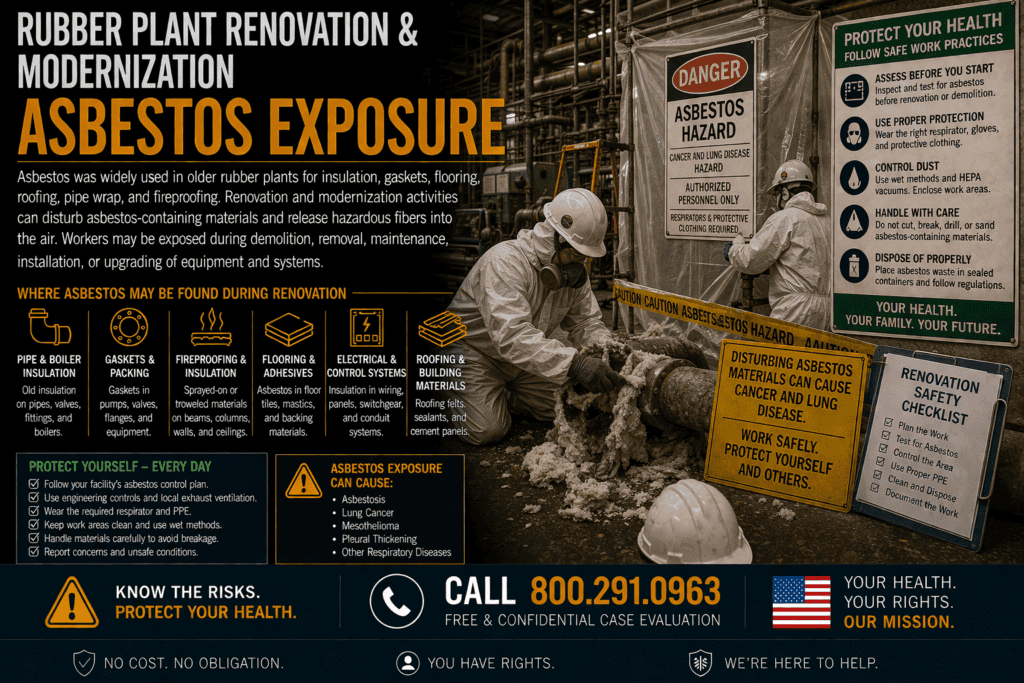
🏗️ Rubber Plant Renovation & Modernization Asbestos Exposure
Facility upgrades disturbed hidden asbestos in walls, ceilings, ducts, equipment housings, and production systems.
Rubber plant renovation and modernization projects created some of the highest asbestos exposure risks for workers and contractors. Many rubber manufacturing facilities were built or expanded during peak asbestos-use decades, long before the health dangers were openly acknowledged. When plants later upgraded production lines, expanded capacity, or retrofitted aging infrastructure, these projects often disturbed asbestos-containing materials that had remained hidden for decades.
Unlike daily operations, renovation work involved cutting, demolishing, drilling, and dismantling equipment and building materials. These activities released large amounts of asbestos fibers into the air—exposing renovation crews, maintenance staff, and even nearby production workers.
🧱 Why Rubber Plant Renovations Released Asbestos
Asbestos was embedded throughout rubber plants. Renovation projects released asbestos because:
-
🧱 Asbestos was concealed behind walls, ceilings, and panels
-
🔥 High-heat equipment was heavily insulated with asbestos
-
⚙️ Old machinery contained asbestos components
-
🚧 Partial plant shutdowns limited abatement
-
⏱️ Tight schedules reduced safety controls
Many renovations proceeded without full asbestos surveys, increasing exposure risks.
🧪 Common Asbestos Sources Disturbed During Rubber Plant Renovations
Renovation and modernization projects frequently disturbed asbestos in:
🧱 Building & Structural Materials
-
Fireproofed steel beams and columns
-
Ceiling tiles and insulation
-
Floor tiles, mastics, and underlayment
⚙️ Production & Mechanical Equipment
-
Mixers, mills, and calenders
-
Vulcanizing presses and curing ovens
-
Conveyors and drive systems
🔥 Utility & Support Systems
-
Boiler rooms and steam piping
-
HVAC ducts and insulation
-
Electrical rooms and panel liners
When these systems were dismantled or modified, asbestos fibers spread throughout renovation zones.
⚠️ How Asbestos Exposure Occurred During Renovation Work
Asbestos exposure commonly occurred during:
-
Demolishing walls, ceilings, and floors
-
Removing insulated machinery and piping
-
Cutting fireproofed structural components
-
Retrofitting electrical and control systems
-
Grinding, sawing, and drilling materials
-
Cleanup of renovation debris and dust
Because renovations often occurred near active production areas, asbestos fibers migrated into occupied workspaces.
🧑🏭 Workers Most at Risk During Rubber Plant Renovations
🛠️ Construction & Renovation Crews
Workers performing demolition and retrofitting faced intense asbestos exposure.
🧰 Maintenance & Engineering Staff
Plant personnel assisting with upgrades encountered disturbed asbestos materials.
⚡ Electricians & Mechanics
Workers upgrading systems inhaled fibers released from fireproofed areas.
🧹 Cleanup & Support Staff
Workers removing debris were exposed to asbestos-contaminated dust.
🧬 Health Risks Linked to Renovation-Related Asbestos Exposure
High-intensity asbestos exposure during rubber plant renovations has been linked to serious illnesses, including:
🧠 Mesothelioma
A rare and aggressive cancer of the lung or abdominal lining, almost exclusively caused by asbestos exposure.
🫁 Asbestosis
A chronic lung disease caused by asbestos scarring, leading to progressive breathing impairment.
🫁 Lung Cancer
Extended asbestos exposure significantly increases lung cancer risk.
Because asbestos-related diseases have latency periods of 20–50 years, many renovation workers are diagnosed long after exposure occurred.
📜 Employer & Contractor Responsibilities During Renovations
Rubber plant owners and contractors were required to:
-
Conduct asbestos surveys before renovation
-
Implement abatement and containment procedures
-
Protect workers and nearby staff
-
Provide asbestos safety training and equipment
Despite these requirements, many renovation projects proceeded without adequate asbestos controls.
❓ Frequently Asked Questions (FAQs)
1️⃣ Did rubber plant renovations commonly disturb asbestos?
Yes. Renovations frequently exposed hidden asbestos materials.
2️⃣ Is demolition more dangerous than routine maintenance?
Yes. Renovation and demolition released higher fiber concentrations.
3️⃣ Can asbestos spread beyond renovation areas?
Yes. Fibers often migrated into active production zones.
4️⃣ Were renovation workers warned about asbestos?
Often no. Many workers were unaware asbestos was present.
5️⃣ Can illness develop decades later?
Yes. Asbestos-related diseases often appear many years after exposure.
⚖️ How a Lawyer Can Help Get Compensation
Workers exposed to asbestos during rubber plant renovation and modernization projects may have legal options. An experienced asbestos lawyer can help by:
-
Identifying renovation projects and job sites linked to exposure
-
Tracing asbestos-containing materials disturbed during upgrades
-
Filing claims against asbestos manufacturers and contractors
-
Pursuing compensation for medical expenses, lost income, and suffering
-
Assisting families with wrongful death claims
Because renovation exposure often involved multiple asbestos sources, experienced legal representation is essential.
📞 Free Case Evaluation – Get Help Today
If you or a loved one worked on rubber plant renovation or modernization projects and later developed mesothelioma or another asbestos-related illness, help is available.
📞 Call Now for a FREE Case Evaluation: 800-291-0963
There is no obligation, and compensation may be available.
📌 Key Takeaways
-
Rubber plant renovations disturbed hidden asbestos
-
Demolition and retrofitting released airborne fibers
-
Active production areas increased exposure spread
-
Health effects may appear decades later
-
Legal options may be available for exposed workers