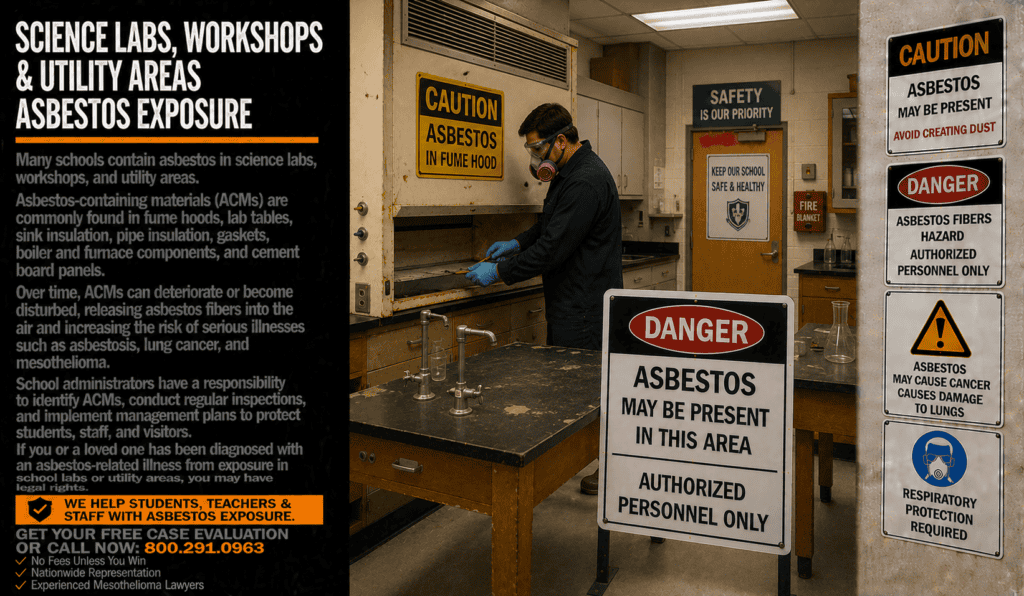
🧪 Science Labs, Workshops & Utility Areas Asbestos Exposure
Laboratories and workshops contained asbestos insulation, panels, and equipment housing.
Science laboratories, vocational workshops, and utility areas in schools and universities were among the most asbestos-intensive environments in educational facilities. These spaces housed high-heat equipment, chemical processes, mechanical systems, and specialized tools that required fire resistance, insulation, and durability. Asbestos was widely used to meet these demands.
Unlike classrooms, labs and workshops often involved hands-on work, frequent equipment modification, and repeated maintenance. Over time, these activities disturbed asbestos-containing materials embedded in walls, ceilings, work surfaces, ventilation systems, and equipment housings—placing students, educators, and workers at elevated risk of exposure.
🧱 Why Asbestos Was Used in School Labs & Workshops
Asbestos was heavily relied upon in laboratories and workshops because it provided critical performance and safety benefits:
-
🛡️ Fire resistance around burners, kilns, furnaces, and electrical equipment
-
🔥 Heat insulation for ovens, exhaust hoods, and piping
-
🧱 Chemical resistance in lab surfaces and panels
-
🔧 Durability in high-use instructional environments
-
💲 Cost efficiency for outfitting large educational facilities
Because these areas were considered controlled environments, asbestos hazards often went undocumented or unmanaged for decades.
🧪 Common Asbestos-Containing Materials in Labs & Utility Areas
Asbestos may be present in many components of school laboratories, workshops, and utility spaces, including:
🔥 Laboratory & Workshop Equipment
-
Heat-resistant panels
-
Insulated equipment housings
-
Kiln and furnace linings
🧰 Insulation & Building Materials
-
Pipe and boiler insulation
-
Wall and ceiling panels
-
Fire-resistant boards
⚙️ Ventilation & Exhaust Systems
-
Fume hood liners
-
Duct insulation
-
Exhaust plenum materials
🧱 Supporting Structures
-
Cement countertops
-
Floor tiles and adhesives
-
Electrical insulation
As these materials age or are disturbed, asbestos fibers can be released into enclosed workspaces.
⚠️ How Asbestos Exposure Occurs in Labs & Workshops
Exposure commonly occurs during activities such as:
-
Equipment installation or replacement
-
Lab renovations or reconfigurations
-
Utility system repairs
-
Ventilation upgrades
-
Maintenance of kilns, furnaces, or exhaust systems
-
Demolition of outdated lab spaces
Because labs and workshops often lack full containment or specialized abatement during routine work, fibers may remain airborne or settle on work surfaces.
🧑🏫 Who Is Most at Risk in Labs & Utility Areas
🎓 Students
Students in science labs or vocational programs may be exposed during experiments, tool use, or class projects involving disturbed materials.
👩🏫 Teachers & Instructors
Science teachers, lab instructors, and shop supervisors often worked for decades in the same spaces, increasing cumulative exposure risk.
🛠️ Maintenance & Facilities Workers
Facilities staff face elevated exposure when repairing lab utilities, ventilation systems, or equipment.
🧰 Outside Contractors
Contractors renovating labs or upgrading equipment frequently disturb hidden asbestos materials.
🧬 Health Risks Linked to Laboratory Asbestos Exposure
Long-term asbestos exposure may lead to severe health conditions, including:
🫁 Asbestosis
A chronic lung disease caused by asbestos fiber scarring, leading to reduced lung function.
🧠 Mesothelioma
A rare and aggressive cancer affecting the lining of the lungs or abdomen, almost exclusively caused by asbestos exposure.
🫁 Lung Cancer
Extended asbestos exposure significantly increases lung cancer risk.
Because asbestos-related diseases often develop decades after exposure, individuals may not connect illness to past lab or workshop exposure.
📜 Regulations for School Labs & Utility Areas
Schools are required to:
-
Identify asbestos-containing materials in laboratories and utility spaces
-
Maintain asbestos management plans
-
Monitor material condition
-
Repair or remove damaged asbestos materials
However, many labs and workshops continue to operate with legacy asbestos materials in place.
❓ Frequently Asked Questions (FAQs)
1️⃣ Did school science labs contain asbestos?
Yes. Many labs used asbestos in insulation, equipment housings, and fire-resistant materials.
2️⃣ Are students at risk in labs and workshops?
Yes. Exposure can occur when materials are damaged or disturbed during instruction or maintenance.
3️⃣ Are lab instructors at higher risk?
Yes. Instructors often worked long-term in the same environments.
4️⃣ Can asbestos from labs spread to other areas?
Yes. Fibers can migrate through ventilation systems.
5️⃣ Can exposure from decades ago still cause illness today?
Yes. Asbestos-related diseases often develop 20–50 years after exposure.
⚖️ How a Lawyer Can Help Get Compensation
Individuals diagnosed with asbestos-related illnesses may have legal options. An experienced asbestos lawyer can help by:
-
Identifying schools where lab or workshop exposure occurred
-
Tracing exposure timelines through academic or employment records
-
Filing claims against asbestos manufacturers and trust funds
-
Pursuing compensation for medical costs, lost income, and pain and suffering
-
Assisting families with wrongful death claims
Laboratory asbestos cases often involve multiple responsible parties, making experienced legal guidance essential.
📞 Free Case Evaluation – Get Help Today
If you or a loved one were exposed to asbestos in school science labs, workshops, or utility areas and later developed an asbestos-related illness, help is available.
📞 Call Now for a FREE Case Evaluation: 800-291-0963
There is no obligation, and compensation may be available.
📌 Key Takeaways
-
School labs and workshops frequently contained asbestos
-
Equipment and ventilation systems disturbed asbestos materials
-
Students, instructors, and workers faced elevated exposure risk
-
Health effects may appear decades later
-
Legal options may be available for asbestos-related illnesses