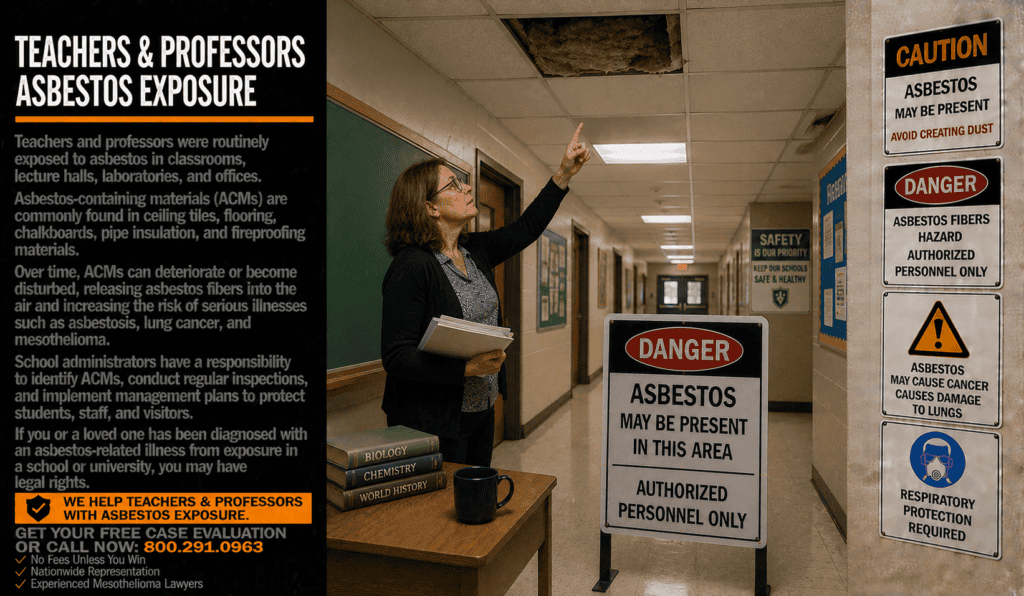
👩🏫 Teachers & Professors Asbestos Exposure
Educators worked daily in classrooms with aging asbestos materials and contaminated ventilation systems.
Teachers and professors represent one of the most overlooked groups affected by asbestos exposure in schools and universities. Unlike maintenance workers who encountered asbestos during specific tasks, educators experienced chronic, long-term exposure simply by working day after day inside aging school buildings. Many spent decades teaching in the same classrooms, offices, laboratories, and lecture halls—often unaware that asbestos-containing materials surrounded them.
From elementary schools built in the 1940s to sprawling university campuses expanded in the 1960s and 1970s, asbestos was embedded into ceilings, walls, floors, HVAC systems, and fireproofing. As these materials deteriorated or were disturbed by maintenance and renovations, teachers and professors inhaled asbestos fibers over extended periods, increasing the risk of serious asbestos-related diseases later in life.
🧱 Why Teachers & Professors Were Exposed to Asbestos
Asbestos exposure among educators occurred not because they worked directly with asbestos, but because it was built into their daily environment. Schools and universities relied heavily on asbestos-containing materials to construct classrooms and academic buildings due to:
-
🛡️ Fire resistance in walls, ceilings, and structural components
-
🔥 Thermal insulation around heating systems and pipes
-
🎧 Sound control in classrooms and lecture halls
-
🧱 Durability in high-occupancy educational spaces
-
💲 Low construction costs for public education facilities
Teachers and professors spent thousands of hours inside these environments, often for 20–40 years or more.
🧪 Common Asbestos Sources in Classrooms & Academic Buildings
Educators may have been exposed to asbestos from multiple sources within their workspaces, including:
🏫 Classroom Materials
-
Acoustic ceiling tiles
-
Plaster walls and joint compounds
-
Vinyl floor tiles and adhesives
🌬️ HVAC & Ventilation Systems
-
Duct insulation
-
Air handler linings
-
Contaminated ventilation pathways
🔥 Fireproofing & Structural Materials
-
Sprayed-on fireproofing
-
Insulated steel beams
-
Fire-resistant wall coatings
🧱 Adjacent Building Areas
-
Mechanical rooms near classrooms
-
Utility chases behind walls
-
Aging pipe insulation above ceilings
Even when asbestos materials appeared intact, fibers could still be released through vibration, air movement, or gradual deterioration.
⚠️ How Asbestos Exposure Occurred for Educators
Teachers and professors were exposed to asbestos in several common ways:
-
Daily inhalation of fibers released from aging materials
-
HVAC systems circulating asbestos-contaminated air
-
Renovation or maintenance work during school sessions
-
Ceiling tile or lighting fixture replacement
-
Water damage causing asbestos materials to crumble
Unlike one-time exposure events, educators experienced repeated, low-level exposure over many years—an exposure pattern strongly associated with asbestos-related disease.
🧑🏫 Who Among Educators Faced the Highest Risk
🍎 Elementary & Secondary Teachers
Teachers in older K–12 schools often worked in buildings that had never undergone full asbestos abatement.
🎓 College Professors & Lecturers
University faculty frequently taught in historic buildings with aging infrastructure and outdated mechanical systems.
🧪 Science & Lab Instructors
Educators working in labs faced additional exposure from asbestos-containing equipment and ventilation systems.
📚 Librarians & Academic Staff
Library and academic office staff spent long hours in buildings constructed with asbestos fireproofing and insulation.
🧬 Health Risks Linked to Educator Asbestos Exposure
Long-term asbestos exposure can cause severe health conditions, including:
🫁 Asbestosis
A chronic lung disease resulting from asbestos fiber scarring, causing shortness of breath and reduced lung capacity.
🧠 Mesothelioma
A rare and aggressive cancer affecting the lining of the lungs or abdomen, almost exclusively caused by asbestos exposure.
🫁 Lung Cancer
Prolonged asbestos exposure significantly increases lung cancer risk, even among non-smokers.
Because asbestos diseases often take 20–50 years to develop, many educators are diagnosed long after retirement.
📜 School & University Responsibilities Toward Educators
Educational institutions are required to:
-
Identify asbestos-containing materials
-
Maintain asbestos management plans
-
Monitor and document material condition
-
Repair or remove damaged asbestos
However, these measures often focused on student safety, leaving educator exposure risks underrecognized for decades.
❓ Frequently Asked Questions (FAQs)
1️⃣ Can teachers develop mesothelioma from working in schools?
Yes. Long-term exposure to asbestos in school buildings has been linked to mesothelioma in educators.
2️⃣ Are professors at risk even if they never worked in mechanical rooms?
Yes. Asbestos fibers could circulate through ventilation systems into classrooms and offices.
3️⃣ Can exposure during teaching years cause illness after retirement?
Yes. Asbestos diseases often appear decades after exposure.
4️⃣ Were educators warned about asbestos risks?
In many cases, teachers and professors were never informed that asbestos was present in their buildings.
5️⃣ Can family members be affected?
Yes. Asbestos fibers brought home on clothing may have exposed family members indirectly.
⚖️ How a Lawyer Can Help Get Compensation
Educators diagnosed with asbestos-related illnesses may have legal options. An experienced asbestos lawyer can help by:
-
Identifying school buildings where exposure occurred
-
Reviewing employment history and teaching locations
-
Filing claims against asbestos manufacturers and trust funds
-
Seeking compensation for medical costs, lost income, and suffering
-
Assisting families with wrongful death claims
Asbestos cases involving educators often rely on long-term exposure documentation, making skilled legal representation essential.
📞 Free Case Evaluation – Get Help Today
If you or a loved one worked as a teacher or professor and later developed an asbestos-related illness, help is available.
📞 Call Now for a FREE Case Evaluation: 800-291-0963
There is no obligation, and compensation may be available.
📌 Key Takeaways
-
Teachers and professors faced long-term asbestos exposure in school buildings
-
Exposure occurred through classrooms, HVAC systems, and renovations
-
Health effects may appear decades after exposure
-
Many educators were never warned of asbestos risks
-
Legal options may be available for asbestos-related illnesses