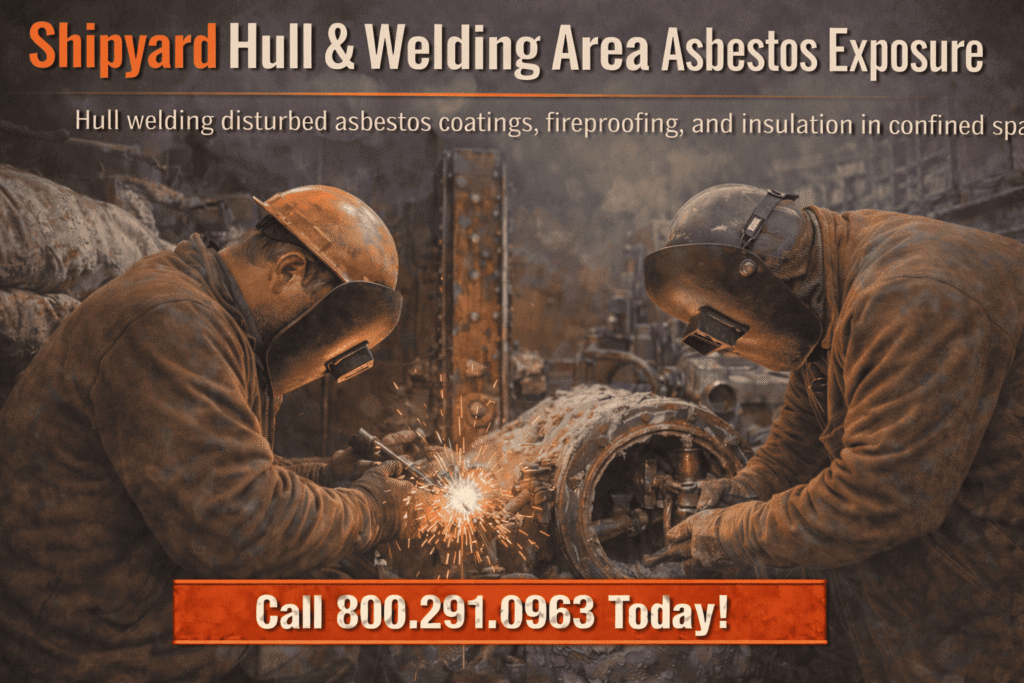
⚓ Shipyard Hull & Welding Area Asbestos Exposure
Shipyard hull and welding areas were among the most hazardous asbestos exposure environments in maritime work. Asbestos was widely used throughout ship hulls and surrounding structures for fireproofing, insulation, corrosion resistance, and sound dampening. Hull sections, bulkheads, decks, and structural components were often coated or lined with asbestos-containing materials.
Welding, cutting, and fabrication work in hull areas repeatedly disturbed these materials. Heat from welding torches, grinding wheels, and cutting equipment broke down asbestos coatings and insulation, releasing airborne fibers directly into workers’ breathing zones. Because hull spaces were often confined, poorly ventilated, and enclosed, asbestos fibers accumulated rapidly, exposing workers throughout entire shifts.
⚠️ How Asbestos Exposure Occurred in Hull & Welding Areas
Asbestos exposure in hull and welding areas occurred during construction, repair, retrofitting, and demolition of ships. Welding torches burned through asbestos fireproofing. Grinding and cutting operations pulverized asbestos coatings. Riveting and structural repairs shook loose aged insulation embedded within hull compartments.
During dry dock operations, multiple trades worked simultaneously in hull spaces. Welding, cutting, pipefitting, and mechanical work overlapped, greatly increasing airborne asbestos concentrations. Even workers not actively welding inhaled asbestos fibers released by nearby operations.
🧱 Asbestos-Containing Materials in Ship Hull & Welding Zones
Ship hulls incorporated asbestos in both visible and hidden forms. Many materials remained intact for decades until disturbed during repairs.
Common asbestos-containing materials included:
-
Fireproofing sprays and coatings on hull steel
-
Bulkhead insulation and soundproofing panels
-
Deck and floor underlayment
-
Pipe insulation running through hull compartments
-
Welding blankets and heat shields
-
Gaskets, packing, and joint materials
-
Structural adhesives and mastics
-
Electrical conduit insulation embedded in hull spaces
Welding heat accelerated deterioration, making these materials especially friable.
👷 Workers Most Exposed in Hull & Welding Areas
Hull and welding operations exposed a wide range of shipyard workers, many of whom worked in close proximity.
High-risk occupations included:
-
Shipyard welders and cutters
-
Hull technicians and steelworkers
-
Shipfitters and fabricators
-
Pipefitters and plumbers
-
Electricians
-
Machinists
-
Maintenance mechanics
-
Shipyard laborers and apprentices
Many workers experienced daily exposure for years, often without respiratory protection.
🔥 Why Welding Increased Asbestos Exposure Risk
Welding amplified asbestos exposure in several ways. Extreme heat burned and degraded asbestos coatings, releasing fibers instantly. Grinding and slag removal pulverized materials into fine dust. Sparks and vibrations dislodged asbestos hidden behind hull panels and bulkheads.
Additionally, welders often worked in enclosed hull compartments, tanks, and double-bottom spaces with limited airflow. This environment allowed asbestos fibers to remain suspended in the air for extended periods, dramatically increasing inhalation risks.
🫁 Health Risks from Hull & Welding Asbestos Exposure
Long-term asbestos exposure in shipyard hull and welding areas is strongly linked to serious diseases that often appear decades later.
Health risks include:
-
Malignant pleural mesothelioma
-
Peritoneal mesothelioma
-
Lung cancer
-
Asbestosis
-
Pleural plaques and chronic respiratory disease
Because symptoms may not appear for 20–50 years, many shipyard workers are diagnosed long after leaving maritime employment.
⚖️ Shipyard Hull & Welding Area Mesothelioma Lawsuit Options
Workers exposed to asbestos in hull and welding areas may be eligible to pursue mesothelioma lawsuits against manufacturers of asbestos-containing fireproofing, insulation, welding materials, and ship components.
Legal options may include:
-
Personal injury asbestos lawsuits
-
Maritime-related asbestos claims
-
Asbestos trust fund claims
-
Wrongful death lawsuits for surviving family members
Liability often involves multiple manufacturers and suppliers due to the number of products used.
🏦 Asbestos Trust Fund Claims for Hull & Welding Exposure
Many asbestos product manufacturers responsible for shipyard materials filed for bankruptcy and created asbestos trust funds. Hull and welding exposure commonly qualifies due to widespread historical use.
Trust fund claims may require:
-
Medical diagnosis documentation
-
Shipyard employment history
-
Job descriptions involving welding or hull work
-
Identification of asbestos-containing products
-
Union, payroll, or shipyard records
Trust fund compensation can be combined with lawsuit recoveries.
⏳ Statute of Limitations for Shipyard Welding Claims
Each state enforces deadlines for filing asbestos-related claims. In most cases, the statute of limitations begins at diagnosis, not the date of exposure.
Because maritime employment may involve multiple states or jurisdictions, timelines can vary. Missing a deadline can permanently bar compensation, making early legal guidance critical.
👨⚖️ How a Shipyard Asbestos Lawyer Can Help
Hull and welding asbestos cases are technically complex and evidence-intensive. An experienced asbestos lawyer can:
-
Identify asbestos fireproofing and welding materials
-
Reconstruct exposure timelines across shipyard projects
-
Gather medical and employment documentation
-
File lawsuits and trust fund claims correctly
-
Coordinate expert testimony
-
Pursue maximum compensation for victims and families
Most cases are handled on a contingency basis, meaning no upfront legal costs.
❓ Shipyard Hull & Welding Asbestos Exposure FAQs
Did welding really release asbestos fibers?
Yes. Welding heat and grinding disturbed asbestos fireproofing and insulation.
Were hull spaces more dangerous than open areas?
Yes. Confined spaces trapped airborne asbestos fibers.
Can former welders still file claims today?
Yes. Long latency periods allow delayed legal action.
Can family members pursue compensation?
Yes. Wrongful death claims may be available.
Is a free consultation available?
Yes. Most asbestos lawyers offer free case reviews.
📞 Free Case Evaluation – Shipyard Hull & Welding Area Asbestos Exposure
If you performed welding or hull work in shipyards and later developed mesothelioma or another asbestos-related illness, legal compensation may still be available.
✔️ Free, confidential case evaluation
✔️ No upfront legal fees
✔️ Nationwide asbestos legal representation
📲 Call 800-291-0963 today to discuss your legal options.