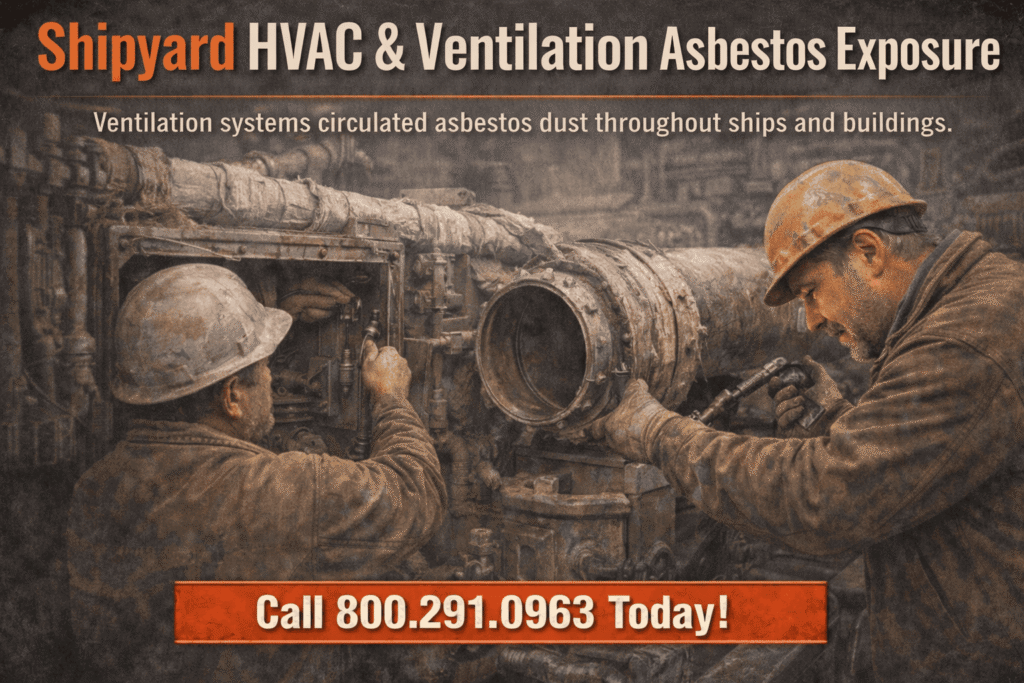
🌬️ Shipyard HVAC & Ventilation Asbestos Exposure
Shipyard HVAC and ventilation systems were a significant and often overlooked source of asbestos exposure. Heating ducts, ventilation shafts, blowers, exhaust systems, and insulation materials commonly contained asbestos to control heat, noise, and fire risk. As these systems aged or were serviced, asbestos fibers were released and circulated throughout ships, dry docks, and shore-based facilities.
Unlike isolated equipment exposure, HVAC systems spread asbestos fibers shipwide, exposing not only maintenance crews but also electricians, welders, pipefitters, machinists, and administrative personnel.
⚠️ How Asbestos Exposure Occurred in HVAC Systems
Asbestos exposure occurred whenever HVAC systems were installed, repaired, cleaned, modified, or removed—especially in vessels and buildings constructed before asbestos regulations.
Common exposure scenarios included:
-
Cutting or removing asbestos-wrapped ductwork
-
Replacing deteriorated insulation on air handlers
-
Cleaning ventilation shafts and exhaust ducts
-
Servicing boilers connected to HVAC systems
-
Repairing asbestos-lined fans and blowers
-
Removing fireproof HVAC insulation
-
Disturbing asbestos panels inside air plenums
-
Working near deteriorating ceiling duct insulation
Even routine airflow could dislodge asbestos fibers from aging materials.
🧱 Asbestos Materials Used in Shipyard HVAC Systems
Asbestos was widely incorporated into HVAC systems for its thermal resistance, sound dampening, and fireproofing qualities.
Common asbestos-containing HVAC materials included:
-
Duct insulation and lagging
-
Asbestos cloth and tape wrapping ducts
-
Fireproof insulation boards
-
Ceiling plenum insulation
-
Gaskets and seals in air handling units
-
Boiler-to-duct transition insulation
-
Vibration dampening pads
-
Spray-applied asbestos fireproofing
Many of these materials became friable over time, releasing fibers continuously.
👷 Shipyard Workers Most Exposed to HVAC Asbestos
HVAC asbestos exposure affected far more workers than those directly servicing systems due to airborne fiber circulation.
High-risk workers included:
-
HVAC technicians and mechanics
-
Shipyard maintenance crews
-
Pipefitters and plumbers
-
Electricians working near ducts
-
Welders and cutters
-
Machinists and engine room crews
-
Shipyard laborers
-
Office and supervisory staff in ventilated areas
Workers were often exposed unknowingly during daily duties.
🚢 Why Ventilation Systems Increased Asbestos Spread
Unlike localized asbestos sources, HVAC systems distributed fibers throughout ships and buildings. Once asbestos entered the ventilation system, fibers could travel long distances and remain airborne for extended periods.
Confined shipboard environments amplified exposure, especially below deck where airflow was restricted. Workers with no direct contact with insulation still inhaled asbestos fibers repeatedly.
🫁 Health Risks from HVAC-Related Asbestos Exposure
Long-term exposure to asbestos fibers circulated by HVAC systems is linked to severe and life-threatening diseases.
Health risks include:
-
Pleural mesothelioma
-
Peritoneal mesothelioma
-
Lung cancer
-
Asbestosis
-
Pleural plaques and thickening
-
Chronic respiratory impairment
Secondary exposure also occurred when fibers were carried home on clothing.
⚖️ Shipyard HVAC Asbestos Lawsuit Options
Workers exposed through shipyard HVAC systems may pursue compensation through asbestos lawsuits and trust fund claims.
Potential legal claims include:
-
Product liability lawsuits against HVAC manufacturers
-
Shipyard premises liability claims
-
Maritime asbestos claims
-
Asbestos trust fund claims
-
Wrongful death lawsuits for surviving families
Multiple manufacturers may be responsible due to layered HVAC components.
🏦 Asbestos Trust Fund Claims for HVAC Exposure
Many HVAC insulation and equipment manufacturers established asbestos trust funds to compensate exposed workers.
Trust claims typically require:
-
Medical documentation of diagnosis
-
Employment or shipyard work history
-
Evidence of HVAC-related exposure
-
Identification of asbestos-containing materials
-
Supporting witness or maintenance records
Trust claims may supplement lawsuit compensation.
⏳ Statute of Limitations for HVAC Asbestos Claims
Statutes of limitations vary by state and often begin at diagnosis—not exposure. Shipyard workers may qualify to file in multiple jurisdictions depending on vessel locations and employment history.
Missing deadlines can permanently eliminate legal rights, making early consultation critical.
👨⚖️ How a Shipyard Asbestos Lawyer Can Help HVAC Exposure Victims
HVAC asbestos cases require detailed investigation into system design, manufacturers, and work environments. An experienced asbestos attorney can:
-
Identify asbestos-containing HVAC products
-
Trace fiber circulation pathways
-
Gather shipyard and vessel maintenance records
-
File lawsuits and trust fund claims
-
Coordinate medical and occupational experts
-
Maximize total compensation recovery
Most asbestos lawyers work on contingency, meaning no upfront fees.
❓ Shipyard HVAC & Ventilation Asbestos FAQs
Did HVAC systems really spread asbestos shipwide?
Yes. Ventilation systems circulated fibers throughout vessels and buildings.
Were non-maintenance workers exposed?
Yes. Anyone breathing circulated air could be exposed.
Is HVAC exposure harder to prove?
Not with experienced asbestos legal investigation.
Can family members file claims?
Yes, through wrongful death or secondary exposure claims.
Are claims still valid decades later?
Yes. Long disease latency allows delayed filing.
📞 Free Case Evaluation – Shipyard HVAC & Ventilation Asbestos Exposure
If you worked in shipyards where HVAC systems circulated asbestos fibers and later developed mesothelioma or another asbestos-related disease, legal options may still be available.
✔️ Free, confidential case evaluation
✔️ No upfront legal fees
✔️ Nationwide asbestos legal representation
📲 Call 800-291-0963 today to discuss your options.