Guide to Asbestos Trust Fund Claims - (800) 291-0963

Steel Mills Asbestos Exposure

🏭 Steel Mills Asbestos Exposure

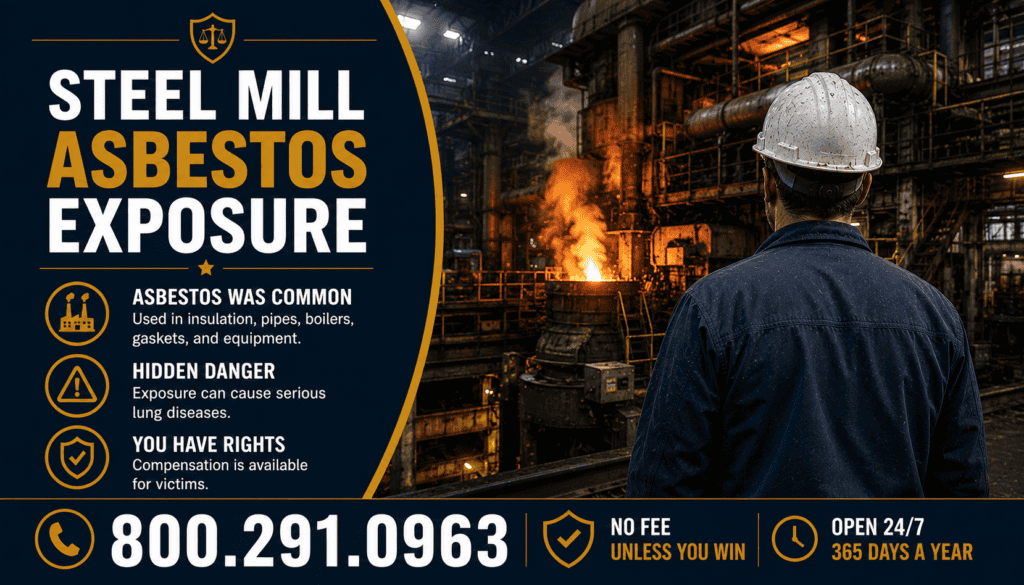
For much of the 20th century, steel mills across the United States heavily used asbestos materials throughout plant machinery, furnaces, piping, and insulation. Asbestos was favored for its durability and fireproofing in the extreme heat environments found in steel production. Unfortunately, these same materials became deadly when disturbed.

Steel mill workers who installed, maintained, or repaired equipment—especially in poorly ventilated foundries—were regularly exposed to airborne asbestos fibers. Tasks such as grinding furnace linings, replacing insulation, and handling refractory bricks often released microscopic particles that were easily inhaled. Even those not directly handling asbestos could experience secondhand exposure.

🏭 Steel Mill Job Sites – What You’ll Learn From This Page:

🔥 Steel mills used asbestos insulation for furnaces, boilers, and molten metal equipment, due to the extreme heat.

🧤 Workers wore protective clothing made with asbestos, including gloves, aprons, and fire blankets.

⚙️ Welding, grinding, and torching operations disturbed asbestos lining and machinery insulation.

🌫️ Poor ventilation in steel bays allowed dust to linger, especially during maintenance and metal cutting.

💰 Steel mill employees with asbestos-related illness may qualify for trust fund claims or legal cases.


Number of People Exposed to Asbestos in Steel Mills in the U.S.

Asbestos was essential to steel production safety until federal restrictions began in the 1980s.

Exposure Category Estimated Number of People Exposed
Occupational Exposure (Mill operators, smelters, welders) Approximately 560,000 workers exposed
Secondary Exposure (Families exposed at home) Estimated 80,000 exposed
Environmental Exposure (Casting floors, machinery rooms) Around 120,000 people exposed

👉 Total Estimated Exposure:
Over 760,000 people in the U.S. were exposed through steel mill asbestos usage.


📊 Facts About Steel Mill Workers

• Over 140,000 people currently work in the U.S. steel manufacturing industry (as of 2023), with hundreds of thousands more having worked in this sector since the 1940s.
• Asbestos Exposure: Common from 1940–1985; risk remains in older plants.
• Asbestos-Related Disease Risk: Very High due to confined workspaces, high-heat environments, and constant exposure to thermal insulation.
• OSHA data shows mill workers had elevated rates of mesothelioma and lung cancer compared to other manufacturing sectors.
• Similar Occupations: Foundry workers, pipefitters, boiler operators, welders, refractory installers

🏗️ History of Asbestos Use on Job Sites

From the 1930s through the late 1980s, asbestos was a standard material in nearly all heavy industries. It was used in insulation, cement, bricks, gaskets, wiring, and machinery due to its heat resistance and low cost. In steel mills, asbestos wrapped pipes, lined furnaces, and was layered in fireproof coatings. Workers commonly disturbed these materials during maintenance or repairs—often without masks, ventilation, or warnings.

The health risks of asbestos exposure often surface decades after exposure. Many former workers are just now receiving diagnoses tied to jobsite exposure that occurred 30 to 50 years ago.

🔥 Mesothelioma Risk for Steel Mill Workers

Numerous medical studies have confirmed the heightened risk of mesothelioma and other asbestos-related diseases among steel mill workers:

• A CDC report found steelworkers have among the highest occupational death rates from mesothelioma, second only to shipyard workers.

• A European study concluded that steelworkers were five times more likely to die of asbestos-related illnesses than the general population.

• A review of U.S. mill workers showed that refractory maintenance staff—those working directly with furnace insulation—had the highest levels of asbestos exposure.

Steel mills were especially hazardous due to poor airflow and high asbestos use in thermal insulation and refractory materials. The latency period for mesothelioma can exceed 40 years, meaning many exposures from the 1960s–1980s are only now causing illness.


⚙️ Asbestos Products Used in Steel Mills

Steel mills heavily relied on asbestos for its heat resistance in equipment and protective gear. Over time, aging, cutting, or replacing these materials released hazardous airborne asbestos fibers, putting workers at serious risk.


🔥 Furnace Insulation
Lined blast furnaces, soaking pits, and ladles with asbestos; relining or damage released toxic airborne fibers into work areas.

💨 Pipe Insulation
Wrapped around high-temperature steam and water pipes; cutting, removal, or wear released microscopic asbestos particles into the air.

🧱 Refractory Bricks
Used in extreme-heat furnaces and ovens; maintenance crews chipped or replaced bricks, releasing asbestos dust into breathing zones.

🔧 Gaskets and Seals
Sealed valves, pumps, and boilers with asbestos rings; fibers released during machinery disassembly or gasket replacement work.

🧤 Protective Clothing
Gloves, aprons, and hoods made of asbestos shielded workers from molten steel, but shed dangerous fibers with wear.

🌫️ Spray-On Insulation
Sprayed on walls and equipment for fireproofing; crumbly texture released airborne fibers during vibration, impact, or maintenance.

Electrical Panels
Backed with rigid asbestos insulation boards; workers inhaled fibers while drilling or modifying panels during electrical upgrades.

🔥 Boiler Insulation
Boilers were lined with thick asbestos padding; repair work disturbed insulation, sending hazardous fibers into poorly ventilated rooms.

🧵 Thermal Tape and Cloth
Wrapped around piping, valves, and joints for heat control; fraying cloth released inhalable asbestos fibers during handling.

🚜 Brake Linings
Overhead cranes and forklifts used asbestos brake pads; friction and maintenance released toxic dust in confined spaces.

🛢️ Adhesives and Coatings
Asbestos-rich adhesives sealed insulation; cracked or aged coatings released dust when scraped, sanded, or exposed to heat.

🏗️ Cement Boards
Fire-resistant wall and ceiling panels in older structures; drilling, cutting, or breaking them released airborne asbestos debris.


🧰 How Steel Mill Workers Were Exposed

Steel mill jobs often involved confined, high-heat environments packed with asbestos. Exposure occurred during routine duties, emergency repairs, and even by simply being near ongoing maintenance. Many workers were never warned about the dangers.


🔥 Furnace Repair Workers
Removed asbestos bricks, insulation, and linings during repairs; demolition and reassembly released clouds of toxic airborne asbestos dust.

💨 Boiler Operators
Operated and cleaned asbestos-lined boilers; exposure occurred while opening, inspecting, or chipping away hardened insulation inside units.

🛠️ Maintenance Technicians
Daily repairs involved pumps, gaskets, and pipes wrapped in asbestos; fibers released every time materials were cut or disturbed.

🔩 Pipefitters
Installed or repaired hot water and steam lines insulated with asbestos; cutting and sealing released harmful dust into air.

🚡 Crane Mechanics
Serviced overhead cranes with asbestos-lined brakes and insulation; exposure occurred during disassembly, brake pad changes, and testing.

Electricians
Cut through asbestos insulation boards and wiring coatings; repairs disturbed materials inside switchgear and electrical panels regularly.

⚙️ Machinists
Operated presses and grinders near asbestos-lined equipment; fine dust from brakes, gaskets, and insulation coated nearby work surfaces.

🔥 Welders and Fabricators
Wore asbestos gloves, aprons, and used heat blankets daily; prolonged use released fibers as protective gear broke down.

🧯 Millwrights
Handled machinery lined with asbestos pads and seals; often worked in enclosed spaces where ventilation was extremely limited.

🔧 HVAC Technicians
Serviced heating and cooling ducts lined with asbestos; fibers released while cutting, sealing, or patching joints and insulation.

📋 Supervisors and Floor Managers
Regularly walked through high-exposure zones without protection; inhaled fibers during inspections or while overseeing hot work operations.

📦 Material Handlers and Laborers
Moved, stacked, and cleaned around asbestos-laden equipment and debris; secondhand exposure common from nearby maintenance or cleanup tasks.


🏗️ Types of Steel Mills With Asbestos Exposure

🔥 Integrated Steel Mills
Handled every stage from smelting to finishing. Asbestos was found in furnaces, boilers, and casting lines—exposing workers throughout the multi-step steelmaking process.

⚙️ Electric Arc Furnace (EAF) Mills
Used high-voltage arcs to melt scrap metal. Workers faced exposure near asbestos-lined transformers, furnace linings, and switchgear cabinets during maintenance and electrode changes.

🏭 Open Hearth Mills
Used massive hearths to refine pig iron. Asbestos lined walls, roofs, and ladles. Maintenance work frequently disturbed insulation in extreme heat environments.

🏗️ Blast Furnace Facilities
Processed iron ore into molten metal. Asbestos was used extensively in refractory bricks and piping; relining and tapping operations released hazardous airborne fibers.

🔩 Rolling Mills
Shaped steel into sheets, beams, or rods. Asbestos coated the rollers, steam lines, and control panels. Exposure occurred during lubrication, alignment, and reassembly.

🔧 Forging Mills
Pressed heated steel into components. Operators wore asbestos gloves and aprons; fibers released from breaking protective gear and insulation near forging equipment.

🚢 Ship Plate Mills
Produced thick plates for ships. Asbestos coated furnaces and forming machines. Maintenance and trimming created airborne dust along production lines and heat zones.

🧱 Rebar Mills
Rolled steel into reinforcement bars. Fibers were released near cooling beds, hot shear machines, and insulation-lined control cabinets frequently accessed by workers.

🚉 Rail & Track Mills
Produced steel rails for trains. Asbestos lined brake housings and heating units; exposure occurred during testing and servicing in enclosed mill compartments.

🔌 Wire & Rod Mills
Created fine steel wire and rods. Asbestos-insulated drawbenches and electrical boxes were common; rewiring and panel drilling released fibers during electrical maintenance.


❓ Common Questions About Steel Mill Asbestos Claims

📝 Can I file a claim if the steel mill shut down?
Yes — claims target the asbestos product manufacturers, not the mill itself.

What if I worked there decades ago?
Most states allow claims 1–3 years after diagnosis, even if exposure happened 40+ years earlier.

📋 Do I need to remember every asbestos product I worked with?
No — legal teams use work records, union data, and mill blueprints to identify exposure sources.

👷 What if I was a contractor or supplier?
You may still qualify if you worked on-site where asbestos exposure occurred.

💵 What kind of compensation can I receive?
Many cases result in six-figure settlements or asbestos trust payouts depending on disease severity and job history.

🏠 Can my family file a claim if I passed away from asbestos disease?
Yes — surviving relatives may file a wrongful death or trust fund claim.


⚖️ How a Mesothelioma Attorney Can Help Steel Mill Workers

Filing a claim for asbestos exposure can feel overwhelming. A qualified attorney can help by:

• Researching job history and likely exposure sources
• Collecting union logs, employment records, and medical evidence
• Filing claims with asbestos trust funds
• Pursuing lawsuits against liable manufacturers
• Identifying all available compensation options
• Meeting filing deadlines under state law

Most asbestos attorneys work on a contingency fee basis — you pay nothing unless they win your case.


💬 Free Legal Help for Steel Mill Workers & Families

If you or a loved one worked in a steel mill and later developed mesothelioma, lung cancer, or asbestosis, you may be eligible for financial compensation. Whether you were in maintenance, operations, or a supervisory role, we can help.

📞 Call Now: 800.291.0963
• No upfront costs
• No fees unless we win your case
• Full exposure investigation
• Claims filed with trust funds and/or lawsuits
• Help for families, retirees, and surviving spouses

📧 Or request help online 24/7

Find Out If You Qualify Today!

25 Years Working With Diagnosed Mesothelioma Victims!

Our Mesothelioma lawyers work on a contingency fee basis.

This means NO MONEY OUT OF POCKET EXPENSES by the asbestos victims or their families. You will find the contingency fees to be among the lowest in the country.

Talk to a real live person!
Contact a mesothelioma lawyer today for a free, no-obligation case evaluation. 

Call (800) 291-0963 to find out if you have a valid claim.

Free Mesothelioma Case Evaluation

Get Answers From Expert Mesothelioma Attorneys