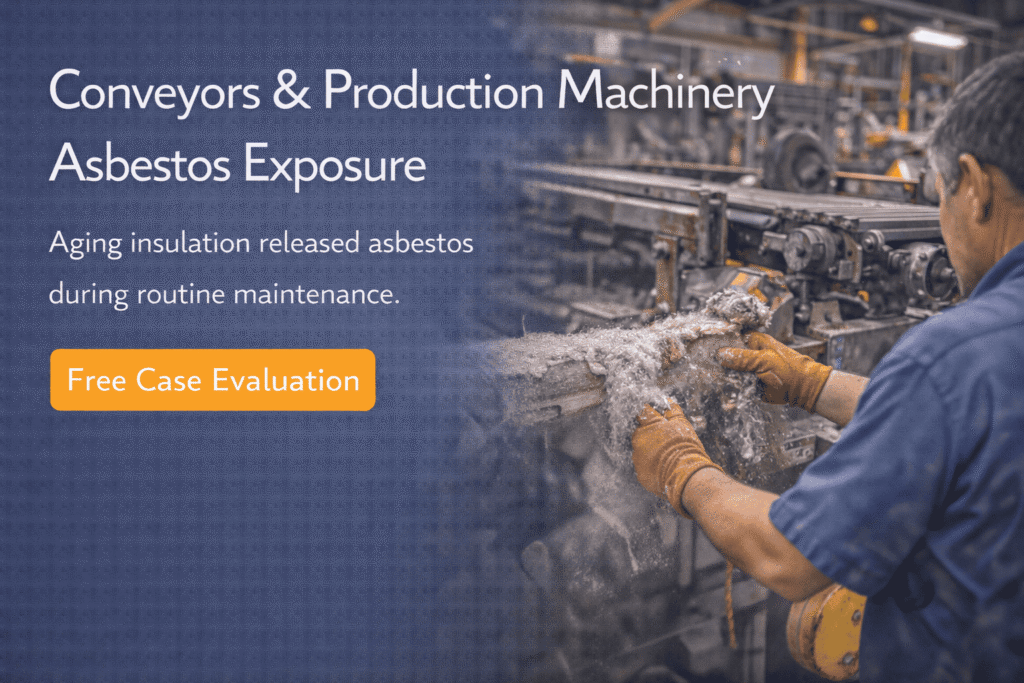
Conveyors & Production Machinery Asbestos Exposure
Automotive manufacturing plants relied on extensive conveyor systems and production machinery to move vehicle bodies, components, and materials through assembly, stamping, painting, and finishing operations. These systems operated continuously, often under heavy loads, heat, vibration, and friction—conditions that made asbestos-containing insulation, gaskets, seals, and mechanical components common throughout the machinery.
Asbestos was widely used on conveyor motors, gearboxes, bearings, brakes, clutches, control cabinets, hydraulic systems, and surrounding fireproofing. Over time, insulation aged and deteriorated. During routine maintenance, belt replacements, lubrication work, breakdowns, and system upgrades, asbestos-containing materials were disturbed, releasing fibers into the air.
Because conveyors and production machinery ran through multiple departments, asbestos dust released in one area often spread across entire plant floors, exposing workers far beyond the immediate work zone.
📞 If you worked around conveyors or production machinery in an auto plant and were later diagnosed with mesothelioma or another asbestos-related disease, call 800-291-0963 for a free case evaluation.
⚠️ How Asbestos Exposure Occurred from Conveyors & Production Machinery
Asbestos exposure related to conveyors and production machinery commonly occurred during:
-
🛠️ Routine mechanical maintenance, disturbing insulation, gaskets, and seals
-
🔄 Belt replacements and realignments, exposing asbestos-insulated components
-
⚙️ Motor, gearbox, and bearing repairs, releasing fibers from aging insulation
-
🔥 Heat-generating operations, accelerating asbestos deterioration
-
🧹 Cleanup and compressed-air blow-downs, re-aerosolizing settled asbestos dust
Because asbestos fibers are microscopic and lightweight, they often remained airborne for long periods and migrated throughout interconnected production areas.
🏭 Asbestos-Containing Materials Used in Conveyors & Machinery
Conveyors and production machinery historically incorporated asbestos in many components, including:
-
Thermal insulation on motors and drive units
-
Lagging on hydraulic and pneumatic lines
-
Brake and clutch components containing friction asbestos
-
Gaskets, packing, and seals in mechanical joints
-
Electrical insulation in control panels and wiring
-
Fireproofing on structural supports and machinery enclosures
As these materials aged, cracked, or were removed, asbestos fibers were released directly into workers’ breathing zones.
👷 Workers Exposed Around Conveyors & Production Machinery
Asbestos exposure affected a wide range of auto plant workers, including:
-
Assembly line workers
-
Conveyor operators
-
Maintenance mechanics and millwrights
-
Machinists and equipment technicians
-
Industrial electricians
-
Supervisors and inspectors
-
Cleanup and material-handling staff
Workers in nearby departments were also exposed as asbestos fibers traveled through shared airspace and ventilation systems.
Secondhand exposure occurred when asbestos dust was carried home on work clothing, shoes, and tools, exposing family members.
⚠️ Health Risks from Conveyor-Related Asbestos Exposure
Inhaling asbestos fibers significantly increases the risk of serious and often fatal diseases, including:
-
Mesothelioma — cancer of the lining of the lungs, abdomen, or heart
-
Asbestosis — permanent lung scarring that restricts breathing
-
Lung cancer — risk increases with cumulative exposure
-
Pleural disease — chronic thickening, plaques, and breathing difficulty
Symptoms often do not appear until 20–50 years after exposure, meaning many former production workers are diagnosed long after leaving the plant.
⚖️ Legal Options for Conveyor & Production Machinery Workers
Workers exposed to asbestos from conveyors and production machinery may qualify for compensation through:
-
Personal injury asbestos lawsuits
-
Asbestos trust fund claims for bankrupt manufacturers
-
Wrongful death lawsuits filed by surviving family members
Compensation may include:
-
Medical and treatment expenses
-
Lost wages and reduced earning capacity
-
Pain and suffering
-
Long-term care needs
-
Funeral and burial costs
Workers do not need proof of specific asbestos products. Attorneys identify exposure using job duties, machinery types, and historical plant records.
📞 Call 800-291-0963 to discuss your legal options at no cost.
⏳ Statute of Limitations for Conveyor Asbestos Claims
Asbestos claims are governed by strict statutes of limitations, typically starting at diagnosis—not exposure.
Because conveyor-related exposure often occurred decades ago, delaying legal review can permanently eliminate compensation rights.
📞 Call 800-291-0963 to confirm your filing deadline today.
🏦 Asbestos Trust Funds and Conveyor Exposure
Many manufacturers of conveyor systems, motors, insulation products, and mechanical components later filed for bankruptcy and established asbestos trust funds.
Auto plant workers exposed through production machinery often qualify for multiple trust fund claims, especially if they worked around different systems or facilities over time.
Trust fund claims:
-
Do not require going to court
-
Can be filed alongside lawsuits
-
Often result in faster compensation
📍 Where Conveyor & Production Machinery Asbestos Exposure Occurred
Asbestos exposure occurred around conveyors and production machinery at auto plants nationwide, including assembly plants, engine plants, stamping facilities, and supplier operations.
Exposure was not limited to production lines—maintenance shops, control rooms, and utility corridors often contained the same asbestos materials.
⚖️ How an Asbestos Attorney Helps Conveyor & Machinery Workers
An experienced asbestos attorney can:
✔ Reconstruct your job duties and machinery assignments
✔ Identify asbestos-containing conveyor and equipment components
✔ Locate responsible manufacturers and trust funds
✔ File all claims accurately and on time
✔ Maximize total compensation
There are no upfront costs. Attorneys are paid only if compensation is recovered.
📞 Call 800-291-0963 for a free, confidential case evaluation.
❓ Conveyors & Production Machinery Asbestos Exposure FAQs
Can exposure from decades ago still qualify?
Yes. Long latency periods are common in asbestos disease cases.
What if I worked near conveyors but not on maintenance?
Indirect exposure often qualifies due to airborne fibers.
Do I need proof of asbestos materials?
No. Attorneys rely on historical industry and plant records.
What if the machinery was replaced years ago?
Trust funds and successor liability may still apply.
🧠 What You Should Do Next
If you believe your illness is linked to asbestos exposure from conveyors or production machinery:
-
📞 Call 800-291-0963 for a free case evaluation
-
🗂️ Gather job titles, departments, and work years
-
⚖️ Speak with an asbestos attorney before deadlines expire
Compensation may still be available — even decades later.