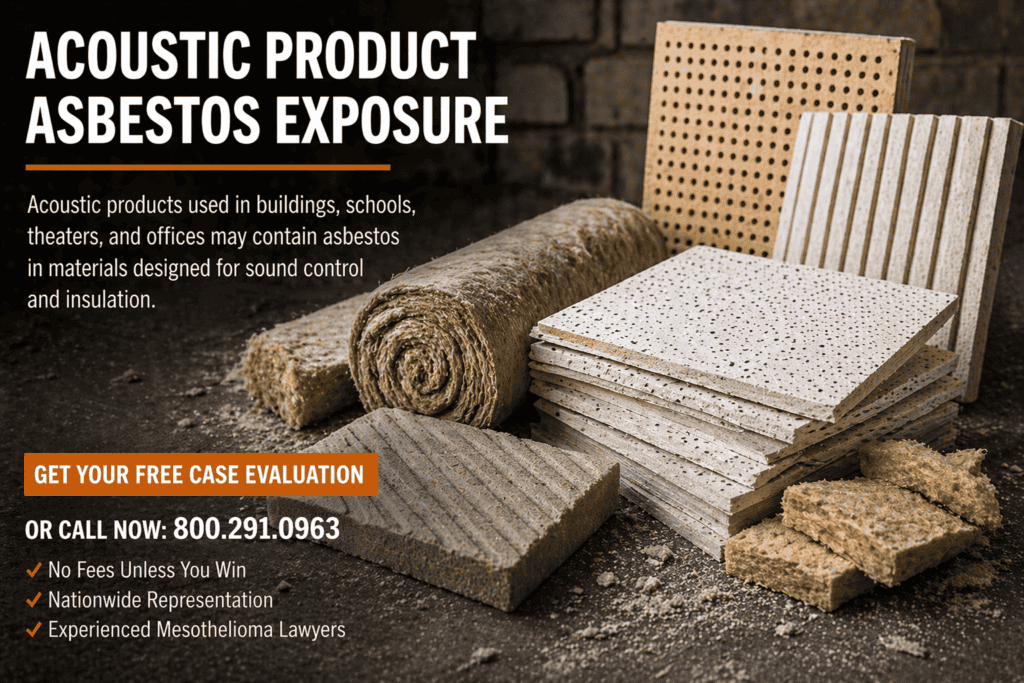
🎵 Acoustic Asbestos Products Mesothelioma Lawsuit
If you or a loved one has been diagnosed with mesothelioma or asbestos lung cancer due to exposure from acoustic asbestos products, you may qualify to file an acoustic mesothelioma lawsuit. Our experienced legal team helps workers, veterans, and families pursue financial compensation by identifying the companies responsible for their asbestos exposure—often through negligent practices and a failure to provide proper safety warnings. We carefully build strong legal cases based on occupational and environmental exposure history, including asbestos exposure from acoustic ceiling tiles, wall panels, sprayed insulation, decorative plasters, floor underlayment, and fireproof acoustic barriers.
Through acoustic asbestos lawsuits, victims may receive compensation for medical expenses, lost income, pain and suffering, long-term care, and wrongful death. At Mesothelioma Help Center, we guide families through every step of the legal process—with no upfront fees, and no payment unless we win. Our attorneys have decades of experience securing asbestos verdicts, settlements, and trust fund claims, helping victims hold negligent corporations accountable and obtain the justice they deserve.
📖 Here’s What You’ll Learn When You Read This Page:
🎵 Acoustic materials often contained asbestos to improve soundproofing, insulation, and fire resistance.
🏢 Workers were exposed while installing, spraying, or repairing acoustic ceilings and walls.
⚒️ Exposure was common in schools, offices, factories, and military housing.
📑 Victims of acoustic asbestos exposure have filed lawsuits and trust fund claims.
📌 Facts About Asbestos in Acoustic Products
• Many acoustic tiles, panels, and plasters manufactured before 1980 contained asbestos fibers
• Asbestos Exposure: High during cutting, sanding, or removal of acoustic materials
• Asbestos-Related Disease Risk: Significant for construction crews, insulators, and maintenance staff
• Dust released during renovations in confined areas heightened exposure risk
• Similar Occupations: Carpenters, drywall installers, painters, demolition workers, janitors
🏛️ History of Asbestos Use in Acoustic Materials
Beginning in the mid-20th century, acoustic products were heavily manufactured with asbestos for durability, noise reduction, and fire resistance. Acoustic ceiling tiles, wall panels, and sprayed coatings were installed in schools, offices, apartments, factories, and military bases.
Over time, repairs, drilling, sanding, or demolition disturbed these materials and released invisible asbestos fibers. Exposure was especially common for construction workers, maintenance crews, and janitors working inside aging buildings without protective equipment.
📊 Number of U.S. Workers Exposed to Asbestos from Acoustic Products
Acoustic insulation, panels, and tiles were widely used in American construction until the late 1970s. This exposed hundreds of thousands of workers in education, industrial, commercial, and residential settings.
| Occupational Group | Estimated Number of Workers Exposed |
|---|---|
| Construction & Renovation Crews | Over 300,000 worked on asbestos-acoustic ceilings and walls. |
| School Maintenance Staff | Around 200,000 janitors and custodians handled asbestos panels. |
| Insulation Installers | Approximately 150,000 sprayed asbestos-acoustic coatings. |
| Factory & Office Builders | Nearly 100,000 installed asbestos ceiling tiles and panels. |
| Military Base Crews | About 75,000 worked in barracks and offices with asbestos acoustics. |
| Demolition Workers | Roughly 50,000 disturbed asbestos panels during removals. |
Total Estimated Exposure:
Over 875,000 U.S. workers were exposed to asbestos through acoustic products in schools, offices, military bases, and industrial facilities.
🔊 Asbestos Acoustic Products
Acoustic materials were often manufactured with asbestos fibers to resist fire, reduce noise, and improve insulation. Cutting, sanding, or demolition of these products released harmful fibers, exposing countless workers and building occupants.
🎵 Acoustic Ceiling Tiles
Installed in schools, offices, and apartments. Cutting or replacing tiles released dangerous asbestos fibers into the air.
🎵 Sprayed Acoustic Insulation
Used in auditoriums and factories. Spraying or removal spread asbestos dust widely.
🎵 Wall Panels
Acoustic asbestos panels absorbed sound. Sanding or demolition disturbed fibers, endangering workers.
🎵 Decorative Plasters
Plasters reinforced with asbestos for fireproofing cracked over time, releasing fibers.
🎵 Floor Underlayment
Asbestos-acoustic flooring materials disturbed during renovations released harmful fibers.
🎵 Fireproof Acoustic Barriers
Used in theaters, schools, and industrial buildings. Repairs or demolition spread asbestos dust.
👷 Types of Workers & Asbestos Exposure from Acoustic
Acoustic tiles, panels, and sprayed insulation were common in commercial, residential, and military construction. Workers who manufactured, installed, or repaired these products were unknowingly exposed to toxic fibers released during cutting, sanding, or demolition.
👷 Carpenters
Carpenters installed and repaired acoustic ceilings and wall panels. Sawing and drilling disturbed asbestos, filling the air with dust. Exposure was daily and widespread across residential and commercial projects.
👷 Drywall Installers
Drywall crews installed asbestos-acoustic plaster and joint compounds. Sanding seams released fibers that lingered in enclosed rooms. Decades of exposure caused dangerous inhalation risks.
👷 Insulation Workers
Insulators sprayed asbestos-acoustic coatings in factories, schools, and offices. Overspray and sanding left fine dust in work areas, exposing crews without protective gear.
👷 Janitors & Custodians
School and office custodians swept asbestos tile dust daily. Maintenance tasks like drilling or replacing panels further exposed them to hidden asbestos hazards.
👷 Painters
Painters sanded, patched, and finished asbestos-acoustic walls and ceilings. Disturbing brittle surfaces released fibers, causing long-term occupational risks in commercial and residential spaces.
👷 Demolition Workers
Demolition crews tore out acoustic tiles and sprayed coatings. Dust clouds filled enclosed spaces, heavily exposing workers during building renovations or tear-downs.
👷 Maintenance Staff
Building staff drilled into acoustic ceilings, walls, and tiles for repairs. Routine work released asbestos, exposing them year after year in schools and offices.
👷 HVAC Crews
HVAC teams cut through asbestos-acoustic panels during installations. Ductwork repairs and ceiling access disturbed asbestos, releasing dust into confined mechanical spaces.
👷 Military Technicians
Military base workers handled asbestos-acoustic panels in barracks, offices, and ship facilities. Exposure in enclosed quarters was especially severe without protective gear.
👷 Factory Line Workers
Factories manufactured acoustic asbestos tiles and panels. Cutting, sanding, and packaging filled air with fibers, exposing thousands of workers daily.
❓ FAQs About Acoustic Products and Mesothelioma Lawsuits
Who qualifies?
Anyone diagnosed with mesothelioma or asbestos-caused lung cancer after working with or around asbestos-containing acoustic products may qualify for legal claims and asbestos trust fund compensation.
How did exposure happen?
Acoustic ceiling tiles, panels, plasters, and sprayed insulation often contained asbestos. Workers inhaled fibers when cutting, sanding, drilling, or demolishing these materials in schools, offices, and homes.
Are veterans eligible?
Yes. Veterans exposed to asbestos-based acoustic materials in military barracks, offices, and facilities may qualify for VA benefits plus additional legal compensation against negligent manufacturers.
What’s the filing deadline?
Most states allow 1–3 years from diagnosis or death to file lawsuits. Immediate legal action is vital to preserve rights and secure rightful financial compensation.
Do I pay anything upfront?
No. Our acoustic mesothelioma attorneys operate strictly on contingency. Clients pay nothing upfront, and fees are only collected if financial compensation is successfully recovered.
🏭 Manufacturers of Acoustic Asbestos Products
Acoustic tiles, panels, and insulation were produced by many companies that incorporated asbestos to strengthen materials and improve fire resistance. These products endangered workers who manufactured, installed, repaired, or demolished them.
🏭 Johns-Manville
Johns-Manville manufactured asbestos-acoustic ceiling panels and sprayed coatings. Cutting or removing these materials exposed workers in schools, offices, and factories.
🏭 Armstrong World Industries
Armstrong produced asbestos ceiling tiles widely installed in homes and public buildings. Renovations and demolitions released asbestos dust into occupied spaces.
🏭 USG (United States Gypsum)
USG manufactured asbestos plaster and acoustic ceiling products. Construction crews inhaled fibers during installation and sanding.
🏭 Owens-Corning Fiberglas
Owens-Corning produced asbestos acoustic insulation and panels. Workers exposed fibers during manufacturing, building, and renovations.
🏭 National Gypsum
National Gypsum distributed asbestos-acoustic wallboards and ceiling materials. Cutting and fitting these panels released asbestos dust in enclosed areas.
🏭 Celotex
Celotex ceiling tiles and wallboards contained asbestos. Workers in offices and schools were heavily exposed during installation and repair projects.
🏭 CertainTeed Corporation
CertainTeed manufactured asbestos-acoustic wall panels and tiles. Renovations disturbed fibers that exposed construction crews, school staff, and building occupants.
🔊 Acoustic Products Mesothelioma Cases
For decades, acoustic products like ceiling tiles, soundproofing sprays, wall panels, and insulation materials contained asbestos to improve fire resistance and sound absorption. Workers installing, repairing, or removing these materials frequently inhaled microscopic fibers released into the air. Contractors, drywall installers, and building maintenance crews working in schools, offices, theaters, and recording studios were particularly at risk. Many later developed mesothelioma due to long-term occupational exposure.
👥 Who Qualifies
Individuals diagnosed with mesothelioma who installed, manufactured, or removed asbestos-containing acoustic materials — including ceiling tiles, sprayed coatings, or soundproof panels — may qualify for compensation. Family members exposed secondhand from contaminated work clothes may also be eligible for claims.
📊 Statistics
Thousands of mesothelioma cases in the U.S. have been linked to asbestos acoustic materials.
Each year, numerous building contractors, maintenance workers, and renovation crews are diagnosed with asbestos diseases tied to soundproofing materials.
Settlements and asbestos trust fund awards often exceed six figures, with some verdicts reaching multi-million-dollar levels.
🔊 Acoustic Products Asbestos Lung Cancer Cases
Acoustic materials also contributed significantly to asbestos-related lung cancer. Sanding, drilling, or cutting asbestos-filled soundproofing released fine fibers into the air, which remained suspended for hours and were easily inhaled. Decades later, many workers developed lung cancer after long-term exposure in construction, demolition, or renovation settings.
👥 Who Qualifies
Individuals diagnosed with lung cancer who worked with or around asbestos acoustic products — including installers, painters, electricians, and maintenance crews — may qualify for claims. Family members exposed secondhand through dust brought home on work clothing may also be eligible.
📊 Statistics
Workers exposed to asbestos in acoustic materials face significantly higher risks of lung cancer compared to the general population.
Thousands of claims related to acoustic insulation and soundproofing products have been filed, often resulting in six-figure settlements or asbestos trust fund compensation.
📜 History of Mesothelioma and Asbestos Lung Cancer in Acoustic Work
1930s–1970s: Asbestos was routinely added to acoustic sprays, ceiling tiles, and wall coatings to reduce noise and improve fire resistance.
1980s: Regulations limited asbestos use, but older buildings continued to expose workers during renovations and maintenance.
Today: Many cases involve contractors, painters, and building engineers exposed while removing or disturbing asbestos soundproofing in aging schools, office buildings, and commercial properties.
⚖️ How a Mesothelioma Lawyer Can Help Acoustic Workers
If you or a loved one worked with acoustic asbestos products and have been diagnosed with mesothelioma, asbestos lung cancer, or asbestosis, legal support is available. Acoustic products—widely used in schools, homes, factories, and offices—were often reinforced with asbestos for strength and fire resistance. Workers in construction, maintenance, demolition, and manufacturing were heavily exposed while cutting, sanding, spraying, or disposing of acoustic components.
How a Mesothelioma Lawyer Can Help
🔎 Investigate Job Sites and Exposure Records
Attorneys trace asbestos exposure in schools, factories, military bases, and offices, documenting asbestos-acoustic ceilings, wall panels, and sprayed coatings.
📑 File Trust Fund Claims and Lawsuits
Lawyers file asbestos trust fund claims and lawsuits, recovering compensation for medical expenses, lost wages, long-term treatment needs, and financial stability for acoustic workers and their families.
👨👩👧 Represent Families of Deceased Workers
Wrongful death claims may be filed by surviving spouses, children, or estates for acoustic workers who passed away from mesothelioma or asbestos-related diseases.
💵 Work on a No-Win, No-Fee Basis
Acoustic asbestos claims are handled on contingency, meaning no upfront legal costs are required. Attorneys only receive payment if financial recovery is secured.
🎖️ Assist Veterans with Military-Related Exposure
Acoustic panels and sprayed insulation containing asbestos were common in military facilities. Lawyers assist veterans with both VA benefits claims and lawsuits against asbestos product manufacturers.
📞 Legal Help for Acoustic Asbestos Exposure
If you or a loved one worked with acoustic asbestos materials and developed mesothelioma, lung cancer, or asbestosis—you may be eligible for financial compensation.
📱 Call Now: 800.291.0963
• No upfront cost
• No fees unless we win
• Product and exposure research included
• Help for construction workers, janitors, teachers, veterans, and families
Or request help online 24/7