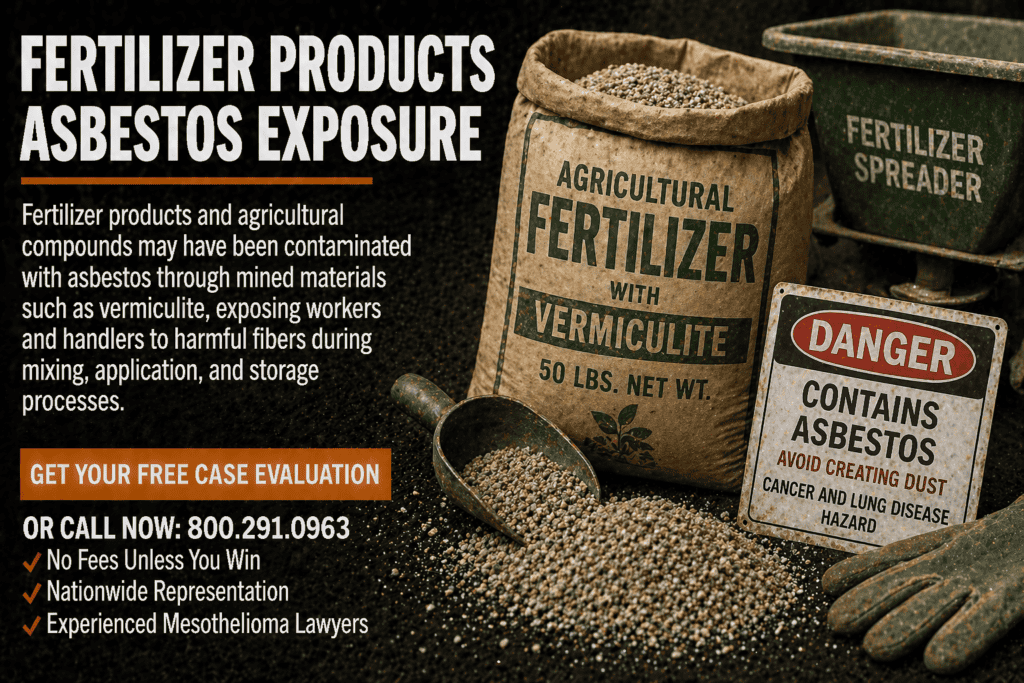
🌱 Fertilizer Asbestos Products Mesothelioma Lawsuits
If you or a loved one has been diagnosed with mesothelioma or asbestos lung cancer due to exposure from fertilizer asbestos products, you may qualify to file a fertilizer asbestos mesothelioma lawsuit. Our experienced legal team helps workers, farmers, and families pursue compensation by identifying the companies responsible for asbestos exposure—often through contaminated fertilizer, storage bags, or application equipment. We carefully investigate occupational and environmental exposure histories, including asbestos in vermiculite-based fertilizers, storage silos, spreading equipment, and packaging materials.
Through fertilizer asbestos lawsuits, victims may recover compensation for medical expenses, lost wages, pain and suffering, long-term care, and wrongful death. At Mesothelioma Help Center, we guide families through every step of the process—with no upfront fees, and no payment unless we win. Our attorneys have decades of experience securing asbestos verdicts, settlements, and trust fund claims, holding negligent corporations accountable for their dangerous use of asbestos.
📖 Here’s What You’ll Learn When You Read This Page:
🌱 Fertilizers, soil treatments, and storage bags sometimes contained asbestos.
🛠️ Workers inhaled fibers during packaging, application, and repairs.
🏭 Exposure occurred in farms, plants, storage silos, and mills.
📑 Victims have successfully filed asbestos lawsuits and trust fund claims.
📌 Facts About Asbestos in Fertilizer Products
• Vermiculite fertilizers were often contaminated with asbestos fibers
• Exposure Risk: High during packaging, spreading, or silo maintenance
• Disease Risk: Mesothelioma, lung cancer, and asbestosis among farmers, packagers, and factory staff
• Asbestos dust traveled from fields into homes and communities
• Similar Occupations: Farmers, mill workers, fertilizer packagers, truck drivers, silo crews
🏛️ History of Asbestos Use in Fertilizer Products
From the 1930s through the 1980s, asbestos entered fertilizers primarily through contaminated vermiculite, mined in Libby, Montana. The mineral was processed into soil conditioners and fertilizers, spreading asbestos contamination across farms nationwide.
Asbestos also appeared in fertilizer storage bags, silos, and application equipment. Workers packaging or spreading fertilizer unknowingly inhaled fibers. Family members were at risk through secondhand exposure from dusty clothing and contaminated soil.
📊 Number of U.S. Workers Exposed to Asbestos from Fertilizer Products
| Occupational Group | Estimated Number of Workers Exposed |
|---|---|
| Farmers & Agricultural Workers | Over 450,000 spread asbestos-contaminated fertilizers. |
| Fertilizer Plant Workers | Nearly 300,000 processed asbestos-tainted vermiculite fertilizers. |
| Silo & Storage Workers | About 220,000 handled asbestos-contaminated fertilizer silos. |
| Packaging Workers | Roughly 190,000 bagged asbestos fertilizers in dusty plants. |
| Truck Drivers | Nearly 150,000 hauled and unloaded asbestos fertilizer bags. |
| Farm Families | Over 100,000 exposed through secondhand contact with contaminated clothing and soil. |
Total Estimated Exposure:
Over 1.4 million Americans were exposed to asbestos through fertilizers.
🌱 Asbestos Fertilizer Products
🌱 Vermiculite Fertilizers
Vermiculite mined in Libby was contaminated with asbestos. Farmers spreading these products inhaled fibers directly, contaminating fields, clothing, and homes.
🌱 Fertilizer Storage Bags
Asbestos reinforced fertilizer bags. Factory packagers and farmers inhaled fibers when filling, carrying, and tearing bags during field application.
🌱 Soil Conditioners
Asbestos-contaminated vermiculite was mixed into soil conditioners. Handling dusty mixtures exposed farmers and gardeners during planting.
🌱 Silos & Storage Units
Asbestos cement was used in fertilizer silos. Maintenance disturbed materials, releasing fibers throughout storage facilities.
🌱 Spreading Equipment
Fertilizer spreaders often used asbestos gaskets and linings. Mechanics repairing equipment inhaled asbestos dust during service.
🌱 Protective Clothing
Some fertilizer workers used asbestos gloves and aprons. Handling contaminated fertilizers and equipment further heightened their exposure.
👷 Types of Workers & Asbestos Exposure from Fertilizer Products
👷 Farmers
Directly exposed spreading asbestos-contaminated fertilizers across fields. Dust inhaled daily.
👷 Fertilizer Plant Workers
Processed vermiculite-based fertilizers. Asbestos dust filled packaging areas.
👷 Truck Drivers
Transported asbestos fertilizer bags. Dust released during loading and unloading.
👷 Silo Workers
Handled asbestos silos storing fertilizers. Repairs disturbed asbestos linings.
👷 Maintenance Staff
Serviced spreading equipment lined with asbestos. Fibers inhaled during routine work.
👷 Packaging Workers
Exposed while filling and sealing asbestos fertilizer bags. Factories were dusty.
👷 Gardeners
Exposed using asbestos-tainted soil conditioners and fertilizers. Dust inhaled during planting.
👷 Farm Families
Experienced secondhand exposure from contaminated clothing and soil tracked home.
❓ FAQs About Fertilizer Products and Mesothelioma Lawsuits
Who qualifies?
Anyone diagnosed with mesothelioma or lung cancer after asbestos exposure from fertilizers may qualify for compensation.
How did exposure happen?
Fertilizers contaminated with asbestos released fibers during spreading, packaging, and storage.
Are veterans eligible?
Yes. Veterans working with fertilizer shipments or bases storing asbestos products may qualify for VA benefits and lawsuits.
What’s the filing deadline?
Most states allow 1–3 years from diagnosis or death to file. Quick action is essential.
Do I pay anything upfront?
No. Our asbestos fertilizer attorneys work on contingency—clients pay nothing unless recovery is secured.
🏭 Manufacturers of Fertilizer Asbestos Products
🏭 W.R. Grace & Company – Produced asbestos-contaminated vermiculite fertilizers from Libby, Montana. Farmers and factory staff inhaled fibers.
🏭 Johns-Manville – Supplied asbestos cement for fertilizer silos and spreading equipment. Repairs disturbed asbestos.
🏭 Eagle-Picher – Manufactured asbestos packaging materials for fertilizers. Workers inhaled fibers handling dusty bags.
🏭 Owens-Corning – Distributed asbestos insulation for fertilizer plants and equipment. Maintenance exposed staff.
🏭 Armstrong Cork Company – Supplied asbestos boards and gaskets for fertilizer machinery. Mechanics inhaled asbestos dust during repairs.
🏭 Celotex Corporation – Produced asbestos products used in fertilizer storage and mixing facilities. Workers exposed during handling.
🌾 Fertilizer Products Mesothelioma Cases
From the early 20th century through the 1980s, asbestos was widely used in fertilizer production facilities for its heat resistance, chemical stability, and insulation properties. Asbestos-lined furnaces, dryers, mixers, and piping systems were common throughout fertilizer plants. Workers were frequently exposed to airborne asbestos fibers while handling raw materials, performing maintenance, repairing machinery, or replacing insulation. Additionally, some phosphate fertilizers were contaminated with naturally occurring asbestos from mined minerals. Decades later, many fertilizer plant workers developed mesothelioma due to prolonged occupational exposure.
👥 Who Qualifies
Individuals diagnosed with mesothelioma after working with or around asbestos-containing fertilizer equipment — including plant operators, maintenance mechanics, chemical processors, and loading dock workers — may qualify for compensation. Family members exposed secondhand through contaminated work clothes may also be eligible.
📊 Statistics
-
Thousands of mesothelioma cases nationwide are linked to asbestos exposure in fertilizer manufacturing.
-
Workers involved in raw phosphate processing and machinery maintenance face the highest risk.
-
Settlements in fertilizer-related mesothelioma cases often exceed six figures, with compensation available through asbestos trust funds and legal claims.
🌾 Fertilizer Products Asbestos Lung Cancer Cases
Fertilizer plants used asbestos extensively in high-heat systems, reaction vessels, and protective materials. Cutting, sanding, or removing asbestos insulation during repairs released dangerous airborne fibers into work areas. Additionally, contaminated phosphate rock used in fertilizer production increased exposure risks. Workers inhaled asbestos over many years, leading to a significantly higher likelihood of developing asbestos-related lung cancer decades later.
👥 Who Qualifies
Individuals diagnosed with asbestos-related lung cancer who worked with or near fertilizer production equipment — including plant engineers, chemical technicians, maintenance crews, and transport workers — may qualify for compensation. Family members exposed to asbestos fibers brought home on work clothing may also be eligible.
📊 Statistics
-
Thousands of asbestos lung cancer lawsuits have been linked to fertilizer manufacturing operations.
-
Many claims result in six-figure settlements or asbestos trust fund compensation for medical costs, lost wages, and suffering.
📜 History of Mesothelioma and Asbestos Lung Cancer From Fertilizer Products
-
1930s–1970s: Asbestos was used extensively in fertilizer manufacturing equipment, piping, and insulation. Phosphate raw materials also contained natural asbestos contaminants.
-
1980s: Regulatory changes reduced asbestos use, but legacy systems continued to expose workers.
-
Today: Many diagnosed individuals include chemical plant operators, furnace technicians, maintenance workers, and raw material handlers who were exposed decades earlier during fertilizer production and plant operations.
⚖️ How a Mesothelioma Lawyer Can Help Fertilizer Workers & Families
If you or a loved one worked with fertilizer asbestos products and later developed mesothelioma, lung cancer, or asbestosis, legal help is available.
How a Mesothelioma Lawyer Can Help
🔎 Investigate Job Sites & Records – Attorneys trace asbestos fertilizer exposure in farms, plants, and storage facilities.
📑 File Trust Fund Claims & Lawsuits – Recover compensation for medical bills, lost income, and long-term care needs.
👨👩👧 Represent Families of Victims – File wrongful death lawsuits against negligent asbestos fertilizer companies.
💵 No-Win, No-Fee Basis – Clients owe nothing unless attorneys secure compensation.
🎖️ Assist Veterans – Support veterans with asbestos exposure from fertilizers in bases and supply chains.
📞 Legal Help for Fertilizer Asbestos Exposure
If you or a loved one worked with asbestos fertilizer products and developed mesothelioma, lung cancer, or asbestosis—you may qualify for financial compensation.
📱 Call Now: 800.291.0963
• No upfront cost
• No fees unless we win
• Product and exposure research included
• Help for farmers, plant workers, truck drivers, and families
Or request help online 24/7