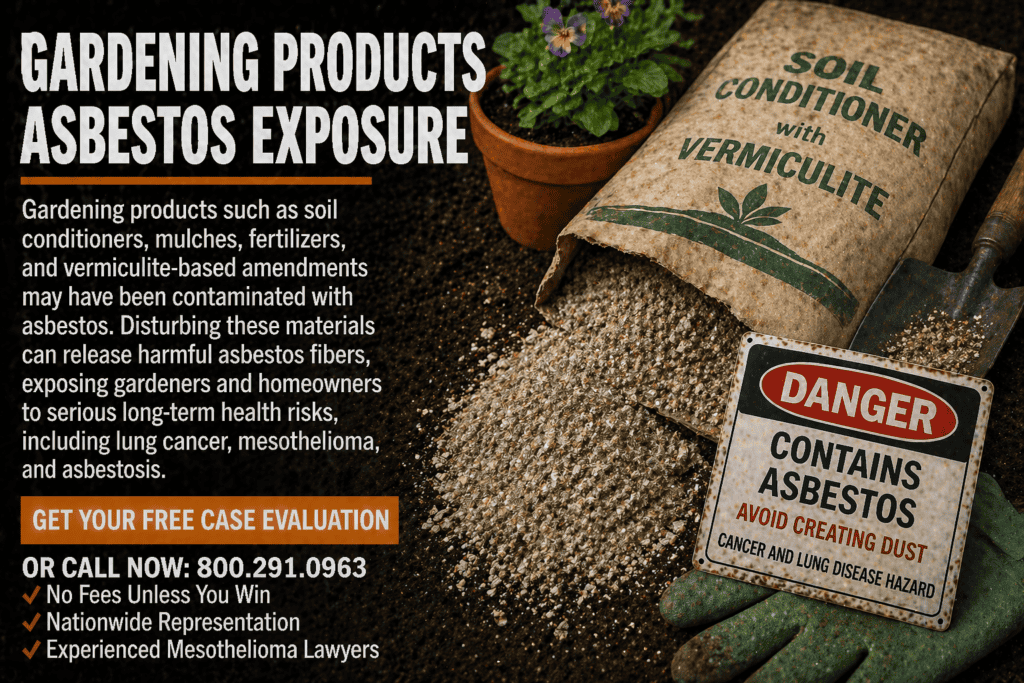
🌱 Gardening Asbestos Products Mesothelioma Lawsuits
If you or a loved one has been diagnosed with mesothelioma or asbestos lung cancer due to exposure from gardening asbestos products, you may qualify to file a gardening asbestos mesothelioma lawsuit. Our experienced legal team helps workers, homeowners, and families pursue financial compensation by identifying the companies responsible for asbestos exposure—often through asbestos-containing soils, fertilizers, and gardening equipment. We carefully build strong cases based on occupational and environmental histories, including asbestos exposure from vermiculite soil additives, planters, gloves, cement pots, and protective clothing.
Through gardening asbestos lawsuits, victims may recover compensation for medical bills, lost income, pain and suffering, long-term care, and wrongful death. At Mesothelioma Help Center, we provide full legal support—with no upfront fees, and no payment unless we win. Our attorneys have decades of experience securing asbestos verdicts, settlements, and trust fund claims, holding negligent corporations accountable for exposing gardeners, landscapers, and homeowners to asbestos risks.
📖 Here’s What You’ll Learn When You Read This Page:
🌱 Gardening soils and products often contained asbestos-based materials.
🛠️ Workers and homeowners inhaled fibers when planting, mixing, or repairing items.
🏡 Exposure occurred in gardens, nurseries, and landscaping projects.
📑 Victims have successfully filed lawsuits and asbestos trust fund claims.
📌 Facts About Asbestos in Gardening Products
• Vermiculite-based soil conditioners often contaminated with asbestos fibers
• Exposure Risk: High when mixing, pouring, or tilling soils or fertilizers
• Disease Risk: Mesothelioma and lung cancer among landscapers, nursery workers, and gardeners
• Fibers spread into homes on clothing and gardening tools
• Similar Occupations: Landscapers, nursery staff, agricultural workers, construction laborers, homeowners
🏛️ History of Asbestos Use in Gardening Products
From the 1940s through the 1980s, asbestos-contaminated vermiculite and other minerals were widely sold as soil conditioners, fertilizers, and potting mixes. Asbestos also reinforced cement planters and gardening gloves.
Homeowners and landscapers handling these products unknowingly disturbed asbestos fibers. Dust lingered in gardens, nurseries, and homes, exposing entire families through secondary contamination carried on clothing, shoes, and tools.
📊 Number of U.S. Workers Exposed to Asbestos from Gardening Products
| Occupational Group | Estimated Number of Workers Exposed |
|---|---|
| Landscapers & Gardeners | Over 310,000 exposed handling asbestos-contaminated soils. |
| Nursery Workers | Nearly 220,000 exposed mixing fertilizers and planting media. |
| Agricultural Workers | About 190,000 used asbestos soils and fertilizers. |
| Homeowners & DIY Gardeners | Roughly 170,000 exposed during planting projects. |
| Cement & Pot Makers | Around 130,000 handled asbestos planters and molds. |
| Maintenance Staff | Nearly 90,000 exposed repairing asbestos cement garden fixtures. |
Total Estimated Exposure:
More than 1.1 million Americans were exposed to asbestos from gardening products.
🌱 Asbestos Gardening Products
🌱 Vermiculite Soil Additives
Soil conditioners containing vermiculite often carried asbestos contamination. Gardeners mixing or pouring soil inhaled asbestos fibers while working outdoors and in greenhouses.
🌱 Fertilizers
Some fertilizers were blended with asbestos-contaminated minerals. Farmers and gardeners exposed themselves to asbestos dust while spreading and mixing these products.
🌱 Cement Pots & Planters
Garden pots, troughs, and planters reinforced with asbestos cement released fibers when chipped, drilled, or broken. Landscapers and homeowners faced significant risks.
🌱 Protective Gloves
Heat-resistant asbestos gloves were marketed for gardening and landscaping. Worn gloves shed fibers, exposing users during routine handling of soil, tools, and plants.
🌱 Garden Tools
Asbestos was used in handles of shovels and hoes for durability. Sanding or wear released asbestos fibers, endangering gardeners and toolmakers.
🌱 Outdoor Insulation
Some garden heaters, compost bins, and outdoor ovens contained asbestos insulation. Repairs or demolition disturbed fibers, contaminating soil and nearby air.
👷 Types of Workers & Asbestos Exposure from Gardening Products
👷 Landscapers
Exposed while planting and handling asbestos-contaminated soil conditioners. Dust lingered in outdoor air during projects.
👷 Nursery Workers
Mixed asbestos-tainted soil and fertilizers. Fibers circulated in greenhouses and storage areas.
👷 Agricultural Workers
Spread fertilizers contaminated with asbestos. Dust clouds exposed entire crews.
👷 Homeowners & DIY Gardeners
Handled asbestos planters and potting mixes. Household exposure spread fibers to family members.
👷 Cement Pot Makers
Molded asbestos-reinforced garden products. Cutting and shaping released fibers into workshops.
👷 Toolmakers
Crafted asbestos-handled shovels and hoes. Machining created dust hazards.
👷 Maintenance Staff
Exposed while repairing asbestos cement fixtures in public gardens and parks.
👷 Recycling Workers
Handled discarded asbestos planters and soil bags. Breaking and grinding spread asbestos dust.
❓ FAQs About Gardening Products and Mesothelioma Lawsuits
Who qualifies?
Anyone diagnosed with mesothelioma or lung cancer after working with asbestos-contaminated gardening products may qualify for lawsuits or trust fund compensation.
How did exposure happen?
Mixing soil, spreading fertilizers, and handling asbestos planters released asbestos fibers inhaled by gardeners and families.
Are veterans eligible?
Yes. Veterans maintaining base housing gardens or grounds with asbestos-contaminated products may qualify for VA benefits and lawsuits.
What’s the filing deadline?
Most states allow 1–3 years from diagnosis or death to file asbestos claims. Prompt action is crucial.
Do I pay anything upfront?
No. Our asbestos gardening attorneys work on contingency—clients pay nothing unless recovery is secured.
🏭 Manufacturers of Gardening Asbestos Products
🏭 W.R. Grace & Co. – Sold vermiculite soil conditioners contaminated with asbestos from Libby, Montana. Gardeners and nursery staff inhaled fibers while mixing.
🏭 Johns-Manville – Produced asbestos cement planters and troughs. Breaking or repairing them exposed landscapers and homeowners.
🏭 Armstrong Cork Company – Manufactured asbestos gardening gloves and boards. Wear and tear released fibers.
🏭 Eagle-Picher – Distributed asbestos adhesives and cement for garden fixtures. Workers disturbed fibers during repairs.
🏭 Celotex Corporation – Supplied asbestos insulation in outdoor gardening heaters. Maintenance released dangerous asbestos dust.
🏭 CertainTeed Corporation – Produced asbestos cement products used in landscaping and gardening. Cutting or demolition released fibers.
🌿 Gardening Products Mesothelioma Cases
From the 1940s through the late 1980s, asbestos was widely used in gardening products for its heat resistance, strength, and durability. It was commonly found in gardening gloves, planter boxes, soil additives, potting mixes, and even cement-based decorative items. As these products aged, routine gardening activities — including planting, tilling, repotting, and handling soil mixtures — released asbestos fibers into the air. Landscapers, nursery workers, groundskeepers, and home gardeners inhaled these fibers, putting them at risk of developing mesothelioma decades later.
👥 Who Qualifies
Individuals diagnosed with mesothelioma who worked with or around asbestos-containing gardening products — including landscapers, nursery employees, grounds maintenance crews, greenhouse workers, and home gardeners — may qualify for compensation. Family members exposed secondhand through contaminated clothing or gardening tools may also be eligible.
📊 Statistics
-
Thousands of mesothelioma cases have been linked to asbestos exposure from consumer and commercial gardening products.
-
Many affected individuals never worked in heavy industry but were exposed during everyday gardening or landscaping tasks.
-
Settlements from gardening-related asbestos cases often exceed six figures, with compensation available through asbestos trust funds and legal claims.
🌿 Gardening Products Asbestos Lung Cancer Cases
Asbestos exposure from gardening products also led to significant numbers of asbestos-related lung cancer cases. Fibers from gloves, soil amendments, and cement-based planters became airborne during planting, soil mixing, or outdoor cleanup. Groundskeepers and landscaping professionals working near older asbestos-insulated irrigation systems or greenhouse materials faced particularly high exposure risks. Even low-level, long-term exposure in residential settings has been linked to lung cancer diagnoses decades later.
👥 Who Qualifies
Individuals diagnosed with asbestos-related lung cancer who worked with or near asbestos-containing gardening materials — including landscapers, greenhouse workers, nursery staff, and home gardeners — may qualify for compensation. Family members exposed secondhand from contaminated gardening clothing or tools may also be eligible.
📊 Statistics
-
Numerous asbestos lung cancer lawsuits have been filed by individuals exposed to gardening materials at work or home.
-
Many victims have received six-figure settlements or asbestos trust fund compensation to help cover medical costs and lost income.
📜 History of Mesothelioma and Asbestos Lung Cancer From Gardening Products
-
1940s–1970s: Asbestos was added to gardening gloves, planters, soil conditioners, and decorative items for strength and fire resistance.
-
1980s: Consumer safety regulations began limiting asbestos use, but older gardening materials remained in circulation.
-
Today: Many cases involve landscapers, nursery workers, greenhouse staff, and homeowners who encountered asbestos decades ago during routine gardening, planting, and landscaping work.
⚖️ How a Mesothelioma Lawyer Can Help Gardeners & Families
If you or a loved one worked with asbestos gardening products and later developed mesothelioma, lung cancer, or asbestosis, legal support is available.
How a Mesothelioma Lawyer Can Help
🔎 Investigate Homes & Job Sites – Attorneys trace asbestos gardening product use in homes, nurseries, and landscaping projects.
📑 File Trust Fund Claims & Lawsuits – Recover compensation for medical costs, lost wages, and care needs.
👨👩👧 Represent Families of Victims – File wrongful death lawsuits against asbestos product manufacturers.
💵 No-Win, No-Fee Basis – Clients owe nothing unless compensation is recovered.
🎖️ Assist Veterans – Help veterans secure VA benefits for asbestos gardening exposure.
📞 Legal Help for Gardening Asbestos Exposure
If you or a loved one worked with asbestos gardening products and developed mesothelioma, lung cancer, or asbestosis—you may qualify for financial compensation.
📱 Call Now: 800.291.0963
• No upfront cost
• No fees unless we win
• Product and exposure research included
• Help for landscapers, nursery workers, homeowners, and families
Or request help online 24/7