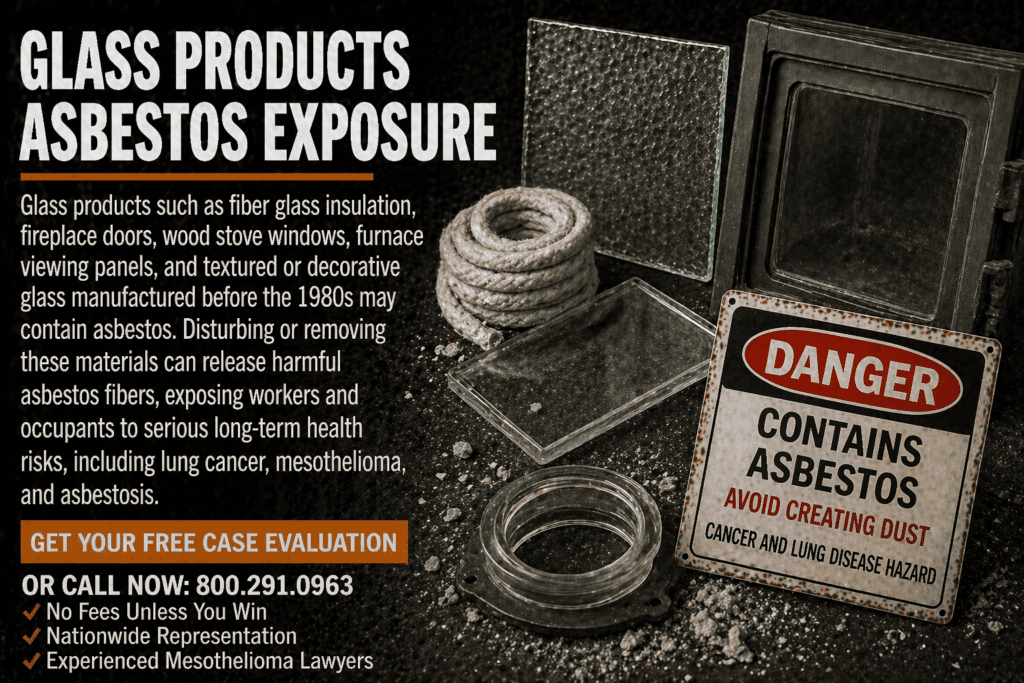
🪟 Glass Asbestos Products Mesothelioma Lawsuit
If you or a loved one has been diagnosed with mesothelioma or asbestos lung cancer due to exposure from glass asbestos products, you may qualify to file a glass asbestos mesothelioma lawsuit. Our experienced legal team helps workers, veterans, and families pursue financial compensation by identifying the companies responsible for asbestos exposure—often through unsafe product design and failure to warn. We carefully build strong cases based on occupational and environmental histories, including asbestos exposure from glassmaking furnaces, insulation, protective clothing, and reinforced glass composites.
Through glass asbestos lawsuits, victims may recover compensation for medical bills, lost wages, pain and suffering, long-term care, and wrongful death. At Mesothelioma Help Center, we support families through every stage of the process—with no upfront costs, and no payment unless we win. Our attorneys have decades of experience securing asbestos verdicts, settlements, and trust fund claims, holding negligent manufacturers accountable.
📖 Here’s What You’ll Learn When You Read This Page:
🪟 Asbestos was widely used in glass furnaces, insulation, and glass composites.
🛠️ Workers were exposed while producing, cutting, or repairing glass.
🏭 Exposure occurred in glass factories, foundries, and construction sites.
📑 Victims have successfully filed asbestos lawsuits and trust fund claims.
📌 Facts About Asbestos in Glass Products
• Asbestos insulation lined furnaces, kilns, and ovens in glass factories
• Exposure Risk: High during maintenance and furnace rebuilds
• Disease Risk: Mesothelioma and lung cancer in glassworkers, machinists, and repair crews
• Dust and fibers spread throughout facilities and nearby homes
• Similar Occupations: Furnace operators, engineers, maintenance staff, glass installers, and construction workers
🏛️ History of Asbestos Use in Glass Products
From the 1920s through the 1980s, asbestos was essential in the glass industry. Its fireproofing qualities made it ideal for furnace linings, insulation, and protective gear.
Asbestos was also mixed into reinforced glass panels, adhesives, and sealants for construction. Unfortunately, cutting, repairing, or demolishing these materials released dangerous asbestos fibers, exposing glassworkers, contractors, and their families to long-term health risks.
📊 Number of U.S. Workers Exposed to Asbestos from Glass Products
| Occupational Group | Estimated Number of Workers Exposed |
|---|---|
| Glass Factory Workers | Over 290,000 handled asbestos insulation and composites. |
| Furnace Operators | Nearly 210,000 worked around asbestos-lined furnaces. |
| Construction Crews | About 180,000 cut or installed asbestos glass panels. |
| Maintenance Staff | Roughly 150,000 repaired asbestos furnaces and equipment. |
| Engineers & Supervisors | Around 120,000 oversaw asbestos-filled facilities. |
| Homeowners & Installers | Nearly 90,000 exposed during installation of asbestos-reinforced glass. |
Total Estimated Exposure:
Over 1 million Americans faced asbestos exposure from glass industry products and reinforced construction glass.
🪟 Asbestos Glass Products
🪟 Furnace Linings
Asbestos bricks, cement, and boards lined furnaces in glass factories. Repairs and cleaning released toxic fibers into the air, exposing operators and maintenance staff.
🪟 Kiln Insulation
Glass kilns were insulated with asbestos boards and blankets. Routine servicing disturbed asbestos, placing workers at serious risk in poorly ventilated areas.
🪟 Protective Clothing
Workers wore asbestos aprons, gloves, and mitts in glass plants. Over time, protective fabrics released asbestos dust, exposing glassmakers and furnace crews.
🪟 Reinforced Glass Panels
Construction panels included asbestos composites for fire resistance. Cutting and installation released asbestos fibers, exposing builders and glass installers.
🪟 Adhesives & Sealants
Asbestos adhesives sealed glass joints in industrial and construction projects. Sanding and repairs disturbed asbestos, contaminating work areas.
🪟 Oven & Mold Components
Glass ovens and molds used asbestos insulation. Handling and repairs exposed machinists and glassworkers to dangerous asbestos fibers.
👷 Types of Workers & Asbestos Exposure from Glass Products
👷 Glass Factory Workers
Handled asbestos daily in furnaces, kilns, and molds. Exposure occurred during every shift in dusty environments.
👷 Furnace Operators
Ran asbestos-lined furnaces. Cleaning and repairs disturbed asbestos, releasing fibers into confined work areas.
👷 Maintenance Crews
Repaired insulation, furnaces, and equipment lined with asbestos. Routine jobs disturbed fibers, exposing staff daily.
👷 Construction Workers
Installed asbestos-reinforced glass panels in homes and buildings. Cutting and fitting spread asbestos dust.
👷 Engineers & Supervisors
Oversaw asbestos-lined glass factories. Indirect exposure occurred through daily presence in contaminated facilities.
👷 Machinists & Toolmakers
Serviced molds and machines insulated with asbestos. Grinding and cutting parts released dust.
👷 Homeowners & Installers
Exposed installing or removing asbestos glass panels. DIY projects spread asbestos throughout households.
👷 Recycling & Salvage Workers
Handled asbestos-containing glass scrap. Breaking and cutting contaminated salvage yards with asbestos dust.
❓ FAQs About Glass Products and Mesothelioma Lawsuits
Who qualifies?
Anyone diagnosed with mesothelioma or lung cancer after working with asbestos-containing glass products may qualify for lawsuits or trust fund compensation.
How did exposure happen?
Asbestos insulation, glass panels, adhesives, and clothing released toxic fibers when cut, repaired, or disposed of.
Are veterans eligible?
Yes. Veterans working in glass plants or handling asbestos glass construction may qualify for VA benefits and lawsuits.
What’s the filing deadline?
Most states allow 1–3 years from diagnosis or death to file asbestos claims. Immediate legal action preserves rights.
Do I pay anything upfront?
No. Our asbestos glass product attorneys work on contingency—clients pay nothing unless financial recovery is achieved.
🏭 Manufacturers of Glass Asbestos Products
🏭 Johns-Manville – Produced asbestos insulation for glass furnaces and kilns. Workers exposed during daily operations.
🏭 Owens-Corning – Supplied asbestos composites used in reinforced glass panels. Installers inhaled dust during construction.
🏭 Eagle-Picher – Made asbestos cement and adhesives for glass factories. Application and repairs exposed staff.
🏭 Armstrong Cork Company – Manufactured asbestos boards for furnaces. Maintenance crews disturbed insulation.
🏭 National Gypsum Company – Distributed asbestos construction materials for glass installations. Builders and contractors exposed during cutting.
🏭 CertainTeed Corporation – Produced asbestos panels and coatings for reinforced glass. Workers inhaled fibers during installation.
Glass Products Mesothelioma Cases
⚖️ How a Mesothelioma Lawyer Can Help Glass Workers & Families
If you or a loved one worked with asbestos glass products and later developed mesothelioma, lung cancer, or asbestosis, legal support is available.
How a Mesothelioma Lawyer Can Help
🔎 Investigate Job Sites & Records – Attorneys trace asbestos glass use in factories and construction sites.
📑 File Trust Fund Claims & Lawsuits – Recover compensation for medical bills, lost income, and long-term care.
👨👩👧 Represent Families of Victims – File wrongful death lawsuits against negligent manufacturers.
💵 No-Win, No-Fee Basis – Clients pay nothing unless attorneys secure recovery.
🎖️ Assist Veterans – Help veterans pursue VA benefits and asbestos lawsuits.
📞 Legal Help for Glass Asbestos Exposure
If you or a loved one worked with asbestos glass products and developed mesothelioma, lung cancer, or asbestosis—you may be eligible for financial compensation.
📱 Call Now: 800.291.0963
• No upfront cost
• No fees unless we win
• Product and exposure research included
• Help for glassworkers, furnace crews, and families
Or request help online 24/7