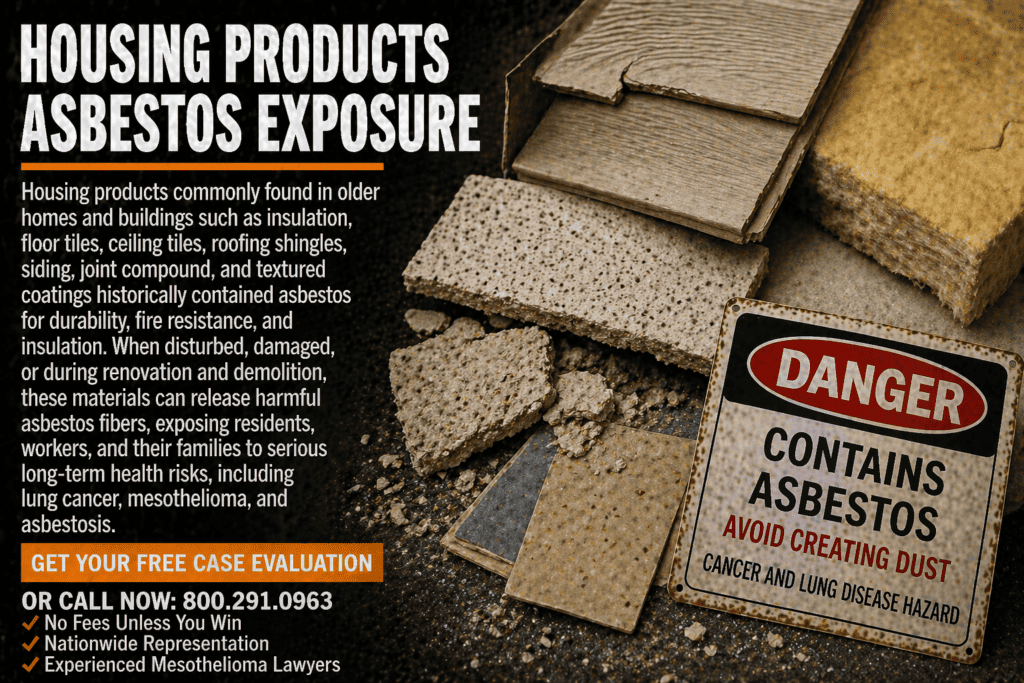
🏠 Housing Asbestos Products Mesothelioma Lawsuits
If you or a loved one has been diagnosed with mesothelioma or asbestos lung cancer due to exposure from housing asbestos products, you may qualify to file a housing asbestos mesothelioma lawsuit. Our experienced legal team helps workers, veterans, and families pursue financial compensation by identifying the companies responsible for asbestos exposure—often through dangerous building materials and failure to warn about risks. We carefully build strong cases based on occupational and environmental histories, including asbestos exposure from siding, roofing, insulation, drywall, flooring, and cement used in homes.
Through housing asbestos lawsuits, victims may recover compensation for medical bills, lost income, pain and suffering, long-term care, and wrongful death. At Mesothelioma Help Center, we guide families through the legal process—with no upfront fees, and no payment unless we win. Our attorneys have decades of experience securing verdicts, settlements, and asbestos trust fund claims, holding corporations accountable for harming millions of homeowners and workers.
📖 Here’s What You’ll Learn When You Read This Page:
🏠 Asbestos was widely used in residential building materials.
🛠️ Workers and homeowners faced exposure during construction, renovation, and demolition.
🏭 Asbestos housing products were common from the 1930s through the 1980s.
📑 Victims have successfully filed lawsuits and asbestos trust fund claims.
📌 Facts About Asbestos in Housing Products
• Homes built before 1980 often contained asbestos materials
• Exposure Risk: High during renovations and demolitions of asbestos-laden housing
• Disease Risk: Severe for builders, homeowners, and families
• Dust spread throughout indoor environments, affecting residents long-term
• Similar Occupations: Carpenters, roofers, painters, flooring installers, maintenance crews
🏛️ History of Asbestos Use in Housing Products
Between the 1930s and 1980s, asbestos was a staple in residential construction. It was blended into siding, roofing, insulation, flooring, and drywall for fire resistance, durability, and affordability.
Unfortunately, cutting, sanding, and demolishing these housing materials released toxic asbestos fibers. Builders, contractors, and do-it-yourself homeowners were exposed, while families faced secondary exposure from fibers tracked inside homes on clothing.
📊 Number of U.S. Workers Exposed to Asbestos from Housing Products
| Occupational Group | Estimated Number of Workers Exposed |
|---|---|
| Construction Workers | Over 1,300,000 built homes using asbestos products. |
| Carpenters | Nearly 850,000 cut and installed asbestos siding, drywall, and panels. |
| Roofers | Around 680,000 installed asbestos shingles and roofing sheets. |
| Flooring Installers | About 560,000 handled asbestos floor tiles and adhesives. |
| Insulation Workers | Roughly 430,000 applied asbestos insulation in attics and walls. |
| Homeowners & Families | More than 390,000 exposed through do-it-yourself projects. |
Total Estimated Exposure:
Over 4.2 million Americans were exposed to asbestos in housing construction and renovations.
🏠 Asbestos Housing Products
🏠 Siding
Asbestos siding was durable and fireproof. Cutting and replacing siding during renovations released asbestos fibers, exposing construction crews and homeowners to dangerous airborne dust.
🏠 Roofing Shingles
Asbestos shingles and roofing sheets were widely installed. Roofers and homeowners faced exposure cutting, drilling, or removing asbestos materials.
🏠 Drywall & Joint Compound
Homes often contained asbestos drywall and finishing compounds. Sanding and remodeling released asbestos fibers, contaminating living spaces.
🏠 Floor Tiles & Adhesives
Vinyl and asphalt floor tiles included asbestos. Removing or sanding these tiles disturbed fibers, exposing flooring crews and families.
🏠 Pipe & Attic Insulation
Asbestos insulation was installed in pipes, attics, and walls. Repairs and retrofits disturbed insulation, exposing both workers and homeowners.
🏠 Cement Sheets & Panels
Asbestos cement boards lined walls and ceilings. Demolition or drilling released asbestos fibers in confined residential areas.
👷 Types of Workers & Asbestos Exposure from Housing Products
👷 Construction Crews
Built homes with asbestos siding, roofing, and insulation. Cutting and fitting materials released fibers into worksites and neighborhoods.
👷 Carpenters
Installed asbestos wall panels, siding, and drywall. Routine cutting exposed carpenters daily.
👷 Roofers
Handled asbestos roofing shingles and sheets. Breaking or replacing materials released fibers widely.
👷 Flooring Installers
Laid asbestos floor tiles and adhesives. Removal and sanding created high exposure risks.
👷 Insulation Workers
Applied asbestos insulation in attics and walls. Dust spread throughout homes.
👷 Homeowners & DIY Crews
Exposed using asbestos products during repairs. Families inhaled fibers disturbed during renovations.
👷 Maintenance Staff
Patched asbestos walls and floors in apartments and housing complexes.
👷 Demolition Crews
Tore down asbestos-containing houses. Breaking siding, roofing, and panels spread asbestos dust heavily.
❓ FAQs About Housing Products and Mesothelioma Lawsuits
Who qualifies?
Anyone diagnosed with mesothelioma or lung cancer after exposure to asbestos housing materials may qualify for lawsuits or trust fund claims.
How did exposure happen?
Cutting, sanding, and demolishing asbestos siding, roofing, insulation, and flooring released toxic fibers into homes and neighborhoods.
Are veterans eligible?
Yes. Veterans exposed to asbestos in military housing and base construction may qualify for VA benefits and lawsuits.
What’s the filing deadline?
Most states allow 1–3 years from diagnosis or death to file asbestos lawsuits. Immediate legal action is critical.
Do I pay anything upfront?
No. Our housing asbestos attorneys work on contingency—clients pay nothing unless recovery is obtained.
🏭 Manufacturers of Housing Asbestos Products
🏭 Johns-Manville – Produced asbestos siding, roofing, and insulation. Construction crews and homeowners inhaled asbestos dust cutting and installing these products.
🏭 National Gypsum Company – Manufactured asbestos drywall and joint compound. Workers sanding walls and ceilings inhaled toxic fibers.
🏭 Owens-Corning – Supplied asbestos insulation batts and attic materials. Renovations disturbed fibers, exposing workers and families.
🏭 Celotex Corporation – Distributed asbestos cement sheets and wall panels. Carpenters and demolition crews encountered high exposure.
🏭 GAF Corporation – Manufactured asbestos roofing shingles widely installed in homes. Roofers and homeowners faced exposure replacing and removing these materials.
🏭 Armstrong Cork Company – Produced asbestos floor tiles and adhesives. Flooring installers and residents were exposed during installation and renovations.
🏠 Housing Products Mesothelioma Cases
From the early 1900s through the late 1980s, asbestos was widely used in housing products for its affordability, strength, and exceptional fire- and heat-resistant properties. It was found in roofing shingles, siding panels, floor tiles, pipe insulation, wallboard, joint compound, plaster, and cement-based building materials across millions of homes in the United States. Builders, carpenters, roofers, plumbers, and electricians frequently encountered asbestos fibers during construction, remodeling, and repairs — especially when cutting, drilling, sanding, or removing older materials. These airborne fibers were easily inhaled or carried home on clothing, leading to mesothelioma decades later.
👥 Who Qualifies
Individuals diagnosed with mesothelioma after working with or around asbestos-containing housing materials — including construction workers, homebuilders, plumbers, electricians, roofers, and insulation installers — may qualify for compensation. Family members exposed secondhand through contaminated work clothes may also be eligible.
📊 Statistics
-
Tens of thousands of mesothelioma cases have been linked to asbestos exposure in residential construction and renovation.
-
Many homeowners and do-it-yourself renovators were unknowingly exposed while updating older homes built before the 1980s.
-
Settlements for housing-related asbestos cases often exceed six figures, with additional compensation available through asbestos trust funds.
🏠 Housing Products Asbestos Lung Cancer Cases
Housing materials were also a major contributor to asbestos-related lung cancer, particularly for construction and home renovation workers. Tasks such as tearing out old insulation, removing floor tiles, replacing roofing, or cutting through asbestos cement released clouds of microscopic fibers into the air. Because asbestos was present in so many household components, even occasional exposure over many years significantly increased cancer risk. Homeowners, tenants, and maintenance workers could also be exposed when deteriorating materials released fibers into living spaces.
👥 Who Qualifies
Individuals diagnosed with asbestos-related lung cancer who worked with or near asbestos-containing housing materials — including homebuilders, renovation contractors, electricians, and plumbers — may qualify for compensation. Family members exposed secondhand may also be eligible for claims.
📊 Statistics
-
Thousands of asbestos lung cancer lawsuits have been filed by workers and homeowners exposed during residential construction and renovation.
-
Successful claims often result in substantial settlements or compensation from asbestos trust funds.
📜 History of Mesothelioma and Asbestos Lung Cancer From Housing Products
-
1920s–1970s: Asbestos was heavily used in roofing, siding, floor tiles, insulation, and joint compounds in millions of American homes. Construction workers and homeowners frequently handled these products without proper safety equipment.
-
1980s: Federal regulations restricted asbestos use, but older homes continued to expose workers and residents during renovations and repairs.
-
Today: Many diagnosed individuals include construction tradesmen, home renovators, electricians, plumbers, and homeowners exposed decades earlier while building, remodeling, or maintaining asbestos-containing houses.
⚖️ How a Mesothelioma Lawyer Can Help Housing Workers & Families
If you or a loved one worked with or lived around asbestos housing materials and later developed mesothelioma, lung cancer, or asbestosis, legal assistance is available.
How a Mesothelioma Lawyer Can Help
🔎 Investigate Homes & Job Sites – Attorneys trace asbestos housing use in construction projects and residential renovations.
📑 File Trust Fund Claims & Lawsuits – Compensation for medical bills, lost wages, and treatment costs.
👨👩👧 Represent Families of Victims – Wrongful death lawsuits provide justice and financial relief.
💵 Work on a No-Win, No-Fee Basis – Clients pay nothing unless financial recovery is secured.
🎖️ Assist Veterans – Support VA claims tied to asbestos exposure in military and base housing.
📞 Legal Help for Housing Asbestos Exposure
If you or a loved one worked with or lived around asbestos housing products and developed mesothelioma, lung cancer, or asbestosis—you may qualify for compensation.
📱 Call Now: 800.291.0963
• No upfront cost
• No fees unless we win
• Product and exposure research included
• Help for builders, carpenters, roofers, homeowners, and families
Or request help online 24/7