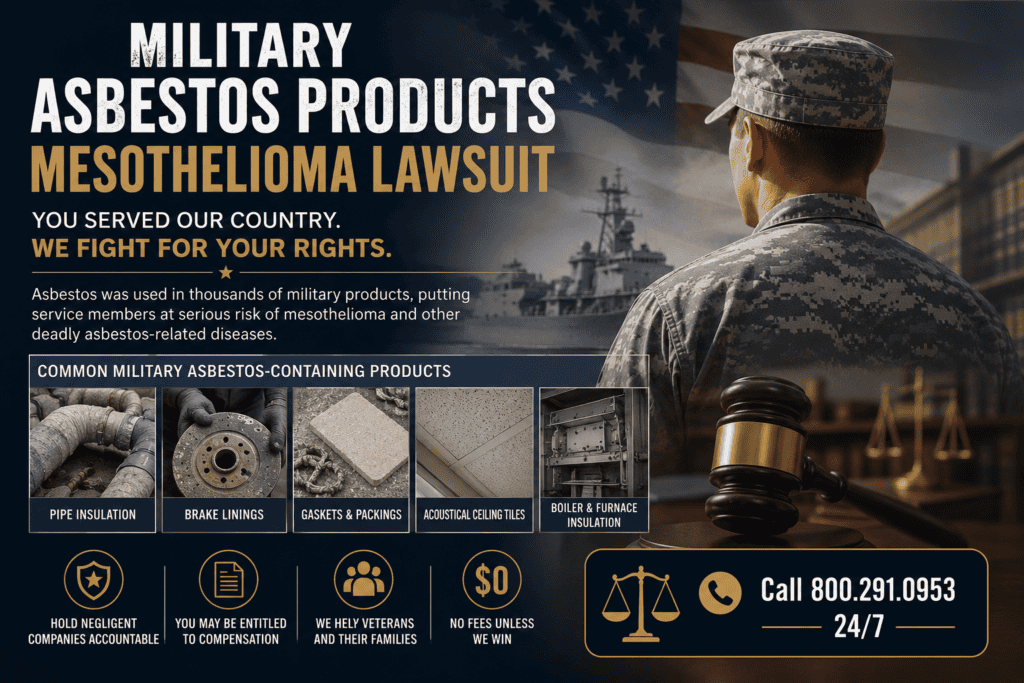
🎖️ Military Asbestos Products Mesothelioma Lawsuit
If you or a loved one has been diagnosed with mesothelioma or asbestos lung cancer due to exposure from military asbestos products, you may qualify to file a military asbestos mesothelioma lawsuit. Our legal team helps service members, veterans, and families pursue compensation by identifying the companies and government contractors responsible for asbestos exposure—often caused by negligent use of asbestos without adequate safety warnings. We carefully build strong cases based on occupational and service records, including asbestos exposure from ships, aircraft, vehicles, bases, and protective equipment.
Through military asbestos lawsuits, victims may recover compensation for medical bills, lost wages, long-term care, and wrongful death. At Mesothelioma Help Center, we guide veterans and families through each step—with no upfront fees, and no payment unless we win. Our attorneys have decades of experience securing asbestos verdicts, settlements, and trust fund claims for military personnel exposed across every branch of service.
📖 Here’s What You’ll Learn When You Read This Page:
🎖️ Asbestos was used in nearly all U.S. military branches for decades.
⚓ Exposure was widespread in Navy ships, aircraft, vehicles, and barracks.
🏭 Veterans and civilian contractors faced risks during service and repairs.
📑 Many military asbestos victims qualify for VA benefits and legal claims.
📌 Facts About Asbestos in Military Products
• Military ships, planes, and bases relied on asbestos for heat resistance and durability
• Asbestos Exposure: High during ship repair, vehicle maintenance, and base construction
• Disease Risk: Severe for Navy, Army, Air Force, and Marine veterans
• Dust spread quickly in confined quarters aboard vessels, barracks, or planes
• Similar Roles: Mechanics, shipbuilders, electricians, welders, construction crews
🏛️ History of Asbestos Use in the Military
From World War II through the late 1970s, asbestos was used extensively across the U.S. military. Ships, submarines, planes, tanks, barracks, and bases all contained asbestos in insulation, gaskets, brakes, flooring, and protective gear.
Because asbestos was cheap, durable, and heat-resistant, military contractors used it widely, often ignoring health warnings. Service members, civilian workers, and even families living on bases were exposed to dangerous fibers that caused lifelong health risks.
📊 Number of U.S. Service Members Exposed to Asbestos
| Military Group | Estimated Number Exposed |
|---|---|
| Navy Sailors & Shipyard Crews | Over 1,200,000 exposed during ship construction and repair. |
| Army Mechanics & Engineers | Nearly 850,000 handled asbestos vehicle and base materials. |
| Air Force Technicians | Around 620,000 worked with asbestos aircraft brakes, gaskets, and housing. |
| Marine Corps Service Members | About 450,000 exposed aboard Navy ships and bases. |
| Civilian Defense Contractors | Over 500,000 exposed building and maintaining military facilities. |
Total Estimated Exposure:
More than 3.6 million U.S. service members and contractors were exposed to asbestos through military products.
🎖️ Military Asbestos Products
Asbestos was integrated into countless military applications.
🎖️ Ship Insulation
Navy ships relied on asbestos insulation around pipes, boilers, and turbines. Sailors and shipyard crews disturbed these fibers daily during operations, repairs, and refits in confined environments.
🎖️ Aircraft Components
Asbestos reinforced brakes, gaskets, and engine parts in military aircraft. Air Force technicians and mechanics faced inhalation risks while replacing, sanding, or repairing asbestos-containing aviation components.
🎖️ Vehicle Parts
Army jeeps, trucks, and tanks used asbestos brakes, clutches, and gaskets. Mechanics and engineers inhaled asbestos dust during routine service and battlefield maintenance.
🎖️ Barracks & Housing
Military housing and barracks included asbestos tiles, roofing, and insulation. Construction crews, base staff, and families were unknowingly exposed during installation, repair, or deterioration.
🎖️ Protective Gear
Asbestos gloves, aprons, and fireproof suits protected soldiers from burns. Prolonged wear, cleaning, or disposal of this gear released asbestos fibers directly onto skin, hair, and clothing.
🎖️ Boiler & Engine Rooms
Navy boiler and engine rooms were packed with asbestos insulation. Repairs released fibers into the air, exposing sailors and engineers to constant risk during missions.
👷 Types of Service Members & Workers Exposed to Military Asbestos
👷 Navy Sailors
Lived and worked in ships filled with asbestos insulation. Daily operations in engine rooms, boiler rooms, and living quarters released fibers in confined environments.
👷 Army Mechanics
Serviced jeeps, trucks, and tanks with asbestos clutches and brakes. Grinding and replacing parts generated toxic dust that filled poorly ventilated garages and motor pools.
👷 Air Force Technicians
Maintained aircraft using asbestos gaskets, brake pads, and insulation. Routine inspections and repairs created airborne fibers, exposing entire hangar crews to asbestos.
👷 Marine Corps Crews
Deployed aboard Navy ships and bases. Marines inhaled asbestos dust while living and working in contaminated environments without protective equipment.
👷 Shipyard Workers
Civilian and enlisted shipyard crews repaired Navy vessels. Cutting, sanding, and removing asbestos insulation created heavy exposure risks in dry docks and naval yards.
👷 Base Construction Crews
Built barracks, hangars, and storage facilities with asbestos tiles and roofing. Cutting and installing materials exposed carpenters, masons, and electricians daily.
👷 Boiler Operators
Maintained asbestos-lined boilers on ships and bases. Constant repairs released fibers that contaminated entire workspaces and crew quarters.
👷 Defense Contractors
Civilian employees manufacturing asbestos military products were exposed in factories, often carrying fibers home to families through clothing and equipment.
❓ FAQs About Military Products and Mesothelioma Lawsuits
Who qualifies?
Any veteran or contractor diagnosed with mesothelioma or lung cancer from asbestos exposure in military service may qualify for lawsuits or VA benefits.
How did exposure happen?
Ships, aircraft, bases, and vehicles contained asbestos insulation, brakes, tiles, and gaskets. Repairs, retrofits, or daily operations released dangerous fibers.
Are veterans eligible?
Yes. Veterans qualify for both VA benefits and lawsuits against asbestos manufacturers and contractors supplying the military.
What’s the filing deadline?
Most states allow 1–3 years from diagnosis or death to file claims. Quick legal action is critical to protect rights.
Do I pay anything upfront?
No. Our attorneys handle military asbestos claims on contingency. Clients pay nothing unless compensation is recovered.
🏭 Manufacturers of Military Asbestos Products
Several corporations supplied asbestos to the U.S. military.
🏭 Johns-Manville – Supplied asbestos insulation and panels for ships, bases, and housing.
🏭 Raybestos-Manhattan – Manufactured asbestos brakes and clutches for Army vehicles.
🏭 Owens-Corning – Distributed asbestos insulation and roofing for bases and barracks.
🏭 Eagle-Picher – Produced asbestos coatings, gaskets, and panels for military equipment.
🏭 Armstrong Cork Company – Made asbestos ceiling, flooring, and fireproofing products for military use.
🏭 General Electric – Manufactured asbestos electrical components used in bases and Navy ships.
🪖 Military Asbestos Products Mesothelioma Cases
From World War II through the late 1980s, asbestos was widely used across all branches of the U.S. military due to its unmatched fire resistance, heat insulation, and durability. It was incorporated into ships, submarines, aircraft, tanks, vehicles, barracks, and bases — often in boilers, piping, gaskets, brake linings, insulation, and protective gear. Sailors, soldiers, airmen, and Marines were frequently exposed while maintaining or repairing military equipment, replacing components, or living and working in asbestos-contaminated environments. Decades later, thousands of veterans developed mesothelioma, an aggressive cancer caused by inhaling asbestos fibers during their service.
👥 Who Qualifies
Veterans diagnosed with mesothelioma after working with or around asbestos-containing military equipment, ships, vehicles, or buildings may qualify for compensation. Family members exposed secondhand through contaminated uniforms or gear may also be eligible for claims.
📊 Statistics
-
The U.S. Department of Veterans Affairs (VA) estimates that over 30% of all mesothelioma patients are military veterans.
-
The Navy had the highest asbestos use, with nearly every ship built before 1980 containing asbestos insulation and components.
-
Settlements for military-related mesothelioma cases often exceed $1 million, with additional compensation available through VA benefits and asbestos trust funds.
🪖 Military Asbestos Products Asbestos Lung Cancer Cases
Asbestos exposure in the military also led to thousands of asbestos-related lung cancer cases among veterans and civilian contractors. Routine maintenance tasks — including replacing brake pads in military vehicles, repairing boiler rooms on ships, or servicing aircraft insulation — released asbestos dust into enclosed spaces. Many veterans were unknowingly exposed daily, often without protective equipment, significantly increasing their long-term risk of developing lung cancer.
👥 Who Qualifies
Veterans and civilian defense workers diagnosed with asbestos-related lung cancer who served on ships, bases, aircraft, or armored vehicles containing asbestos products may qualify for compensation. Family members exposed through contaminated uniforms or gear may also be eligible.
📊 Statistics
-
Thousands of asbestos-related lung cancer claims have been filed by veterans and military workers.
-
Many cases result in six-figure settlements, VA disability compensation, or asbestos trust fund payouts covering medical costs and lost income.
📜 History of Mesothelioma and Asbestos Lung Cancer From Military Products
-
1930s–1970s: Asbestos was heavily used in ships, aircraft, bases, and vehicles for insulation, fireproofing, and mechanical durability.
-
1980s: Regulations and awareness led to reductions in asbestos use, but many military facilities and vehicles still contained asbestos materials.
-
Today: Veterans remain one of the largest groups affected by asbestos diseases, with many diagnoses linked to exposure decades earlier during active service or military support work.
⚖️ How a Mesothelioma Lawyer Can Help Military Veterans
If you or a loved one served in the military and were later diagnosed with mesothelioma, asbestos lung cancer, or asbestosis, legal help is available. Military asbestos lawsuits have delivered justice to thousands of veterans.
How a Mesothelioma Lawyer Can Help
🔎 Investigate Service Records and Job Duties
Attorneys trace asbestos exposure from ships, planes, vehicles, and bases during military service.
📑 File VA Claims and Lawsuits
Lawyers help veterans secure VA benefits while pursuing lawsuits against asbestos manufacturers.
👨👩👧 Represent Families of Deceased Veterans
Wrongful death lawsuits provide justice for families who lost loved ones to asbestos disease.
💵 Work on a No-Win, No-Fee Basis
No upfront legal fees—attorneys are only paid if compensation is secured.
🎖️ Assist with Military-Specific Exposure Cases
Attorneys focus on asbestos exposure unique to Navy, Army, Air Force, and Marine service.
📞 Legal Help for Military Asbestos Exposure
If you or a loved one served in the U.S. military and developed mesothelioma, lung cancer, or asbestosis—you may be entitled to financial compensation.
📱 Call Now: 800.291.0963
• No upfront cost
• No fees unless we win
• Service and exposure history research included
• Help for Navy, Army, Air Force, Marine, and contractor families
Or request help online 24/7