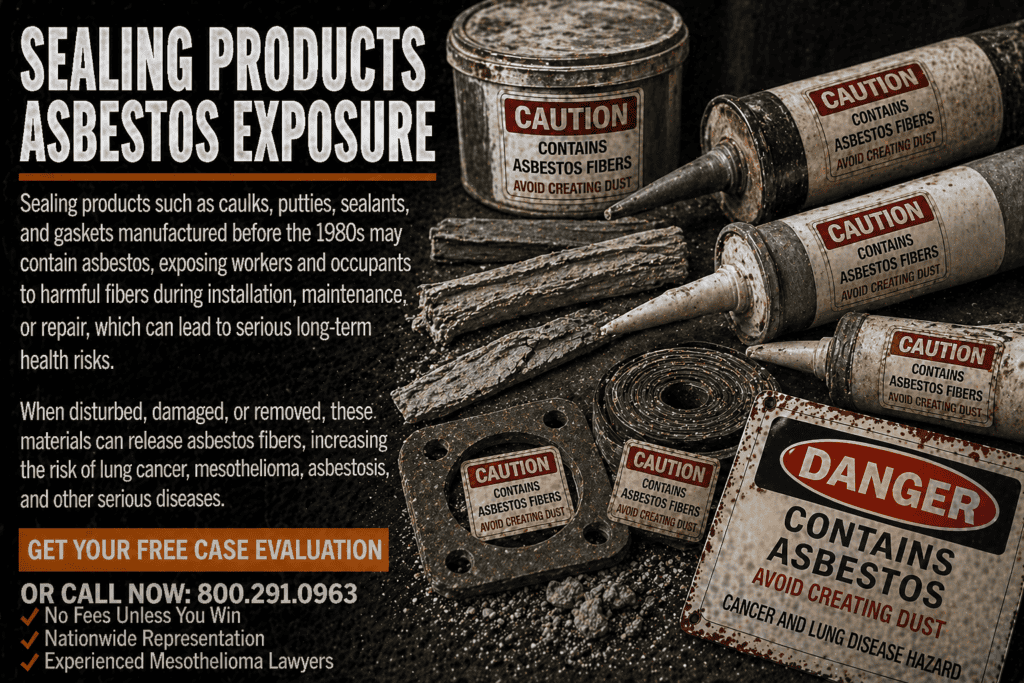
🧴 Sealing Products Asbestos Exposure Lawsuit
Asbestos was widely used in sealing compounds across industries due to its strength, fire resistance, and long-lasting bond. From the 1930s through the 1980s, asbestos was added to sealants used in plumbing, HVAC systems, pipe joints, and construction materials. These products were applied around flanges, ducts, and masonry to block heat, moisture, or air leaks.
Over time, sealants hardened and deteriorated—turning brittle. When scraped, drilled, or removed, they released invisible asbestos fibers. Workers in construction, plumbing, and maintenance unknowingly inhaled these fibers during routine repairs, leading to long-term health risks.
Here’s What You’ll Learn When You Read This Page:
-
🧴 Sealing products in plumbing and construction used asbestos for fire resistance.
-
🔧 Scraping or disturbing seals released airborne asbestos fibers.
-
🏠 Maintenance workers and pipefitters faced long-term exposure.
-
💵 Sealing material exposure has led to successful mesothelioma lawsuits.
Facts About Asbestos in Sealing Products
• Asbestos sealants were used in plumbing, masonry, and HVAC systems
• Asbestos Exposure: Occurred during scraping, sanding, or cutting old sealants
• Asbestos-Related Disease Risk: High for plumbers, masons, HVAC techs, and laborers
• Exposure happened during remodeling, pipe work, and retrofits—often without masks
• Similar Occupations: Pipefitters, carpenters, general contractors, shipyard workers, mechanics
History of Asbestos in Sealing Materials
Because sealing products were often exposed to heat or chemical processes, asbestos was mixed in to enhance their resistance and lifespan. The result was a range of pastes, caulks, compounds, and adhesives applied to joints, cracks, and seams. These were found in homes, high-rises, industrial sites, and ships.
Decades later, the once-soft sealants became dry and crumbly. Any effort to remove, drill, or disassemble the surrounding area could release hazardous dust—unseen and easily inhaled by nearby workers.
Number of People Exposed to Asbestos in Sealing Products in the U.S.
Sealants used in plumbing, construction, and industrial machinery contained asbestos. When scraped, drilled, or disassembled, fibers became airborne.
| Exposure Category | Estimated Number of People Exposed |
|---|---|
| Occupational Exposure (Plumbers, construction workers, equipment mechanics) | Approximately 740,000 workers exposed. |
| Secondary Exposure (Family members of exposed tradesmen) | Estimated 105,000 exposed. |
| Environmental Exposure (Buildings undergoing renovation or repairs) | Around 130,000 people exposed. |
Total Estimated Exposure:
Over 975,000 people in the U.S. were exposed through sealing products.
Mesothelioma Risk from Sealant Exposure
Those working with aging buildings, plumbing systems, or industrial joints frequently encountered asbestos sealants. The most vulnerable included:
• Plumbers and pipefitters
• HVAC technicians
• General contractors
• Masonry workers
• Mechanical repair crews
Because asbestos sealants were used in hard-to-access places, exposure often occurred in confined spaces with poor ventilation.
Asbestos-Containing Sealing Products
These common sealing items frequently contained asbestos and caused exposure during maintenance or demolition:
🧴 Pipe Joint Compounds
Used to seal threaded pipe connections. Fibers released during disassembly.
🪠 Plumber’s Sealant
Applied around drains and valves. Dangerous when removed or reheated.
📦 Boiler Seal Compounds
Used for thermal joints. Cracked and crumbled over time.
🧱 HVAC Duct Sealer
Sealed vents and duct connections. Exposure common during retrofits.
🔩 Flange Sealants
Filled gaps around piping connections. Released fibers when chipped or scraped.
🧰 Caulking Compounds
Applied around windows and fixtures. Dangerous when sanded or drilled.
📏 Panel Joint Sealer
Used between wall and ceiling panels. Fibers released when replaced.
🪛 Masonry Crack Seal
Applied to repair bricks or stone. Deteriorated and shed fibers.
🛠 Gasket Seal Paste
Used in mechanical parts. Exposure occurred during gasket changes.
🧼 Chimney Sealant
Used in fireplaces and flues. Released dust with age or use.
📐 Aircraft & Marine Sealers
Used in fuselage and hull joints. Hazardous during repairs or overhauls.
🧯 Insulation Adhesives
Doubled as sealant around thermal wrap. Released dust when disturbed.
Types of Workers & Sealing Product Exposure
These trades routinely used or disturbed asbestos-containing sealants:
🧴 Plumbers
Applied or removed sealing compounds in joints and valves.
🛠 Pipefitters
Exposed while scraping and re-threading pipe connections.
📏 HVAC Installers
Cut into old ductwork and vents sealed with asbestos paste.
🪛 Carpenters
Disturbed panel sealants and caulks during remodeling.
🧱 Masons
Repaired mortar joints sealed with asbestos crack filler.
🧯 Shipyard Workers
Used marine-grade sealants in ship construction and repair.
📐 Contractors
Worked around asbestos caulks, glues, and adhesives in old buildings.
🧰 Maintenance Techs
Exposed while servicing mechanical systems with sealed joints.
🛠 Boiler Operators
Scraped away boiler joint sealants during overhauls.
🧼 Custodians
Cleaned up around deteriorating caulk and seal debris.
Common Questions About Sealant Claims
What if I just worked around the sealants?
Secondary exposure from nearby work is still eligible for claims.
Do I need to identify the brand?
No—lawyers investigate jobsite and era-specific products for you.
Were sealants used in homes or just factories?
Both. Homes, schools, ships, and industrial buildings all used asbestos sealants.
Is there still time to file a claim?
Yes—claims are allowed 1–3 years from diagnosis in most states.
Can family file after a worker has passed?
Yes—spouses and children can pursue wrongful death cases.
How a Mesothelioma Lawyer Can Help
An experienced asbestos attorney can:
• Identify sealing products used at your worksite
• Connect exposure history to known asbestos brands
• File trust fund claims or lawsuits on your behalf
• Help family members seek compensation
• Charge no fees unless a payout is awarded
Free Legal Help for Sealing Product Exposure
If you or a loved one worked with or around sealing products and now face a diagnosis of mesothelioma, lung cancer, or asbestosis—you may be eligible for financial compensation.
📞 Call Now: 800.291.0963
• No upfront costs
• Product history fully investigated
• Help for plumbers, contractors, military vets, and families
Or request help online 24/7