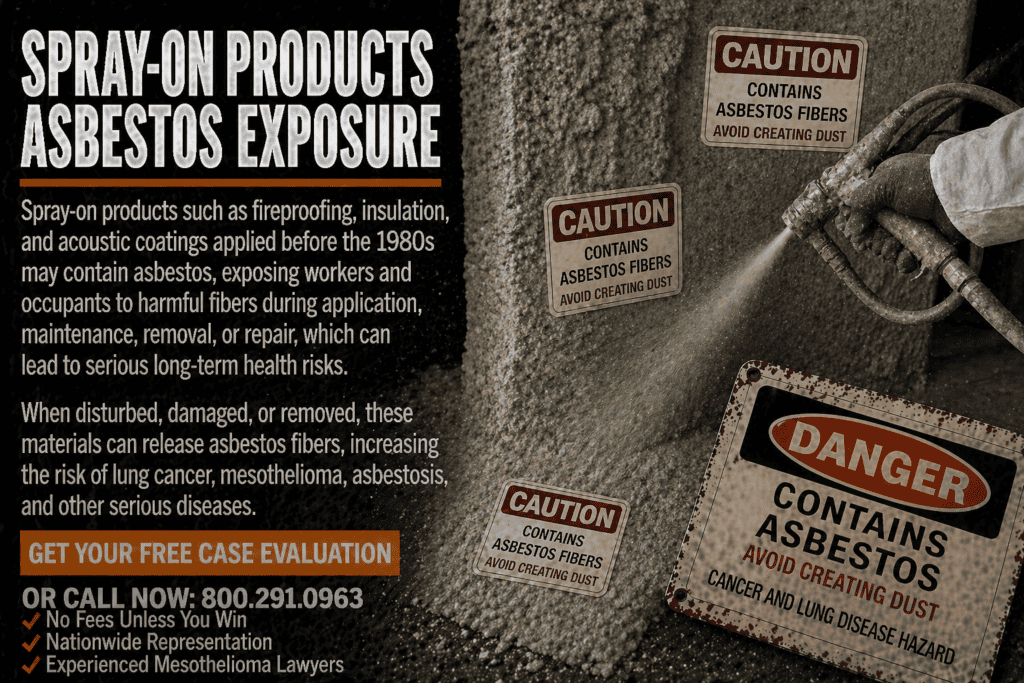
Spray-On Products Asbestos Exposure
Some historical spray-applied fireproofing, acoustical and insulating materials contained asbestos, while other sprayed products did not. Asbestos use depended on the manufacturer, formulation, purpose and year. Because many spray-on surfacing materials were applied directly to structural steel, ceilings, walls and other building surfaces, later maintenance or renovation could disturb material that was hidden above ceilings or behind finishes.
OSHA defines surfacing material as material sprayed, troweled on or otherwise applied to surfaces for acoustical, fireproofing or similar purposes. OSHA also requires installed sprayed-on and troweled-on surfacing materials in buildings constructed no later than 1980 to be treated as presumed asbestos-containing material unless the presumption is properly rebutted. EPA states that spray-applied asbestos-containing surfacing material for fireproofing and insulating purposes was banned in 1973.
This guide explains historical spray-on products, where they were used, how exposure could occur during application, maintenance, scraping or removal, which workers may have encountered them, and what evidence can help identify the material. For a broader overview, see Asbestos Exposure in Products.
Spray-On Products and Historical Asbestos Use
Spray-applied materials were used to cover large areas quickly and to provide fire resistance, sound control, thermal protection or decorative texture. Some older formulations contained asbestos fibers mixed with binders and other ingredients.
OSHA identifies sprayed fireproofing and acoustical materials as surfacing materials. These products were often applied to structural steel, ceiling decks, walls and other surfaces. OSHA has explained that surfacing materials can present a higher exposure concern because asbestos fibers may be loosely bound and the material may be more easily damaged or deteriorated than many dense products.
EPA banned spray-applied surfacing asbestos-containing material for fireproofing and insulating purposes in 1973. That regulatory history does not establish that every sprayed material installed before 1973 contained asbestos, and it does not mean every later spray-applied product did. Product-specific evidence remains important.
Types of Spray-On Asbestos Applications
Depending on manufacturer, formulation and year, asbestos may historically have been associated with:
- spray-applied fireproofing on structural steel;
- sprayed acoustical surfacing on ceilings and walls;
- some spray-applied thermal or insulating coatings;
- decorative or textured surfacing materials with asbestos-containing formulations;
- materials sprayed onto beams, columns, decks or other structural members;
- sprayed coatings above suspended ceilings;
- certain acoustical finishes associated with older ceiling products;
- sprayed or troweled surfacing related to historical plaster systems; and
- adjacent wall-finishing materials such as spackling or drywall finishing products.
Spray-on surfacing should be distinguished from dense asbestos-cement products, panel products and other hard materials. The way asbestos fibers are bound in the product can affect how readily disturbance creates airborne dust.
How Asbestos Exposure Could Occur
A potential exposure pathway requires asbestos-containing spray-on material and circumstances that release fibers into the air. Some historical surfacing materials were friable or became friable with age, impact, water damage or repeated maintenance.
Potential disturbance could occur during tasks such as:
- mixing dry ingredients before spray application;
- feeding spray machines or hoppers;
- spraying fireproofing or acoustical material overhead;
- working in overspray or fallout during application;
- drilling or cutting through coated structural members or ceilings;
- installing conduit, pipe, ducts or fixtures through sprayed surfaces;
- scraping or brushing damaged surfacing material;
- removing ceiling systems that expose sprayed material above them;
- demolishing beams, decks, walls or ceilings coated with surfacing material; and
- cleaning accumulated dust, debris or fallen material.
OSHA treats removal of asbestos-containing surfacing material as Class I asbestos work, reflecting the potential for significant fiber release when these materials are disturbed. Actual exposure depends on asbestos content, friability, material condition, work method, duration, frequency, proximity, ventilation, respiratory protection and cleanup practices.
Worked around older sprayed fireproofing, acoustical surfacing or structural coatings? If you are trying to identify a historical product or reconstruct a possible asbestos exposure, Call 800.291.0963. Live chat available 24/7, 365 days a year. Submit Your Case.
Workers and Job Sites That May Have Encountered Spray-On Material
Workers who mixed, sprayed, installed around, maintained or removed historical surfacing materials may have encountered asbestos-containing spray-on products. Job title alone does not prove exposure; the specific material and work circumstances matter.
Potentially relevant occupations may include fireproofing applicators, insulation workers, construction laborers, painters, plasterers, drywall workers, electricians, plumbers, pipefitters, HVAC workers, sheet-metal workers, welders, ironworkers, maintenance personnel and demolition crews.
Possible settings include high-rise buildings, schools, hospitals, factories, warehouses, theaters, offices, industrial plants, power facilities, commercial buildings and military installations.
Workers who did not apply the material themselves could still have encountered dust from overspray, falling debris or later maintenance. Exposure reconstruction should consider where the person worked relative to the application or disturbance, how long the work lasted, ventilation and visible dust or debris.
Application, Maintenance and Removal Risks
Mixing and spraying
Historical spray-on systems could involve dry material mixed with water or other binders and pumped through spraying equipment. If the formulation contained asbestos, handling dry ingredients and spraying overhead could create airborne fibers and widespread fallout.
Overspray and nearby trades
Sprayed fireproofing and acoustical material could settle on floors, equipment, scaffolding and nearby surfaces. Workers in other trades may have been present during or soon after application, depending on the job sequence and site controls.
Maintenance above ceilings
Later electrical, plumbing, HVAC or communications work may require access above suspended ceilings where sprayed fireproofing remains on beams or decks. Accidental contact, drilling or scraping can disturb material that is otherwise out of sight.
Damage and deterioration
Water leaks, vibration, impact and building age can damage sprayed surfacing. Loose or deteriorated material may fall onto ceiling tiles, floors or equipment and create cleanup concerns.
Removal and demolition
OSHA classifies removal of asbestos-containing surfacing material as Class I work. Large-scale scraping or demolition can disturb extensive surface areas and should be managed under applicable asbestos requirements rather than treated as ordinary dust removal.
Evidence That May Identify Historical Spray-On Products
Spray-applied material often lacks visible labels once installed, so historical identification may require records from the building, contractor or project. Exposure reconstruction is stronger when several sources point to the same product and time period.
Useful evidence may include:
- manufacturer names, trade names and product numbers;
- original bags, cartons, labels or photographs of packaging;
- manufacturer catalogs and technical literature;
- architectural specifications and fireproofing schedules;
- structural drawings showing protected beams, columns or decks;
- acoustical ceiling or finish specifications;
- purchase orders, invoices and supplier records;
- fireproofing, insulation or plastering contractor records;
- maintenance and renovation records;
- asbestos surveys, bulk-sample reports and abatement documents;
- historic job-site photographs showing sprayed surfaces or application crews;
- employer, union or military records documenting assignments;
- coworker or supervisor statements identifying products and tasks; and
- qualified laboratory analysis of surviving material when appropriate.
Sampling should distinguish spray-applied surfacing from paint, plaster, ceiling texture, insulation, wallboard and other adjacent materials whenever those layers can be separately identified.
Medical and pathology records may document an asbestos-related diagnosis but do not establish which historical spray-on product was an exposure source.
Secondhand Exposure and Health Risks
If asbestos-containing spray-on material generated dust that settled on work clothing, shoes, tools or personal belongings, fibers could potentially have been carried away from the job site. This is a possible secondhand exposure pathway, but family relationship alone does not establish exposure.
Asbestos exposure is associated with mesothelioma, asbestos-related lung cancer, asbestosis and other asbestos-related disease. Working near old spray-applied material does not diagnose disease and does not establish individual medical causation.
Anyone concerned about historical occupational asbestos exposure should discuss their work history and health with a qualified healthcare professional.
Legal and Compensation Considerations
Depending on the evidence and circumstances, legal options may be available to a person diagnosed with an asbestos-related disease after documented exposure to a specific asbestos-containing spray-on fireproofing, acoustical surfacing or related product.
A legal review may consider the manufacturer, product line, formulation, installation dates, building or job site, work performed, frequency and duration of exposure, diagnosis, jurisdiction and applicable filing deadlines.
Identifying a manufacturer or contractor does not automatically establish legal responsibility. Liability is case-specific and depends on product evidence, exposure evidence and governing law.
Some matters may involve asbestos trust funds, but each trust has its own product, exposure and medical documentation requirements. Eligibility is not automatic, and compensation is not guaranteed.
Exposure that occurred decades ago does not by itself determine whether a claim is timely. Statutes of limitation and other deadlines vary by jurisdiction and circumstances and should be reviewed individually.
Spray-On Products Asbestos Exposure FAQs
Did all old spray-on products contain asbestos?
No. Some historical spray-applied fireproofing, acoustical and insulating products contained asbestos, while others did not. Manufacturer, formulation, purpose and installation date matter.
What does OSHA mean by surfacing material?
OSHA defines surfacing material as material sprayed, troweled on or otherwise applied to surfaces for purposes such as acoustical treatment or fireproofing.
When was asbestos spray-on fireproofing banned?
EPA states that spray-applied surfacing asbestos-containing material for fireproofing and insulating purposes was banned in 1973.
Are older sprayed-on materials presumed to contain asbestos?
Under OSHA’s workplace asbestos standards, installed sprayed-on and troweled-on surfacing materials in buildings constructed no later than 1980 are treated as presumed asbestos-containing material unless the presumption is properly rebutted.
Could electricians or HVAC workers be exposed without applying the product?
Potentially. Later work above ceilings or around coated structural members can disturb historical surfacing material. Actual exposure depends on the material, task, proximity, duration and controls.
Why can spray-on asbestos be a higher concern than some hard asbestos products?
OSHA has explained that some surfacing materials contain loosely bound fibers and can be more easily damaged, deteriorated or disturbed than denser materials.
What evidence can identify a historical spray-on product?
Useful evidence can include specifications, invoices, contractor records, catalogs, photographs, asbestos surveys, laboratory reports and coworker testimony.
Does working near old spray-on material automatically qualify someone for compensation?
No. Legal eligibility depends on identifying asbestos-containing material, establishing exposure, documenting diagnosis, jurisdiction and other case-specific evidence. Compensation is not guaranteed.
Get Help Reviewing Historical Spray-On Product Exposure
If you or a family member has been diagnosed with mesothelioma, asbestos-related lung cancer or another asbestos-related disease and you are trying to identify older sprayed fireproofing, acoustical surfacing or related coatings from a workplace, construction project or military facility, we can help organize the product and exposure history that may be relevant.
Call 800.291.0963 to discuss what you remember about the material, building, job site and work performed. Live chat is available 24/7, 365 days a year. Submit Your Case using the form below.
Prior exposure does not automatically establish a legal claim. Eligibility depends on the evidence, diagnosis, jurisdiction and other circumstances, and compensation is not guaranteed.
⚕️ Legal & Medical Information Disclaimer
This page provides general educational information and is not medical or legal advice. The information does not establish asbestos exposure, diagnosis, causation, liability, claim eligibility or compensation. Medical concerns should be discussed with a qualified healthcare professional, and legal questions should be reviewed with a qualified attorney.