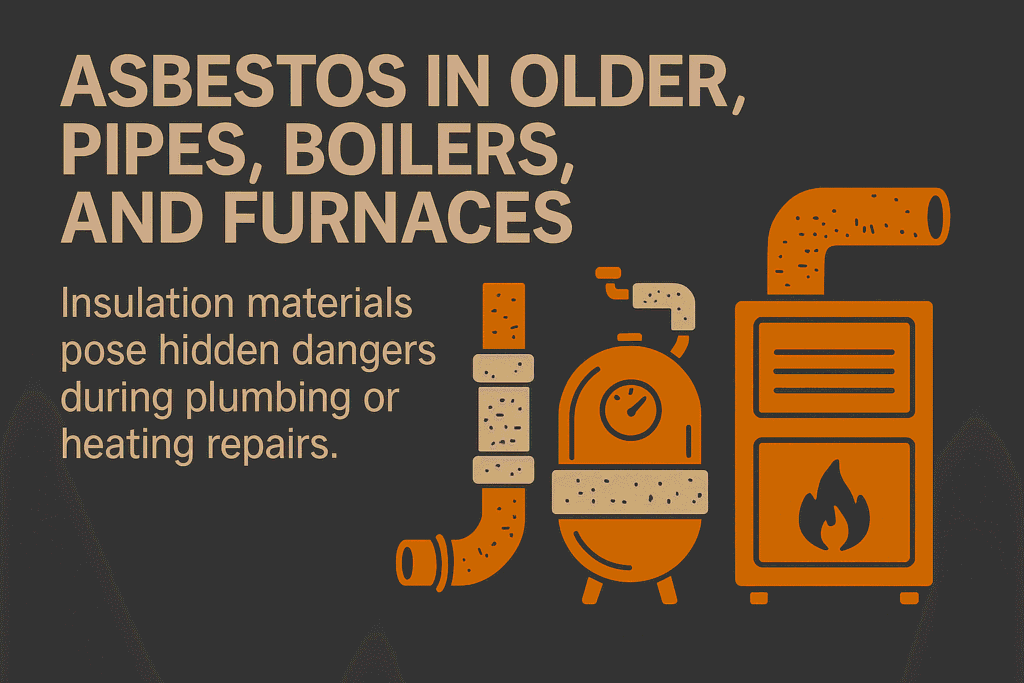
Asbestos in Older Pipes, Boilers, and Furnaces
For decades, asbestos was widely used to insulate heating systems, plumbing lines, and boilers in millions of American homes, apartment complexes, and commercial buildings. These older systems remain one of the most common and dangerous sources of asbestos exposure today. When insulation ages, cracks, or becomes disturbed during repair work, it can release microscopic fibers that pose significant health risks to homeowners, tenants, and maintenance workers.
If your home was built before 1980—or still has original heating or plumbing components—understanding how asbestos appears in pipes, boilers, and furnaces is essential for protecting your family.
For help with testing, removal, or contractor guidance, call 800.291.0963.
🔥 Step 1: Why Asbestos Was Used in Heating & Plumbing Systems
Asbestos was considered a miracle material because of its strength, heat resistance, and insulating properties.
📌 Why Asbestos Was Ideal for Heating Systems
-
Resistant to extremely high temperatures
-
Inexpensive and widely available
-
Provided fireproof and heatproof insulation
-
Durable enough to wrap pipes and boilers
-
Easy to mold into blankets, paste, or cement
Because heating systems generate high temperatures, asbestos was used liberally to protect surrounding building materials.
🧵 Step 2: Where Asbestos Is Found in Older Pipes
Older plumbing systems often contain asbestos insulation that becomes hazardous when disturbed.
✔ Common Asbestos Pipe Materials
-
Pipe wrap (lagging) — friable insulation often held in place by cloth or wire
-
Air-cell insulation — cardboard-like asbestos product
-
Block insulation — rigid panels surrounding pipe chases
-
Asbestos paper beneath metal or fiberglass
-
Asbestos cement used in joints or elbows
📌 Signs Pipe Insulation Contains Asbestos
-
White, gray, or off-white crumbly material
-
Fibrous, chalky wrapping
-
Flaking or powdery texture
-
Cloth covering that tears easily
-
Damage near joints or hangers
Pipe lagging is one of the most dangerous asbestos materials because it is highly friable and deteriorates with age.
🔥 Step 3: Boilers and Asbestos — A Major Source of Hidden Danger
Boilers, especially older cast-iron or steel models, often contain several asbestos components.
✔ Asbestos Materials Commonly Found in Boilers
-
Boiler-room pipe insulation
-
Fireproof cement or “mud”
-
Gaskets and seals
-
Rigid block insulation panels
-
Asbestos rope around access doors
-
Insulation blankets wrapped around the boiler unit
-
Asbestos-lined refractory materials
Why Boiler Asbestos Is Dangerous
Boilers run at extremely high temperatures. Over time, repeated heating and cooling cycles cause insulation to:
-
Flake
-
Crack
-
Crumble
-
Release fibers during maintenance
Even simple tasks like opening a boiler door can disturb asbestos gaskets.
🔥 Step 4: Asbestos in Older Furnaces and Heating Systems
Many forced-air furnaces manufactured before the 1980s used asbestos in multiple components.
✔ Furnace Components That May Contain Asbestos
-
Duct insulation
-
Heat exchanger lining
-
Fireproof panels
-
Furnace cement
-
Gaskets and door seals
-
Tape on duct joints
-
Asbestos fabric used around burners
High-Risk Furnace Locations
-
Basements
-
Crawl spaces
-
Utility closets
-
Attics with old ductwork
Any repair involving ducting, blower motors, or heat exchangers may disturb asbestos insulation.
⚠️ Step 5: Why Repairs Disturb Asbestos Without Homeowners Knowing
Routine heating or plumbing work often breaks old asbestos insulation.
High-Risk Repair Activities Include:
-
Replacing pipe sections
-
Cutting or scraping old insulation
-
Removing damaged ductwork
-
Replacing boiler gaskets
-
Upgrading furnace components
-
Repairing leaks or burst pipes
-
Cutting into wall cavities around old heating systems
📌 Invisible Exposure Risk
Most asbestos fibers are too small to see with the naked eye. A plumbing repair that takes five minutes can release thousands of fibers if old insulation is disturbed.
Many homeowners aren’t aware they’ve been exposed until years later.
🧪 Step 6: Testing Heating & Plumbing Insulation for Asbestos
Before any repair or replacement, proper testing is essential.
✔ EPA-Recommended Testing Includes:
-
Inspection by a certified asbestos professional
-
Safe sample collection
-
Lab analysis using PLM or TEM
-
Written documentation of all ACMs found
Testing Is Necessary If:
-
Insulation is damaged
-
Renovation is planned
-
Plumbing or heating repairs are needed
-
You suspect contamination after a leak
Never touch or break insulation to check for asbestos yourself.
🚧 Step 7: Safe Containment Procedures for Heating-System Work
When asbestos is confirmed, licensed abatement contractors establish a controlled work environment.
✔ Containment Requirements
-
Seal off the boiler or furnace room
-
Shut down HVAC systems to prevent fiber spread
-
Use negative-air pressure units
-
Place plastic sheeting on walls and floors
-
Restrict access to authorized personnel
-
Wear full protective equipment
High-Risk Zones That Must Be Contained
-
Basements
-
Crawl spaces
-
Attics
-
Utility rooms
-
Laundry rooms connected to furnace spaces
Heating systems often sit near ventilation pathways — increasing the risk of whole-home contamination.
🧰 Step 8: Professional Removal of Asbestos Pipe, Boiler & Furnace Insulation
Licensed abatement teams use strict methods to remove hazardous materials safely.
✔ Removal Methods Include:
-
Wetting insulation to reduce airborne fibers
-
Cutting pipe sections only when safe
-
Using hand tools instead of power tools
-
Double-bagging all asbestos debris
-
HEPA vacuuming work areas
-
Cleaning surrounding surfaces
-
Removing contaminated clothing and gear
-
Air monitoring throughout the project
Friable Material Requires the Most Caution
Pipe lagging, boiler cement, and old furnace insulation are highly friable and can contaminate air quickly.
🗑️ Step 9: Proper Disposal of Heating-System Asbestos
The EPA and OSHA require specific disposal steps.
✔ Disposal Rules Include:
-
Wetting asbestos waste
-
Sealing materials in 6-mil plastic bags
-
Labeling all bags with asbestos warnings
-
Placing bags inside rigid containers
-
Transporting waste using licensed haulers
-
Disposing only at approved landfills
Any violation can result in fines and legal liability.
🌬️ Step 10: Air Monitoring After Repair or Removal
After asbestos abatement, clearance air testing ensures the home is safe.
✔ Clearances Must Meet:
-
EPA standard of 0.01 f/cc or lower
-
State-specific requirements (some require TEM testing)
If the home does not pass, additional cleaning is required.
🔧 Step 11: What Homeowners Should Do Before Heating or Plumbing Work
Protect your family by preparing properly before any contractor touches older systems.
✔ Homeowner To-Do List
-
Ask the contractor if they are trained in asbestos awareness
-
Request asbestos testing before repairs
-
Confirm the insulation type around your pipes and boiler
-
Keep children and pets away from affected areas
-
Turn off HVAC systems
-
Document all repairs and materials removed
-
Never allow unlicensed contractors to disturb insulation
📌 Avoid DIY Repairs
Cutting old insulation without proper containment is extremely dangerous.
🏥 Where to Get Help
If your home has older heating or plumbing systems, we can help you:
-
Schedule asbestos inspections
-
Review heating-system insulation for safety
-
Find licensed abatement contractors
-
Understand EPA and OSHA rules
-
File insurance claims when applicable
-
Monitor air quality after repairs
-
Protect your family from hidden asbestos hazards
📞 Call 800.291.0963 today for expert guidance.
📝 Summary
Asbestos in older pipes, boilers, and furnaces poses a major health risk—especially during repairs or renovation.
Key Takeaways
-
Older heating systems used asbestos extensively
-
Pipe wrap and boiler insulation are highly friable
-
Repairs often disturb asbestos without warning
-
Certified testing is essential before any work begins
-
Professional containment and removal protect families
-
Proper disposal prevents community contamination
-
Clearance air testing ensures a safe home
If you’re planning repairs or suspect asbestos in your heating or plumbing system, call 800.291.0963 for help taking the next safe step.