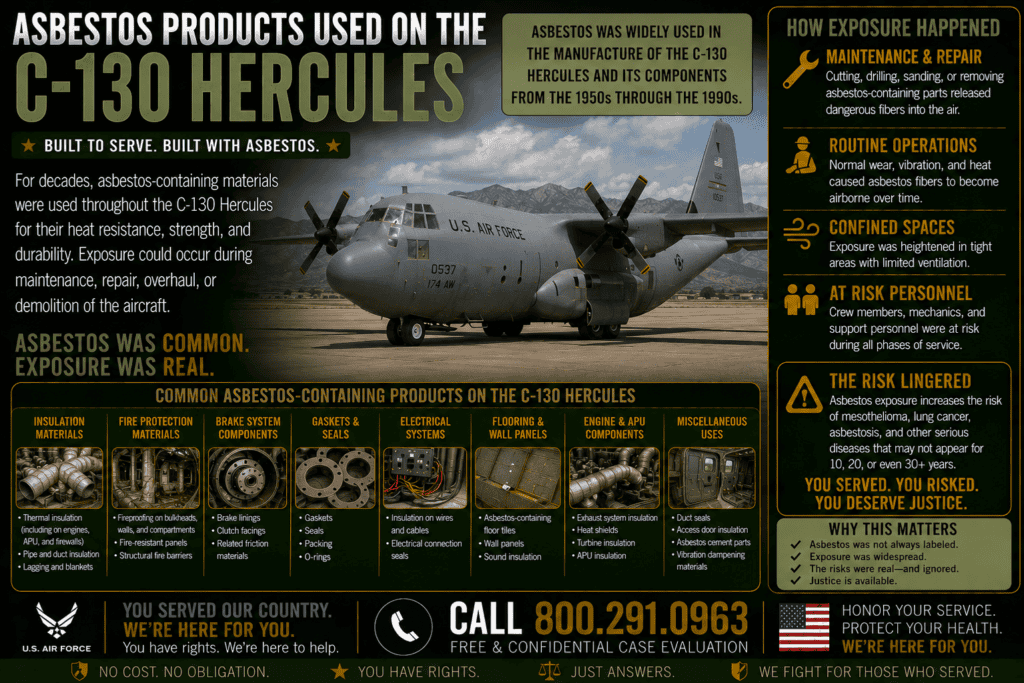
🛩️ Asbestos Products Used on the C-130 Hercules
The C-130 Hercules was designed during a time when asbestos was widely used in military aircraft. Engineers relied on asbestos because it resisted heat, fire, and friction—three constant threats in aviation. As a result, many components on early and mid-generation C-130 aircraft contained asbestos, exposing maintenance crews, mechanics, and flight personnel during repairs and daily operations.
This article explains the main asbestos-containing products used on the C-130 and how they caused exposure.
🛑 Brake Pads and Brake Linings
Asbestos was heavily used in aircraft brakes.
• Brake pads contained asbestos to handle friction heat
• Brake linings used asbestos for durability
• Landing and taxiing released asbestos dust
• Mechanics inhaled fibers during brake changes
Every landing produced friction that slowly released asbestos into the air.
🔥 Engine Insulation and Blankets
C-130 engines produced extreme heat.
• Asbestos blankets wrapped engine components
• Insulation protected fuel and wiring systems
• Heat caused insulation to crack and shed fibers
• Engine overhauls released heavy dust
Engine mechanics faced repeated exposure.
⚡ Wiring Coverings and Electrical Insulation
Electrical systems used asbestos for fire safety.
• Wires wrapped in asbestos sleeves
• Electrical panels backed with asbestos boards
• Heat-resistant cable coverings used asbestos
• Drilling and rewiring released fibers
Avionics technicians were especially exposed.
🌡️ Heat Shields
Heat shields protected nearby systems from engine heat.
• Shields made from asbestos cloth or sheets
• Installed near exhaust and turbines
• Cracked over time and released fibers
• Removal during repairs caused exposure
High heat made these materials break down faster.
🔩 Gaskets and Seals
Asbestos was ideal for sealing hot, pressurized systems.
• Used in engines, fuel, and hydraulics
• Flange gaskets crumbled during removal
• Packing materials broke down with age
• Even small repairs released fibers
Mechanics inhaled fibers during routine servicing.
🌀 Vibration Dampeners
Aircraft vibration required shock-absorbing materials.
• Dampeners used asbestos fibers
• Installed near engines and structural joints
• Disturbed during inspections
• Released fibers when cracked
These parts were handled frequently.
🧱 Fireproofing Materials
Fire protection used asbestos throughout the aircraft.
• Fireproof panels contained asbestos
• Bulkhead linings used asbestos boards
• Insulation behind walls included asbestos
• Repairs released fibers into enclosed spaces
Many asbestos materials were hidden from view.
⚠️ Why These Products Caused High Exposure
• Aircraft required constant maintenance
• Heat and vibration degraded asbestos
• Parts were replaced often
• Enclosed hangars trapped dust
• Workers were not warned
• Protective gear was rarely used
Exposure happened slowly over years of service.
👷 Who Faced the Highest Risk
Most affected roles included:
• Aircraft mechanics
• Crew chiefs
• Avionics technicians
• Engine specialists
• Structural repair crews
• Maintenance supervisors
Even flight crews inhaled fibers through air systems.
🩺 Long-Term Health Effects
Asbestos diseases often appear decades later.
Common illnesses:
• Mesothelioma
• Lung cancer
• Asbestosis
• Pleural disease
Many C-130 veterans are diagnosed 20–50 years after service.
❓ Asbestos Products on the C-130 – FAQs
Did every C-130 contain asbestos?
Most aircraft built before the 1980s used asbestos in multiple components.
Was exposure only during major repairs?
No. Aging materials released fibers during normal use.
Could flight crews be exposed?
Yes. Fibers spread through maintenance and air systems.
Did hangars increase risk?
Yes. Enclosed spaces trapped asbestos dust.
⚖️ How an Asbestos Lawyer Can Get You Compensation
An asbestos lawyer links your service to asbestos products.
An asbestos lawyer will:
• Review your aircraft assignments
• Identify asbestos-containing C-130 parts
• Match parts to manufacturers
• Work with doctors to prove disease
• File lawsuits and trust fund claims
📞 Get Help Now
If you worked on or flew aboard a C-130 Hercules and later developed mesothelioma, lung cancer, or another asbestos-related disease, you may be entitled to compensation.
You may qualify for:
• Lawsuit settlements or verdicts
• Asbestos trust fund payments
• VA disability and survivor benefits
There is no upfront cost.
Call now for a free, confidential case consultation:
800.291.0963