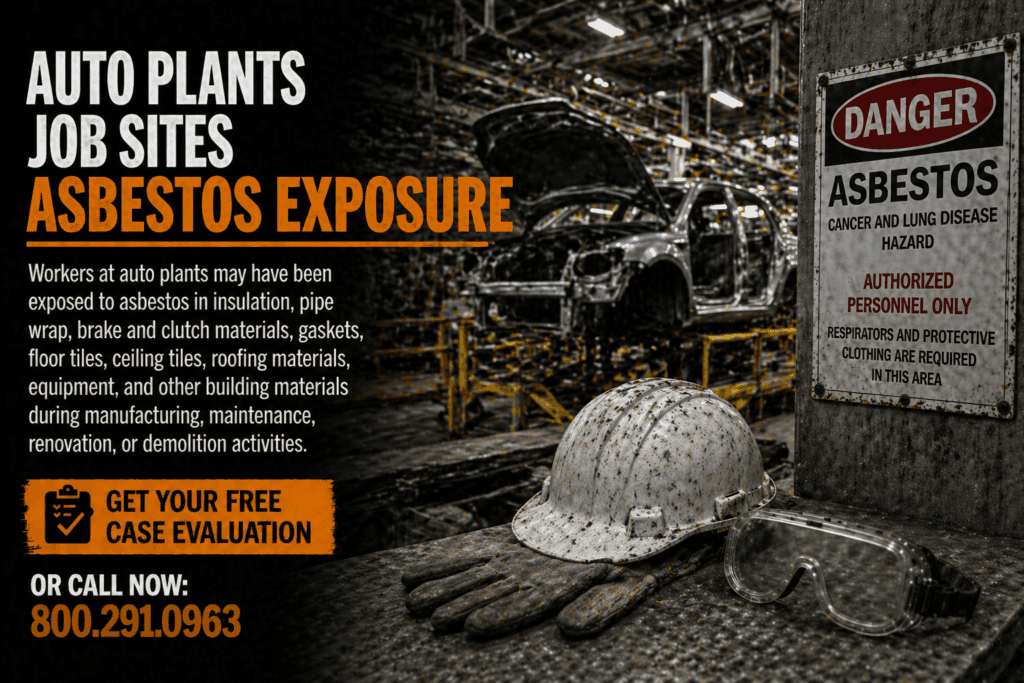
🚗 Auto Plants With Asbestos Exposure
For much of the 20th century, U.S. auto plants used asbestos-containing parts and machinery throughout the vehicle manufacturing process. Workers who assembled, repaired, or maintained vehicles and factory equipment were often exposed to airborne asbestos dust—especially in brake and clutch assembly, engine building, and insulation removal. While many plants phased out asbestos by the 1980s, exposure risks remain when handling older vehicles, parts, and outdated equipment. Workers in these plants may be at risk for mesothelioma, lung cancer, or asbestosis decades after initial exposure.
Read More Articles about Auto Plant Asbestos Exposure.
🚗 Auto Manufacturing Plant Job Sites – What You’ll Learn From This Page:
🚙 Brake linings, clutch parts, gaskets, and sealing components used asbestos during vehicle production.
🛠️ Assembly line workers, press operators, and machinists inhaled dust from friction parts and molded asbestos materials.
🔩 Asbestos was present in molds, adhesives, and engine housing components installed during manufacturing.
🌫️ Plant-wide air circulation spread fibers beyond workstations and into shared spaces.
💰 Auto factory workers diagnosed with asbestos diseases may qualify for compensation or legal action.
Estimated Number of People Exposed to Asbestos in U.S. Auto Plants
| Exposure Category | Estimated Number of People Exposed |
|---|---|
| Occupational Exposure (assembly line, press, repair staff) | Over 1,400,000 workers exposed |
| Secondary Exposure (maintenance, custodial, warehouse) | Estimated 400,000 exposed |
| Environmental Exposure (factory zones, storage areas) | Around 600,000 people exposed |
👉 Total Estimated Exposure:
Over 2.4 million people were exposed in auto manufacturing job sites.
List of Auto Manufacturing Plants in the U.S.
🟦 Michigan Auto Plants With Asbestos Exposure
Michigan was the core of American automobile manufacturing. Plants owned by Ford, GM, Chrysler, and Fisher Body used asbestos in gaskets, clutches, brakes, and high-heat machinery. These materials were essential for heat resistance but deadly when disturbed. Workers were regularly exposed while grinding, sanding, or installing asbestos-laced components on assembly lines, in boiler rooms, or during equipment maintenance. Exposure often occurred in confined areas with poor ventilation, where asbestos dust collected in the air and on clothing, putting workers and families at risk.
⚙️ Ford Rouge Complex (Dearborn) –
Maintenance and assembly teams faced daily exposure to asbestos from old gaskets, pipe insulation, and boiler equipment during engine work and plant operations.
⚙️ GM Flint Assembly (Flint) –
Brake installers, engine techs, and mechanics were exposed to asbestos when handling linings, gaskets, and seals on older machinery and vehicle systems.
⚙️ Chrysler Jefferson North (Detroit) –
Workers faced exposure during brake pad and clutch installation, as well as while repairing asbestos-insulated machinery in high-heat engine rooms.
⚙️ Fisher Body Plant (Lansing) –
Welders and panel installers disturbed asbestos insulation and adhesives in confined work areas, often without respiratory protection or adequate ventilation.
🟥 Ohio Auto Plants With Asbestos Exposure
Ohio played a major role in America’s automotive history, hosting major facilities for General Motors, Ford, and Honda. Plants in Lordstown, Cleveland, Sharonville, and Marysville relied heavily on asbestos parts like brake pads, clutches, engine gaskets, and machinery insulation. Assembly line workers, maintenance staff, and mechanics were exposed during equipment repairs and vehicle production. Poor ventilation and enclosed workspaces increased the danger, as asbestos fibers became airborne during cutting, sanding, or grinding. Many workers unknowingly carried asbestos dust home on clothing, putting family members at risk.
⚙️ GM Lordstown Assembly (Lordstown) –
Workers installed asbestos-containing brake linings and clutches; exposure also occurred during routine repairs on manufacturing equipment wrapped in heat-resistant asbestos.
⚙️ Ford Engine Plant (Cleveland) –
Engine assembly crews encountered asbestos in gaskets, insulation, and protective machinery coverings, especially near heat-producing components and furnaces.
⚙️ Ford Transmission Plant (Sharonville) –
Employees were exposed to asbestos from transmission linings, sealants, and machinery insulation disturbed during production line maintenance.
⚙️ Honda Manufacturing Plant (Marysville) –
Asbestos exposure occurred during installation of imported friction parts and through maintenance of older machinery originally insulated with asbestos materials.
🟨 Indiana Auto Plants With Asbestos Exposure
Indiana was home to major GM, Chrysler, and Ford operations, particularly in cities like Indianapolis, Fort Wayne, and Kokomo. Asbestos was used extensively in high-friction auto parts and plant machinery. Workers repairing engines, transmissions, or handling industrial ovens and presses were often exposed during routine maintenance or part installation. Asbestos dust became airborne in poorly ventilated sections, especially during retrofitting or plant repairs. Exposure risks were especially high prior to the 1980s.
⚙️ GM Fort Wayne Assembly (Fort Wayne) – Workers faced exposure from asbestos in insulation and auto parts used in stamping and assembly.
⚙️ Chrysler Transmission Plant (Kokomo) – Transmission assembly and gasket installation created regular airborne asbestos hazards.
⚙️ Ford Plant (Indianapolis) – Maintenance crews inhaled fibers while working on asbestos-insulated machinery and brakes.
🟧 Illinois Auto Plants With Asbestos Exposure
Illinois hosted key Ford and Chrysler facilities, including Chicago Assembly and Belvidere Assembly. Older auto parts and building materials contained asbestos that exposed workers during production, repairs, and renovation. Many automotive suppliers across the state also handled asbestos-laden components.
⚙️ Ford Chicago Assembly (Chicago) – Exposure occurred during installation of asbestos-packed brake systems and engine insulation.
⚙️ Chrysler Belvidere Assembly (Belvidere) – Workers handling friction parts were frequently exposed to airborne asbestos during grinding and machining.
🟪 Missouri Auto Plants With Asbestos Exposure
Missouri housed large Ford and GM plants where workers handled asbestos in mechanical equipment, pipe insulation, and vehicle components. High heat areas and old tools released fibers during daily tasks.
⚙️ Ford Claycomo Plant (Claycomo) – Assembly line workers encountered asbestos during brake and clutch installation and boiler maintenance.
⚙️ GM Wentzville Assembly (Wentzville) – Fibers released from gaskets, transmission parts, and pipe insulation exposed many technicians.
🟫 New York Auto Plants With Asbestos Exposure
New York had key GM operations in Tonawanda and Massena. Workers inhaled asbestos while maintaining engine components and handling imported or legacy brake and clutch parts.
⚙️ GM Tonawanda Engine Plant (Tonawanda) – Crews worked around asbestos-laced gaskets and heat-resistant engine insulation.
⚙️ GM Massena Plant (Massena) – Asbestos was used in casting equipment, furnaces, and electrical insulation.
⬜ Wisconsin Auto Plants With Asbestos Exposure
Wisconsin supported GM and Chrysler operations along with suppliers that handled asbestos parts. Facilities in Kenosha and Milwaukee presented exposure risks in production lines and repair areas.
⚙️ Chrysler Kenosha Plant (Kenosha) – Engine assembly exposed workers to asbestos dust from gaskets and fireproofing.
⚙️ GM Milwaukee Plant (Milwaukee) – Exposure occurred in maintenance areas with aging insulation and machinery packing.
🟨 California Auto Plants With Asbestos Exposure
California’s Fremont-based GM-Toyota NUMMI plant and other auto facilities used asbestos in brake systems and engine parts. Heat-intensive environments and poor ventilation worsened exposure.
⚙️ NUMMI Plant (Fremont) – Workers encountered asbestos in brake pads, welding blankets, and heat shields.
🟥 Georgia Auto Plants With Asbestos Exposure
Georgia had past operations with Ford and GM and currently hosts Kia Motors. Workers in parts production facilities used asbestos in friction components like brake shoes.
⚙️ Kia Motors Plant (West Point) – Some friction components and gaskets handled during early operations contained asbestos.
⚙️ Former GM Doraville Plant (Doraville) – Exposure risks from insulation, pipe lagging, and equipment seals.
🟦 Kentucky Auto Plants With Asbestos Exposure
Kentucky’s Toyota plant and parts suppliers presented asbestos exposure risks during engine and brake production, especially before asbestos use declined.
⚙️ Toyota Motor Manufacturing (Georgetown) – Workers were exposed during equipment maintenance and handling of imported asbestos parts.
🟫 Tennessee Auto Plants With Asbestos Exposure
Tennessee housed Nissan and GM plants where asbestos insulation and auto parts were common in earlier years. Maintenance and repair tasks posed high risks.
⚙️ Nissan Smyrna Assembly (Smyrna) – Brake and clutch installation exposed workers to dust from asbestos components.
⚙️ GM Spring Hill Assembly (Spring Hill) – Technicians were exposed when maintaining heat-insulated equipment.
🟥 Texas Auto Plants With Asbestos Exposure
Texas auto plants and parts suppliers used asbestos for its heat resistance. Workers encountered it in clutches, gasket materials, and manufacturing equipment.
⚙️ GM Arlington Assembly (Arlington) – Brake installation and mechanical repairs exposed crews to airborne asbestos.
🟥 Delaware Auto Plants With Asbestos Exposure
Delaware’s GM plant exposed workers to asbestos during vehicle assembly and facility upkeep. Asbestos was present in insulation, seals, and brake components.
⚙️ GM Wilmington Assembly (Wilmington) – Workers were exposed while installing brake pads and maintaining asbestos-insulated machinery.
🟧 Louisiana Auto Plants With Asbestos Exposure
Louisiana’s now-closed Ford facility and its suppliers handled asbestos parts like clutch facings and pipe insulation. Workers were exposed during production and maintenance.
⚙️ Ford Assembly Plant (New Orleans) – Brake and engine system workers handled asbestos insulation and adhesives.
⚙️ Asbestos Products Used by Auto Plant Workers
Throughout much of the 20th century, asbestos was widely used in the automotive industry. Auto manufacturing plants depended on asbestos-containing materials for their durability and heat resistance. These products were used in brakes, clutches, gaskets, insulation, and machinery components. Workers were exposed while grinding, sanding, installing, or repairing these parts—often in poorly ventilated factory settings. Maintenance crews also encountered asbestos during equipment servicing and facility upgrades. Despite regulations in the 1980s, older equipment and imported components continued to pose exposure risks. Many workers unknowingly inhaled fibers while simply doing their daily jobs.
⚙️ Brake Linings – Contained asbestos for heat resistance; fibers released during grinding, installation, or removal on assembly lines and in repair bays.
⚙️ Clutch Facings – Woven with asbestos for friction control; fibers dislodged during part sanding, fitting, or maintenance work.
⚙️ Engine Gaskets – Compressed asbestos used in seals; released fibers when replaced or deteriorated from engine heat and pressure.
⚙️ Transmission Parts – Friction discs and housing gaskets contained asbestos; disturbed during disassembly or repairs.
⚙️ Boiler and Pipe Insulation – Used to insulate plant steam systems; friable material released fibers when patched or removed by maintenance crews.
⚙️ Machinery Insulation Wraps – Asbestos sheets lined stamping presses and ovens; airborne dust created during repairs or deterioration.
⚙️ Adhesives and Sealants – Used to bond gaskets and insulation; dried product crumbled and released fibers during cleanup or wear.
⚙️ Welding Blankets and Gloves – Heat-resistant gear used during metalwork; shed fibers during use or disposal.
⚙️ Spray-On Fireproofing – Applied in engine rooms and ceilings for safety; highly friable and easily disturbed during renovations.
⚙️ Electrical Panel Insulation – Asbestos wrapped around wiring and switchgear; degraded insulation released fibers during maintenance.
⚙️ Floor Tiles and Mastics – Common in plant flooring; sanding or removing released harmful dust into workspaces.
⚙️ Packing and Rope Materials – Used in pump seals and valves; disturbed when dismantling old machinery or replacing worn parts.
⚙️ Molded Plastic Components – Contained asbestos for durability; cutting and drilling these parts released fine asbestos particles.
⚙️ Oven and Furnace Panels – Lined with asbestos boards; dust released during replacement or upgrades in heat-intensive departments.
🧰 Auto Manufacturing Workers – How They Were Exposed
Auto plant workers were regularly exposed to asbestos through the daily handling of friction parts, machinery insulation, heat-resistant materials, and electrical systems. Tasks such as grinding brakes, replacing gaskets, repairing engines, or maintaining factory equipment often released toxic asbestos dust. Older plants with poor ventilation and enclosed workstations increased the danger, especially before safety regulations tightened in the 1980s.
Below is a list of common job roles in auto plants and how workers were exposed:
Engine Assembly Workers
Installed asbestos gaskets, manifold seals, and thermal wraps. Exposure occurred during installation or when deteriorated parts were removed and cleaned.
Brake and Clutch Technicians
Worked with asbestos-lined brake pads and clutch plates. Dust was released during sanding, grinding, and replacing worn friction parts.
Transmission Assemblers
Handled asbestos-containing seals, gaskets, and insulation in transmission housing and gear systems. Parts degraded over time, releasing fibers into the workspace.
Electrical Technicians
Installed and maintained switchgear, wiring insulation, and motor components wrapped with asbestos. Cutting, stripping, and repairs caused fiber release.
Maintenance Mechanics
Repaired boilers, piping, and machinery with asbestos insulation. Fibers became airborne during scraping, drilling, and replacing old insulation layers.
Welders and Fabricators
Used asbestos welding blankets, gloves, and aprons near high-heat areas. Frequent handling caused microscopic fibers to flake into the air.
Machinists and Tool Operators
Operated lathes, stamping presses, and ovens lined with asbestos insulation. Exposure occurred during equipment breakdowns and routine cleaning.
Painters and Body Shop Workers
Disturbed asbestos-containing primers, adhesives, and coatings while prepping or refinishing car bodies and internal components.
HVAC and Insulation Crews
Serviced heating systems, ducts, and ventilation units lined with asbestos. Fiber exposure increased during retrofits and emergency repairs.
Supervisors and Inspectors
Even without hands-on work, many inhaled airborne fibers from nearby operations or poorly controlled dust during repairs and equipment changes.
🚗 Types of Auto Plants With Asbestos Exposure
🏭 Assembly Plants
Built vehicles from frame to finish. Asbestos was present in brakes, clutches, insulation, and sealants—disturbed during installation, alignment, and mechanical fitting.
⚙️ Engine Manufacturing Plants
Produced automotive engines. Workers handled asbestos gaskets, heat shields, and insulation wraps—exposure occurred during machining, testing, sealing, and exhaust system installation.
🔧 Brake & Clutch Plants
Made friction components. Asbestos used in linings and pads—dust released during cutting, drilling, or when grinding surfaces to fit vehicle specs.
🛠 Transmission Plants
Assembled gearboxes and drivetrains. Seals and insulation contained asbestos, exposing workers during assembly, gasket cutting, and housing installation.
🧰 Foundries & Casting Shops
Melted and formed metal engine blocks and parts. Used asbestos gloves, blankets, and linings—exposure happened during pouring, furnace maintenance, and handling molds.
🪛 Parts Manufacturing Plants
Produced components like gaskets, pumps, and heat shields. Many parts were asbestos-based—fibers released when sanding, trimming, or assembling.
🏎 Performance & Racing Facilities
Made high-temp vehicle parts. Used asbestos for thermal protection in brakes and headers—exposure occurred during test fitting and breakdowns.
🔩 Proving Grounds & Testing Sites
Tested durability of engines and parts. Brake wear and part failures released asbestos particles into testing chambers and control rooms.
🧪 R&D and Prototype Labs
Built experimental models. Asbestos insulation and fireproofing materials used during welding, engine testing, and heat shielding—disturbed during dismantling and design changes.
🚌 Bus and Heavy Vehicle Plants
Built transit, school buses, and trucks. Asbestos used in brakes, panels, and exhaust—workers exposed during daily installations and routine mechanical servicing.
❓ Common Questions About Auto Plant Asbestos Claims
🛠️ Can I still file a claim if the auto plant is closed?
Yes — asbestos claims are filed against the manufacturers of asbestos-containing products, not the auto plant itself. Many workers from closed factories have successfully filed claims.
⏱️ What if I only worked at the auto plant for a short time?
Even brief exposure can lead to serious diseases like mesothelioma. Many valid claims come from workers with only months or even weeks of exposure.
📦 Do I need to know the exact asbestos products I worked with?
No — experienced investigators and legal teams can determine which products were used in your plant based on your role, department, and years of service.
📅 What is the time limit to file an asbestos-related claim?
Filing deadlines vary by state, but typically range from 1 to 3 years after diagnosis. Early action helps preserve evidence and secure compensation faster.
📋 What if I don’t have detailed employment records from the plant?
We can help. Attorneys use Social Security work history, union rosters, plant blueprints, and company records to verify your job duties and exposure.
💼 Can I still file if I’m receiving Social Security or disability benefits?
Yes — legal compensation from asbestos claims is separate from Social Security or VA benefits and won’t reduce your monthly payments or entitlements.
🛡️ Why Choose Our Legal Team for Auto Plant Asbestos Claims
✅ Over 25 years of experience handling asbestos lawsuits, including claims from former auto plant workers nationwide
✅ In-depth knowledge of automotive manufacturing processes and job-site exposure risks
✅ Access to internal plant records, supplier lists, union logs, and asbestos product databases
✅ No upfront fees — you pay nothing unless we win your case
✅ Legal support for retired workers, mechanics, maintenance crews, and part-time employees
⚖️ How an Asbestos Attorney Can Help
Filing a claim for asbestos exposure from auto plant work can be complex. We guide you every step of the way:
🔍 Investigate your work history and identify the specific areas and tasks that likely led to asbestos exposure
📂 File claims with asbestos trust funds and pursue legal action if necessary
🧾 Gather medical evidence and expert testimony to support your case
💼 Identify all possible compensation sources, including past manufacturers and suppliers
🕒 Ensure your claim is filed on time under your state’s laws
🛠️ Let you focus on your health, while we handle the legal burden
📞 Free Legal Support for Auto Plant Workers & Families
Call 800.291.0963 Today
✅ Free consultation
✅ No upfront costs
✅ Complete asbestos exposure investigation
✅ Lawsuit and trust fund claim assistance