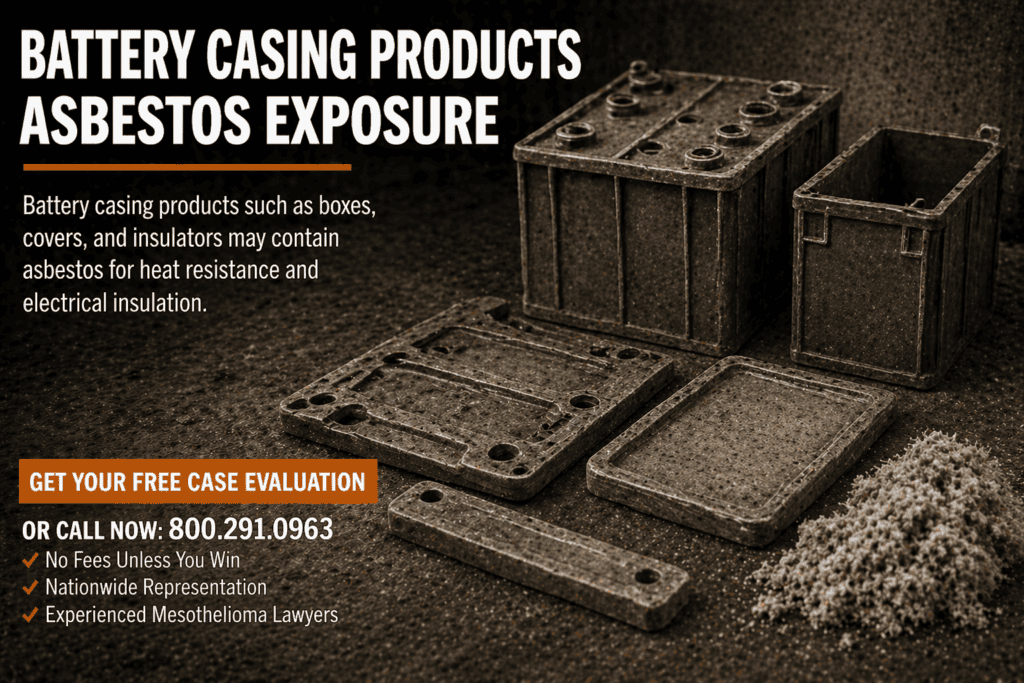
🔋 Battery Casing Asbestos Products Mesothelioma Lawsuits
If you or a loved one has been diagnosed with mesothelioma or asbestos lung cancer after exposure to battery casing asbestos products, you may qualify to file a battery casing asbestos lawsuit. Our attorneys represent factory workers, mechanics, electricians, and shipyard crews exposed to asbestos-reinforced battery casings used in vehicles, power plants, industrial machinery, and military equipment. Exposure frequently occurred during battery manufacturing, repairs, or disposal when asbestos fibers became airborne.
Through asbestos battery casing lawsuits, victims may receive compensation for medical costs, lost wages, long-term care, wrongful death, and pain and suffering. At Mesothelioma Help Center, there are no upfront fees — you pay nothing unless we win. Our attorneys have decades of experience securing asbestos verdicts, settlements, and trust fund claims for individuals harmed by asbestos battery exposure.
📖 Here’s What You’ll Learn When You Read This Page:
🔋 Asbestos added to battery casings for strength and heat resistance.
🛠️ Workers inhaled fibers during battery manufacturing, repairs, or disposal.
🏭 Exposure common in auto shops, power plants, and naval facilities.
📑 Thousands of victims filed lawsuits and asbestos trust fund claims.
📌 Facts About Asbestos in Battery Casing Products
• Asbestos reinforced battery casings to resist heat, acids, and vibration
• Exposure Risk: High during cutting, breaking, or disposal of casings
• Disease Risk: Mesothelioma, lung cancer, asbestosis
• Dust contaminated work areas and equipment
• Similar Occupations: Factory workers, auto mechanics, electricians, shipyard crews, military personnel
🏛️ History of Asbestos Use in Battery Casing Products
From the 1930s through the 1980s, asbestos was widely incorporated into lead-acid and industrial battery casings. The fibers provided durability, insulation, and resistance to chemical corrosion. These products were used in automobiles, forklifts, backup power systems, submarines, and aircraft.
When casings were cut, drilled, cracked, or disposed of, asbestos fibers were released into the air. Exposure affected battery plant workers, maintenance crews, mechanics, and even family members through contaminated clothing.
📊 Number of U.S. Workers Exposed to Asbestos from Battery Casing Products
| Occupational Group | Estimated Number of Workers Exposed |
|---|---|
| Battery Manufacturing Workers | Over 400,000 handled asbestos-reinforced casings in factories. |
| Auto Mechanics | Nearly 350,000 replaced or serviced asbestos battery casings. |
| Electricians | Around 300,000 exposed repairing power systems using asbestos batteries. |
| Shipyard Workers | Roughly 250,000 serviced asbestos battery banks on naval ships. |
| Military Technicians | About 200,000 handled asbestos casings in vehicles and aircraft. |
| Recycling & Disposal Crews | Nearly 150,000 exposed during battery teardown and scrap work. |
Total Estimated Exposure:
Over 1.6 million Americans were exposed to asbestos through battery casing products.
🔋 Asbestos Battery Casing Products
🔋 Automotive Battery Casings
Asbestos casings used in car and truck batteries. Cracking, cutting, or replacing them released hazardous fibers into garages and workshops.
🔋 Industrial Power Batteries
Factories used asbestos casings in heavy-duty power systems. Repairs and disposal released asbestos dust into work environments.
🔋 Marine Battery Housings
Naval ships relied on asbestos-reinforced battery casings for durability. Crews inhaled fibers during maintenance and replacement.
🔋 Backup Power Units
Emergency power batteries contained asbestos casings. Cutting or replacing units during installation spread fibers.
🔋 Aircraft Battery Compartments
Military aircraft used asbestos battery housings. Technicians disturbed asbestos during inspection and servicing.
🔋 Recycling & Scrap Batteries
Recycling plants broke apart asbestos casings, releasing fibers into poorly ventilated spaces and endangering workers.
👷 Types of Workers & Asbestos Exposure from Battery Casing Products
👷 Factory Workers
Produced asbestos-reinforced battery casings, inhaling fibers daily.
👷 Auto Mechanics
Exposed replacing, cutting, and disposing of asbestos battery housings.
👷 Electricians
Handled asbestos-lined power systems and emergency battery units.
👷 Shipyard Workers
Serviced asbestos battery banks aboard naval vessels.
👷 Military Technicians
Installed and maintained asbestos battery systems in vehicles and aircraft.
👷 Recycling Crews
Broke apart asbestos casings during scrap processing.
👷 Maintenance Staff
Worked near asbestos battery units during plant operations.
👷 Warehouse & Storage Crews
Moved and stacked asbestos battery casings, disturbing fibers.
❓ FAQs About Battery Casing Products and Mesothelioma Lawsuits
Who qualifies?
Anyone diagnosed with mesothelioma or lung cancer after asbestos battery casing exposure may qualify.
How did exposure happen?
Cutting, breaking, repairing, or disposing of asbestos casings released fibers into the air.
Are veterans eligible?
Yes. Veterans exposed to asbestos batteries in military vehicles or vessels may qualify for VA benefits plus lawsuits.
What’s the filing deadline?
Most states allow 1–3 years from diagnosis or death to file. Immediate legal action is essential.
Do I pay anything upfront?
No. Our asbestos attorneys work on contingency—clients pay nothing unless financial recovery is secured.
🏭 Manufacturers of Battery Casing Asbestos Products
🏭 Exide Technologies – Produced asbestos battery casings for vehicles and industrial power units.
🏭 General Electric (GE) – Manufactured asbestos-reinforced casings for backup power systems.
🏭 Gould Inc. – Supplied asbestos battery products for submarines, ships, and factories.
🏭 Raybestos-Manhattan – Manufactured asbestos components used in battery housings.
🏭 Eagle-Picher – Produced asbestos casings for aircraft and heavy machinery.
🏭 Delco Remy (GM) – Distributed asbestos battery housings for automotive and industrial use.
🔋 Battery Casing Products Mesothelioma Cases
From the 1930s through the late 1970s, asbestos was widely used in battery casing products to provide heat resistance, electrical insulation, and chemical stability. These casings were essential in automotive batteries, industrial backup power units, telecommunications systems, submarines, aircraft, and power plants. Manufacturing workers, maintenance technicians, and mechanics who built, handled, or repaired battery casings frequently inhaled asbestos fibers released during drilling, cutting, or disassembly. Decades later, many of these individuals developed mesothelioma after repeated occupational exposure to asbestos-containing battery components.
👥 Who Qualifies
Individuals diagnosed with mesothelioma after working with or around asbestos-containing battery casings — including factory workers, mechanics, power plant employees, telecommunications technicians, and electricians — may qualify for compensation. Family members exposed secondhand from contaminated work clothing may also be eligible to file claims.
📊 Statistics
Thousands of mesothelioma cases across the U.S. have been traced to exposure from asbestos battery casings.
Each year, many former industrial workers, automotive mechanics, and utility technicians are diagnosed with asbestos-related diseases linked to battery manufacturing and maintenance.
Settlements and asbestos trust fund compensation for affected workers often exceed six figures, with some verdicts reaching millions of dollars.
🔋 Battery Casing Products Asbestos Lung Cancer Cases
Battery casings also contributed significantly to asbestos-related lung cancer cases. Cutting, grinding, or repairing these components released airborne fibers into workshops and production facilities. Workers performing maintenance on older battery units or disassembling used casings were especially vulnerable, often inhaling asbestos dust daily in enclosed, poorly ventilated areas — increasing their risk of lung cancer decades later.
👥 Who Qualifies
Individuals diagnosed with asbestos-related lung cancer who worked in battery manufacturing, automotive repair, or power generation industries may qualify for compensation. Family members exposed secondhand from asbestos dust on work clothes or tools may also be eligible.
📊 Statistics
Asbestos exposure from battery casings remains a significant cause of occupational lung cancer among mechanics, utility workers, and manufacturing personnel.
Thousands of lawsuits and asbestos trust fund claims have been filed by battery industry workers, often resulting in six-figure settlements or substantial compensation awards.
📜 History of Mesothelioma and Asbestos Lung Cancer From Battery Casing Products
1930s–1970s: Asbestos was commonly used in battery casings for its durability and insulation properties. Workers in automotive, energy, and telecommunications sectors were heavily exposed during daily operations.
1980s: Regulations began phasing out asbestos, but older battery systems remained in service, continuing to pose risks.
Today: Many diagnosed cases involve retired mechanics, power plant workers, telecommunications engineers, and factory personnel who were exposed while manufacturing, repairing, or replacing asbestos-containing battery casings decades ago.
⚖️ How a Mesothelioma Lawyer Can Help Battery Workers & Families
If you or a loved one worked with asbestos battery casings and later developed mesothelioma, lung cancer, or asbestosis, you may qualify for financial compensation.
How a Mesothelioma Lawyer Can Help
🔎 Investigate Job Sites & Records – Attorneys trace asbestos battery exposure in plants, garages, and naval bases.
📑 File Trust Fund Claims & Lawsuits – Recover compensation for medical bills, lost wages, and care.
👨👩👧 Represent Families of Victims – Support wrongful death lawsuits for asbestos battery victims.
💵 No-Win, No-Fee Basis – Clients owe nothing unless recovery is achieved.
🎖️ Assist Veterans – Help veterans exposed to asbestos battery products pursue VA benefits and lawsuits.
📞 Legal Help for Battery Casing Asbestos Exposure
If you or a loved one worked with asbestos battery casings and developed mesothelioma, lung cancer, or asbestosis — you may qualify for compensation.
📱 Call Now: 800.291.0963
• No upfront cost
• No fees unless we win
• Product and exposure research included
• Help for mechanics, electricians, factory workers, and families
Or request help online 24/7