🧬 What Is Biphasic Mesothelioma (Mixed)?
Understanding Biphasic Mesothelioma: From Exposure to Legal Help
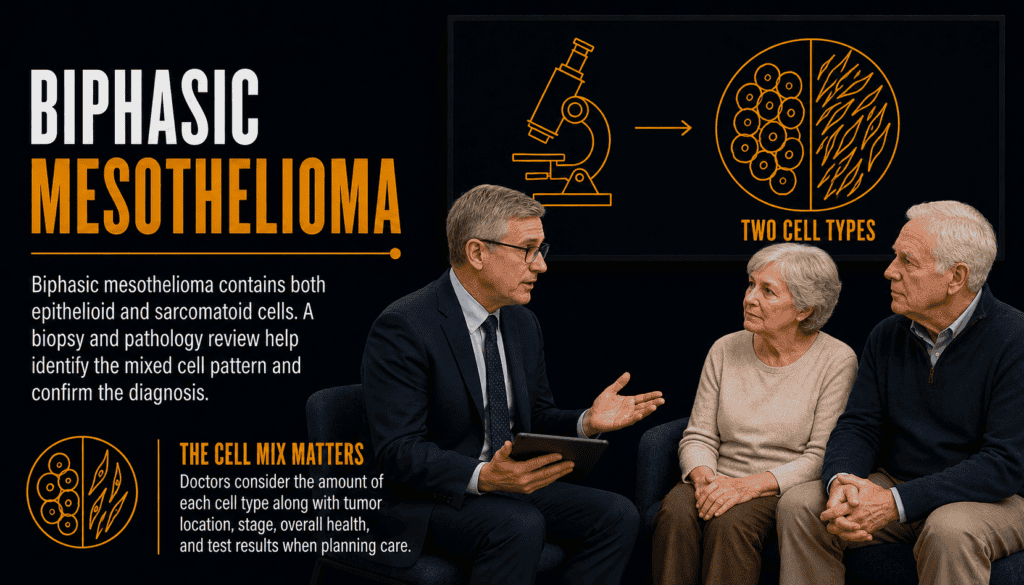
Biphasic mesothelioma is a mixed-cell type that contains both epithelioid and sarcomatoid cells. It accounts for 20–30% of all mesothelioma cases. Because it blends two distinct cell structures, the prognosis and treatment success depend on which cell type is more dominant. Epithelioid cells respond better to treatment, while sarcomatoid cells tend to be more aggressive and harder to treat.
Source: American Cancer Society
🛠️ How Do People Get Biphasic Mesothelioma? (Causes & Progression)
The leading cause of biphasic mesothelioma is asbestos exposure—usually through occupational contact or environmental contamination.
Here’s how exposure turns into disease:
Asbestos materials are disturbed
Construction, manufacturing, or maintenance work releases microscopic asbestos fibers into the air.
Fibers are inhaled or swallowed
These fibers are breathed in or ingested without notice, often during work or household exposure.
Fibers lodge in body linings
They settle into the pleura (lungs), peritoneum (abdomen), or pericardium (heart), causing long-term irritation.
Dormant for decades
Over 20–50 years, inflammation and scarring result in a genetic mutation that creates mixed cell tumors.
Symptoms eventually develop
Pain, swelling, and fatigue appear depending on tumor location and cell behavior.
Mesothelioma is diagnosed
Doctors confirm biphasic mesothelioma by analyzing tissue under a microscope and identifying both cell types.
🏗️ Common Sources of Exposure:
-
Shipbuilding and Navy service
-
Power plants and boiler rooms
-
Chemical and manufacturing plants
-
Auto repair garages (brakes, clutches)
-
Secondary exposure via contaminated clothing
Even brief exposure can result in mesothelioma decades later.
Source: OSHA – Occupational Safety and Health Administration
⚠️ Early Signs and Symptoms
Symptoms reflect a blend of epithelioid and sarcomatoid traits:
-
Chest or abdominal pain
-
Pleural or peritoneal fluid buildup
-
Fatigue or weakness
-
Cough or difficulty breathing
-
Weight loss or appetite loss
-
Digestive or respiratory discomfort
The wide symptom range can delay accurate diagnosis.
🧪 How Biphasic Mesothelioma Diagnosed
Diagnosis involves multiple steps and a detailed pathology review:
-
Imaging: X-ray, CT, and PET scans detect fluid or masses
-
Fluid Testing: Thoracentesis or paracentesis samples may show abnormal cells
-
Biopsy: Needle or surgical biopsy provides tissue for lab study
-
Histology: Confirms both sarcomatoid and epithelioid cells are present
Source: NIH Study
📊 Stages of Biphasic Mesothelioma
Staging helps determine spread and treatment strategy:
-
Stage 1: Tumor is localized; more epithelioid cells may allow curative surgery
-
Stage 2: Cancer begins to spread to nearby organs and lymph nodes
-
Stage 3: Regional invasion of the chest wall, diaphragm, or peritoneum
-
Stage 4: Widespread metastasis; palliative care is prioritized
Outcomes depend on which cell type dominates and how early the disease is caught.
💉 Treatment Options for Biphasic Mesothelioma
Because of its mixed-cell nature, treatment is complex:
Surgery:
Pleurectomy/Decortication (P/D) or Cytoreductive surgery with HIPEC may be used if epithelioid cells dominate and the tumor is localized.
Chemotherapy:
Standard regimens like Pemetrexed and Cisplatin may slow progression, especially with a strong epithelioid component.
Radiation Therapy:
May be used to shrink tumors, relieve pain, or control local recurrence.
Immunotherapy:
Drugs like Opdivo and Yervoy show promise, particularly in treating mixed or sarcomatoid-dominant cases.
Clinical Trials:
Ongoing studies test tailored therapies for mixed histology tumors and personalized medicine approaches.
📈 Life Expectancy & Survival Rates for Biphasic Mesothelioma
-
Average survival: 12–20 months
-
Epithelioid-dominant tumors: 2–3+ years with treatment
-
Sarcomatoid-dominant tumors: Often under 1 year
-
Outcomes vary by cell ratio and tumor location
Source: American Cancer Society
💰 Cost of Treatment for Biphasic Mesothelioma
Medical costs can reach $200,000–$600,000+ depending on approach:
-
Surgery: $40K–$120K
-
Chemotherapy & Imaging: $30K–$90K
-
HIPEC or Immunotherapy: $100K–$200K+
-
Ongoing scans, palliative support, and travel
Financial compensation is often needed to cover uninsured expenses.
⚖️ Legal Help and Compensation
Most patients qualify for asbestos-related financial assistance:
-
Asbestos Trust Funds – More than $30 billion is available
-
Lawsuits or Settlements – Many awards exceed $1M–$2.5M
-
VA Benefits – Available for exposed veterans
-
Wrongful Death Claims – Filed by loved ones after a loss
MesotheliomaHelp.org – Legal Guide
📚 Lawsuit Examples for Biphasic Mesothelioma
Insulator — $9.5 Million Verdict (2020)
Details: Diagnosed with biphasic mesothelioma after decades working around pipe insulation.
Outcome: Jury found product manufacturers liable.
Source: HarrisMartin Publishing
Shipyard Welder — $8.1 Million Settlement (2019)
Details: Exposure occurred while welding near asbestos materials in ship compartments.
Outcome: Settlement paid from multiple defendants.
Source: Bloomberg Law
School Maintenance Worker — $7.3 Million Verdict (2021)
Details: Diagnosed after working around asbestos-wrapped boilers and ceilings.
Outcome: Verdict favored plaintiff due to long-term exposure.
Source: Mealey’s Litigation Report
HVAC Technician — $6.9 Million Verdict (2018)
Details: Worked in attics and crawlspaces filled with asbestos duct wrap.
Outcome: Found multiple parts and supply manufacturers liable.
Source: VerdictSearch
Veteran Pipefitter — $8.6 Million Settlement (2022)
Details: Navy exposure to asbestos in confined engine rooms led to biphasic mesothelioma.
Outcome: VA benefits and lawsuit combined for total recovery.
Source: National Law Review
🔬 Research and Ongoing Studies
-
Tumor Biology Trials: Mapping how cell ratios affect prognosis
-
Immunotherapy Expansion: Exploring effect on biphasic tumors
-
Genetic Mutation Studies: BAP1 and others tied to treatment response
-
Liquid Biopsies: Detecting mixed-cell signatures earlier
Find open studies at: ClinicalTrials.gov
📍 Final Prognosis
Biphasic mesothelioma outcomes depend largely on the ratio of cell types. Epithelioid-dominant cases may respond well to aggressive treatment. Sarcomatoid-heavy cases are harder to treat but may benefit from immunotherapy.
Legal and medical resources are key in managing the physical, emotional, and financial impact.
👨⚖️ How a Mesothelioma Lawyer Can Help
An experienced asbestos attorney can help:
-
Investigate your job history and likely exposure sources
-
Identify responsible manufacturers and job sites
-
File trust fund claims, VA applications, or lawsuits
-
Represent surviving family members in wrongful death cases
-
Work on contingency—no fees unless compensation is recovered
📞 Free Legal Help for Biphasic Mesothelioma Victims
If you or a loved one were exposed to asbestos and now face a diagnosis of biphasic mesothelioma, you may be entitled to major financial compensation.
Call Now: 800.291.0963
• No upfront cost
• No legal fees unless we win
• Cell-type and exposure investigation included
• Help for workers, families, and veterans
Or request help online 24/7