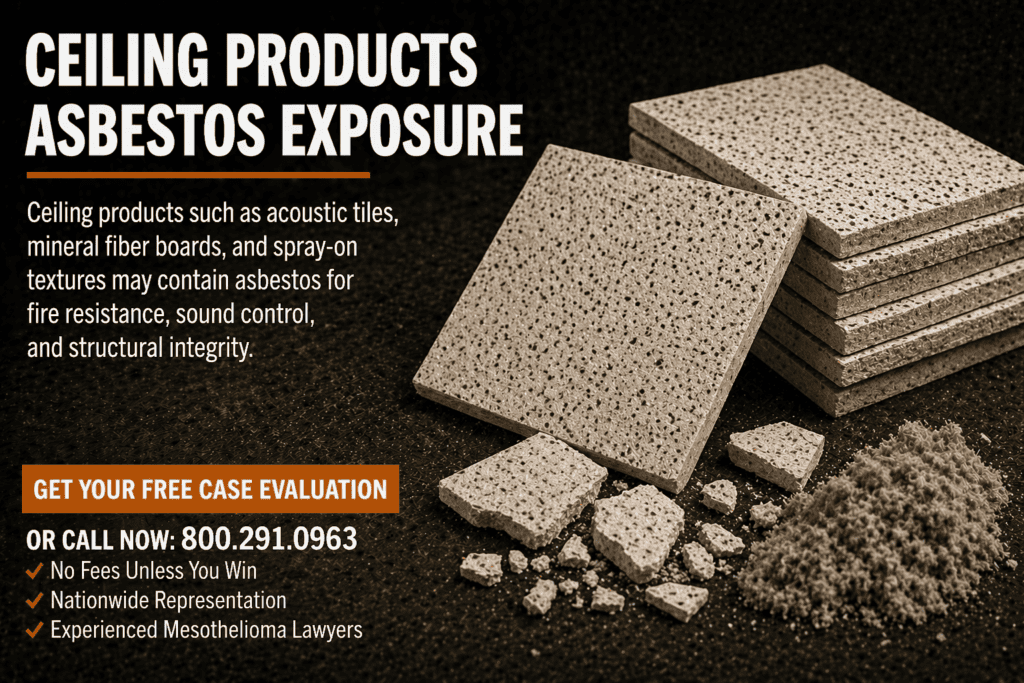
Ceiling Products Asbestos Exposure
Some older ceiling products were manufactured or installed with asbestos-containing materials, while many others were not. Historical asbestos use could involve certain ceiling tiles, acoustical plaster, sprayed or troweled surfacing materials, joint compounds and other components associated with ceiling systems. Whether a particular ceiling product contained asbestos depends on the manufacturer, formulation, installation date and other identifying evidence.
This guide explains where asbestos may have been present in historical ceiling systems, how fibers could become airborne when asbestos-containing material was disturbed, which workers may have encountered these products, and what records can help reconstruct past exposure. For a broader overview of product-related exposure, see Asbestos Exposure in Products.
Ceiling Products and Historical Asbestos Use
Ceilings can be made from many different materials, and the term ceiling product does not identify asbestos content by itself. Certain historical ceiling tiles, acoustical products and sprayed or troweled surfacing materials used asbestos for fire resistance, sound control, durability or reinforcement. Other ceiling products were asbestos-free.
Occupational Safety and Health Administration materials specifically recognize acoustical plaster on ceilings as a type of surfacing material and also identify ceiling tile among building materials historically manufactured with asbestos. U.S. Environmental Protection Agency guidance explains that sprayed- and troweled-on asbestos-containing materials on ceilings and walls can be significant sources of airborne fibers when friable material is damaged or disturbed.
Product condition matters. Some rigid ceiling materials may hold fibers within a solid matrix, while friable sprayed or acoustical materials can release fibers more easily if crumbled, scraped, drilled, damaged or removed.
Where Asbestos May Have Been Used in Ceiling Systems
Depending on manufacturer, product type and year, asbestos-containing materials may historically have been present in parts of a ceiling system such as:
- certain acoustical or decorative ceiling tiles;
- sprayed-on acoustical or fireproofing material;
- troweled-on acoustical plaster;
- textured ceiling finishes in some older applications;
- certain joint compounds used around drywall seams or repairs;
- backing, coatings or adhesives associated with some ceiling installations; and
- adjacent construction materials disturbed during ceiling renovation.
A ceiling system can also intersect with other construction materials. Older work may involve historical caulking or sealant products around penetrations, perimeter joints or mechanical openings, and some facilities used asbestos-cement products in nearby wall, roof or utility applications. Each material must be evaluated separately rather than assuming asbestos was present throughout the assembly.
Appearance alone is unreliable. EPA states that the only way to know for certain whether a suspect material such as ceiling tile contains asbestos is qualified laboratory testing.
How Asbestos Exposure Could Occur
Exposure becomes possible when asbestos-containing material releases respirable fibers that can be inhaled or swallowed. In ceiling work, disturbance can range from a small maintenance task to extensive demolition. The amount of potential fiber release depends heavily on whether the material was friable, how it was handled and the conditions of the work area.
Potential disturbance could occur during tasks such as:
- removing or breaking old ceiling tiles;
- scraping sprayed or troweled ceiling finishes;
- sanding or grinding old ceiling coatings or compounds;
- drilling through ceilings to install lights, wiring, sprinklers or supports;
- cutting openings for HVAC, plumbing or electrical work;
- repairing water-damaged or deteriorated overhead material;
- demolishing suspended ceilings, plaster ceilings or other assemblies; and
- dry sweeping or blowing dust after ceiling work.
Exposure reconstruction should consider the exact product, asbestos content, material condition, frequency and duration of work, distance from the disturbance, ventilation, dust controls, respiratory protection, cleanup practices and coworker activity.
Worked around older ceiling tile, acoustical plaster or textured ceiling material? If you are trying to identify a historical product or reconstruct a possible asbestos exposure, Call 800.291.0963. Live chat available 24/7, 365 days a year. Submit Your Case.
Workers and Job Sites That May Have Encountered Ceiling Products
Workers who installed, repaired, maintained or removed historical ceiling systems may have encountered asbestos-containing material. A job title alone does not establish exposure; the actual product and work performed are more important.
Potentially relevant occupations may include ceiling installers, drywall workers, plasterers, carpenters, electricians, HVAC workers, pipefitters, sprinkler installers, painters, maintenance workers, custodians, construction laborers and demolition crews.
Possible settings include schools, hospitals, offices, factories, warehouses, military facilities, power plants, industrial buildings, commercial properties and older homes undergoing renovation.
People working above suspended ceilings may also have encountered other materials in the plenum space, including insulation, fireproofing, pipe covering, duct insulation or construction debris. Those materials should be identified separately rather than assuming the ceiling product was the exposure source.
Installation, Repair and Removal Risks
Installation and alteration
Some ceiling tiles and panels were cut to fit around walls, lights, vents or other penetrations. If an older tile contained asbestos, sawing, drilling or breaking it could potentially release fibers. Installation records, packaging or remaining material can help identify the product involved.
Maintenance and repair
Maintenance personnel may disturb ceilings while replacing fixtures, running wiring, servicing HVAC systems or repairing leaks. Water damage can weaken some materials and increase the chance that they crumble during handling.
Surfacing materials
OSHA defines surfacing material to include material sprayed, troweled or otherwise applied to surfaces for acoustical, fireproofing and similar purposes, including acoustical plaster on ceilings. Friable asbestos-containing surfacing material can present a greater potential for fiber release when disturbed than hard, intact nonfriable material.
Renovation and demolition
Large-scale removal can break ceiling tiles, scrape old finishes and disturb hidden materials above the ceiling. EPA recommends that suspect material be evaluated before renovation if the work is likely to disturb it. People should not intentionally break or sand unidentified ceiling material to determine whether it contains asbestos.
Evidence That May Identify Historical Ceiling Products
Ceiling systems are often replaced, painted over or modified, so historical identification may require several kinds of evidence. Useful records can help narrow down the product, manufacturer, installation period and work performed.
Potential evidence includes:
- manufacturer stamps or markings on the back of ceiling tiles;
- product packaging, cartons or labels;
- trade names and catalog numbers;
- architectural plans and finish schedules;
- construction specifications describing acoustical ceiling materials;
- purchase orders, invoices and supplier records;
- maintenance, renovation or abatement records;
- photographs showing ceiling tile patterns, packaging or sprayed finishes;
- asbestos surveys and laboratory reports;
- employer, union or military records documenting job assignments;
- coworker or witness statements describing the ceiling work; and
- records showing when the ceiling was installed, repaired or replaced.
Medical and pathology records can document diagnosis, but they do not identify a historical ceiling product. Product evidence and medical evidence answer different questions and should not be treated as interchangeable.
Secondhand Exposure and Health Risks
If a worker disturbed asbestos-containing ceiling material and dust accumulated on work clothing, shoes, tools or personal belongings, fibers could potentially have been carried away from the job site. This is a possible secondhand exposure pathway, but household relationship alone does not establish exposure. The actual work, contamination pathway, frequency and handling of work items matter.
Asbestos exposure is associated with mesothelioma, asbestos-related lung cancer, asbestosis and other asbestos-related disease. Working in a building with an old ceiling does not by itself establish medically significant exposure or individual causation.
People concerned about past asbestos exposure or symptoms should discuss their work history and health with a qualified healthcare professional.
Legal and Compensation Considerations
Depending on the evidence and circumstances, legal options may be available to a person diagnosed with an asbestos-related disease after documented exposure to a specific asbestos-containing ceiling product or surfacing material.
A legal review may consider product identification, manufacturer or supplier evidence, installation period, work tasks, frequency and duration of exposure, nearby activities, diagnosis, jurisdiction and applicable filing deadlines.
Manufacturer identification does not automatically establish legal responsibility. Liability is case-specific and depends on the evidence and governing law.
Some matters may involve asbestos trust funds, but each trust has its own exposure, product and medical documentation requirements. Compensation is not automatic or guaranteed.
Old exposure does not by itself determine whether a claim is timely. Statutes of limitation and other deadlines vary by jurisdiction and circumstances and should be reviewed individually.
Ceiling Products Asbestos Exposure FAQs
Did all old ceiling tiles contain asbestos?
No. Some historical ceiling tiles contained asbestos, while many did not. Product type, manufacturer and year are important.
Can asbestos be identified by looking at a ceiling tile?
No. EPA states that the only way to know for certain whether a suspect material contains asbestos is qualified laboratory testing.
Were sprayed ceiling textures made with asbestos?
Some historical sprayed or troweled surfacing materials contained asbestos. OSHA specifically recognizes acoustical plaster on ceilings as a surfacing-material example, but not every textured ceiling contained asbestos.
Could removing old ceiling tiles release asbestos fibers?
If the tiles contained asbestos, breaking, cutting, drilling or otherwise disturbing them could potentially release fibers. The amount depends on the material and work method.
Are friable ceiling materials more concerning?
Friable material can be crumbled by hand pressure and may release fibers more readily when disturbed. Some sprayed or acoustical asbestos-containing ceiling materials were friable.
What records can help identify a ceiling product?
Useful evidence can include tile markings, packaging, product catalogs, plans, finish schedules, specifications, invoices, asbestos surveys, photographs and coworker testimony.
Can family members have secondhand exposure from ceiling work?
A possible pathway can exist if asbestos-containing dust was carried home on clothing, tools or belongings. Family relationship alone does not prove that exposure occurred.
Does working around old ceilings automatically qualify someone for compensation?
No. Legal eligibility depends on product identification, exposure evidence, diagnosis, jurisdiction and other facts. Compensation is not guaranteed.
Get Help Reviewing Historical Ceiling Product Exposure
If you or a family member has been diagnosed with mesothelioma, asbestos-related lung cancer or another asbestos-related disease and you are trying to identify old ceiling tile, acoustical plaster, sprayed surfacing material or another ceiling product from a workplace, renovation project or military facility, we can help organize the product and exposure history that may be relevant.
Call 800.291.0963 to discuss what you remember about the ceiling material, building, job site and work performed. Live chat is available 24/7, 365 days a year. Submit Your Case using the form below.
Prior exposure does not automatically establish a legal claim. Eligibility depends on the evidence, diagnosis, jurisdiction and other circumstances, and compensation is not guaranteed.
⚕️ Legal & Medical Information Disclaimer
This page provides general educational information and is not medical or legal advice. The information does not establish asbestos exposure, diagnosis, causation, liability, claim eligibility or compensation. Medical concerns should be discussed with a qualified healthcare professional, and legal questions should be reviewed with a qualified attorney.