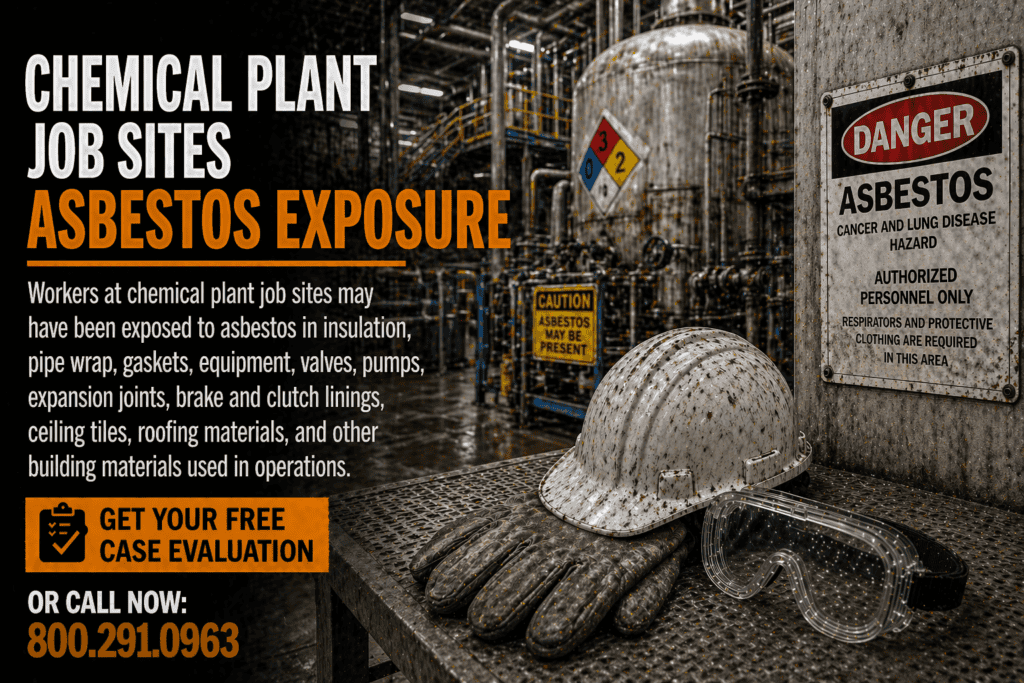
Chemical Plants Asbestos Exposure Lawsuit
From the 1930s to the late 1980s, asbestos was used extensively in chemical plants across the United States. Found in insulation, piping systems, reaction vessels, boilers, and protective clothing, asbestos helped contain the extreme heat and corrosion risks involved in chemical processing—but its use came at a serious cost.
Chemical plant workers were often exposed to airborne asbestos while performing routine maintenance, system overhauls, or emergency repairs. As insulation aged or was removed, microscopic fibers became airborne and inhaled. Exposure often occurred without warning, masks, or ventilation.
🧪 Chemical Plant Job Sites – What You’ll Learn From This Page:
🧴 Chemical processing plants used asbestos to insulate tanks, pipes, and reactors, due to extreme heat and corrosion.
🔩 Routine maintenance on valves, pumps, and processing lines disturbed aging asbestos insulation.
⚠️ Insulation breakdown during chemical exposure or high pressure increased fiber release during equipment repair.
🌬️ Poor airflow in production and storage areas intensified exposure during cleaning or part replacement.
💰 Chemical plant workers with asbestos-related conditions may qualify for trust fund payouts or legal action.
Number of People Exposed to Asbestos in Chemical Plants in the U.S.
Asbestos was favored in chemical facilities for its chemical resistance and fireproofing.
| Exposure Category | Estimated Number of People Exposed |
|---|---|
| Occupational Exposure (Techs, engineers, repair crews) | Approximately 550,000 workers exposed |
| Secondary Exposure (Family via uniforms/tools) | Estimated 85,000 exposed |
| Environmental Exposure (Processing areas, pipe racks) | Around 130,000 people exposed |
👉 Total Estimated Exposure:
Over 765,000 people in the U.S. were exposed at chemical plant job sites.
🧰 Facts About Chemical Plant Workers
• Over 150,000 Americans have worked in chemical plants during the 20th century’s industrial boom.
• Asbestos Exposure: Very common from the 1940s–1980s, particularly in maintenance and mechanical departments.
• Asbestos-Related Disease Risk: Extremely high due to enclosed areas and constant maintenance of hot systems.
• Medical data links chemical plant jobs to elevated mesothelioma and lung cancer rates.
• Similar Occupations: Pipefitters, pump operators, chemical engineers, boilermakers, instrument technicians
🏭 History of Asbestos Use on Job Sites
Chemical plants relied heavily on asbestos due to the high heat and corrosive environments involved in processing operations. Pipes, tanks, boilers, and reactors were insulated with asbestos to protect against chemical and thermal damage.
Unfortunately, that same insulation aged poorly. During plant shutdowns or equipment changeouts, fibers were disturbed and entered the air—endangering mechanics, operators, and anyone nearby in confined spaces.
⚠️ Mesothelioma Risk for Chemical Plant Workers
Extensive medical research has connected chemical plant employment to deadly asbestos-related illnesses:
• A CDC study found elevated mesothelioma rates among chemical processing and utilities workers.
• Longitudinal studies in Europe and North America showed chemical plant employees were 5 times more likely to die from mesothelioma than the general population.
• Routine equipment maintenance, valve overhauls, and insulation replacement contributed heavily to exposure.
The latency period for mesothelioma can exceed 40 years, meaning symptoms today may stem from exposures in the 1970s and 1980s.
🔩 Asbestos Products Used in Chemical Plants
Asbestos-containing materials were present throughout chemical plant infrastructure. Regular maintenance and system upgrades frequently released harmful asbestos fibers into the breathing zones of plant staff.
🔥 Boiler and Furnace Insulation
Lined hot process equipment and boilers; fibers escaped during inspections and overhauls.
🚿 Pipe Insulation
Wrapped around miles of chemical piping systems; fibers released during cutting or removal.
🧱 Refractory Linings
Used in acid-neutralization and thermal systems; cracked linings shed asbestos over time.
🧰 Gaskets and Seals
Found in pumps, reactors, and flange joints; emitted fibers during breakdown or repair.
🧤 Protective Clothing
Gloves, aprons, and face shields made of asbestos; daily use shed fibers into the air.
🚿 Fireproof Spray Insulation
Applied to walls and overhead piping; vibration and damage caused fiber fallout.
⚡ Electrical Insulation Panels
Lined control panels and breaker boxes; asbestos boards disturbed during upgrades.
♨️ Tank and Vessel Coatings
Covered reaction vessels and storage tanks; insulation degraded over time, releasing fibers.
🧵 Thermal Tapes and Wraps
Used on pumps, valves, and pipe joints; frayed wraps created inhalable fiber clouds.
🚜 Brake Linings on Plant Vehicles
Used asbestos pads; grinding and repairs spread dust in nearby areas.
🩹 Adhesives and Sealants
Used throughout piping systems; cracked or sanded coatings released fibers.
🧱 Wall and Ceiling Panels
Installed in control rooms and equipment shelters; airborne dust released when disturbed.
🛠️ How Chemical Plant Workers Were Exposed
Chemical plant workers were exposed to asbestos during routine and emergency work. Poor ventilation and tight quarters worsened conditions, especially during shutdowns or maintenance projects.
🔧 Pipefitters and Insulators
Removed and installed asbestos-lagged piping; exposure occurred during cutting and wrapping tasks.
♨️ Boiler Operators and Steam Engineers
Worked near asbestos-lined equipment; disturbed insulation during cleaning and repairs.
🛠️ Maintenance Technicians
Handled valves, pumps, and tank systems; asbestos disturbed with every gasket replacement.
🔩 Machinists and Millwrights
Serviced insulated rotating equipment; fibers released during part removal or repair.
🏗️ Chemical Process Operators
Worked near insulated tanks and lines daily; long-term exposure occurred in poorly vented units.
⚡ Electricians
Modified asbestos-backed control boxes; particles released during routine wiring upgrades.
🌀 Instrument Technicians
Calibrated gauges and regulators attached to insulated systems; dust dislodged with tools.
🔥 Shutdown Crews
Faced the most exposure during turnarounds; widespread insulation removal released heavy fiber loads.
⚙️ Pump and Valve Mechanics
Rebuilt old seals and gaskets made with asbestos; fibers released during scraping.
🌬️ HVAC and Air System Workers
Repaired air handlers and ducts wrapped in asbestos tape; disturbed fibers while resealing joints.
🧍 Supervisors and Inspectors
Entered active work zones without PPE; secondhand exposure common during site checks.
📦 Laborers and Utility Workers
Swept and cleaned around damaged insulation; handled asbestos waste without awareness.
🧪 Types of Chemical Plants With Asbestos Exposure
🔥 Petrochemical Plants
Processed petroleum into fuels and plastics. Asbestos insulated reactors, pipelines, and furnaces; maintenance crews were exposed during repairs and shutdowns in high-heat zones.
💊 Pharmaceutical Plants
Produced medications in sterile, high-temperature environments. Boilers, pipes, and cleanroom panels were insulated with asbestos; technicians encountered dust during upgrades and cleaning.
🧼 Soap & Detergent Plants
Used heated mixing tanks and steam-powered dryers. Asbestos-lined equipment released fibers during maintenance, especially in confined mixing rooms with poor ventilation.
🧴 Cosmetics Manufacturing
Blended powders, creams, and makeup—some with asbestos-contaminated talc. Exposure occurred during raw material handling, packaging, and machine cleaning in dusty compounding areas.
🧪 Industrial Chemical Plants
Produced acids, solvents, and adhesives. Asbestos wrapped corrosive fluid lines and tanks; cutting or resealing these systems disturbed insulation, releasing fibers.
🧯 Fire Retardant & Sealant Plants
Manufactured coatings and pastes containing asbestos. Workers blended dry asbestos into mixtures, often without adequate protection in powdery, enclosed workspaces.
🧬 Fertilizer Plants
Processed ammonia and phosphate using heat-intensive equipment. Asbestos-insulated boilers and scrubbers released fibers during maintenance and when insulation aged or broke down.
🔬 Research Chemical Facilities
Handled experimental compounds using heat-sealed systems. Technicians were exposed while repairing or modifying asbestos-lined hoods, ducts, and distillation columns.
🧹 Cleaning Product Factories
Produced sprays and powders using heat during bottling. Equipment was often insulated with asbestos; fibers were released when seals or dryers were replaced.
🧱 Resin & Plastic Additive Plants
Produced compounds for plastic molding. Asbestos was used in heat-proof coatings and containers; fiber release occurred during transfer, weighing, and machinery breakdowns.
❓ Common Questions About Chemical Plant Asbestos Claims
Can I file a claim if the plant closed?
✅ Yes — lawsuits target the asbestos manufacturers, not the chemical facility.
What if I was exposed over 30 years ago?
✅ Most states allow 1–3 years after diagnosis to file, regardless of exposure date.
Do I need to recall specific brands or products?
✅ No — attorneys use jobsite records, union data, and equipment logs to prove exposure.
What if I was a contractor or worked through a union?
✅ You may still qualify if you worked in an affected area or role.
What compensation is possible?
✅ Many settlements reach six figures depending on diagnosis, work history, and exposure level.
Can my family file if I passed away from mesothelioma?
✅ Yes — surviving spouses and dependents may file a wrongful death claim.
⚖️ How a Mesothelioma Attorney Can Help Chemical Workers
A mesothelioma attorney can help maximize your compensation and simplify the legal process by:
• Reviewing your job duties and likely exposure points
• Collecting employment records and medical documentation
• Filing asbestos trust fund claims or lawsuits
• Identifying liable manufacturers and suppliers
• Ensuring claims meet strict state deadlines
• Assisting family members with wrongful death claims
Most attorneys charge no fees unless they recover money for your case.
📞 Free Legal Help for Chemical Plant Workers & Families
If you or someone you love worked at a chemical plant and now faces a diagnosis of mesothelioma, lung cancer, or asbestosis, financial compensation may be available. Whether you were in maintenance, operations, or supervision, we can help.
Call Now: 800.291.0963
• No upfront costs
• No legal fees unless we win
• Exposure investigation included
• Trust fund & lawsuit claims filed
• Help for surviving spouses & family members
Or request help online 24/7