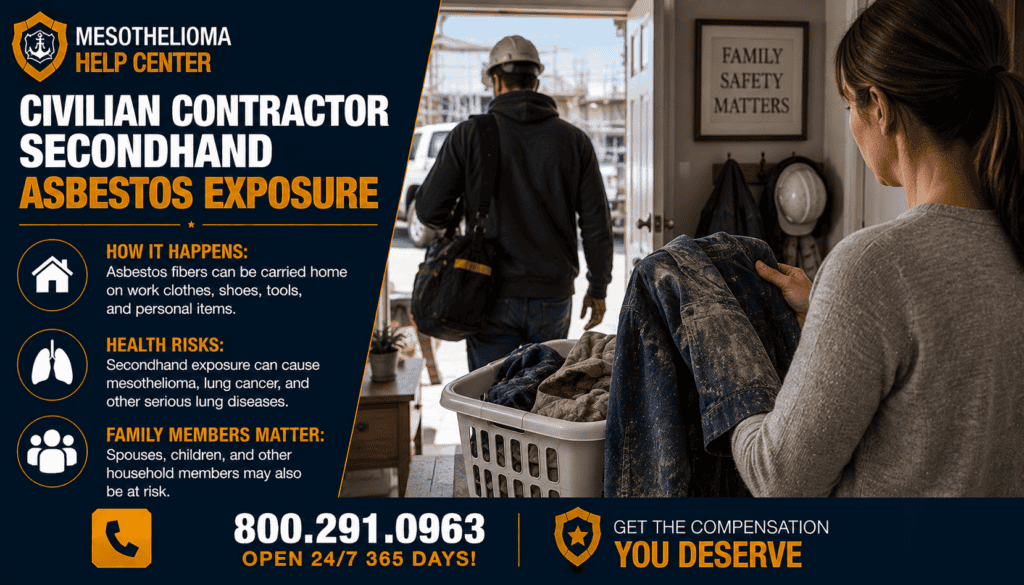
🏠 Civilian Contractor Secondhand Asbestos Exposure
Secondhand asbestos exposure can occur when fibers from a civilian contractor’s workplace are carried into a home or vehicle on clothing, shoes, skin, hair, tools or personal belongings. Family members may then inhale fibers while handling dusty work clothes, cleaning contaminated areas or having close daily contact with the worker.
This is also called household, domestic, para-occupational or take-home exposure. A family relationship alone does not prove exposure. A useful review identifies the worker’s job, source of dust, shared household, routines, frequency and years involved.
🧭 On This Page
- How secondhand exposure may occur
- Work clothing and laundry exposure
- Tools, vehicles and household surfaces
- Family members who may have been exposed
- Health risks and medical evaluation
- How to document household exposure
- Evidence used in secondhand claims
- Lawsuits, trusts and filing deadlines
- Frequently asked questions
🔄 How Secondhand Exposure May Occur
A contractor may have worked around disturbed pipe insulation, boiler materials, gaskets, packing, brakes, electrical components, fireproofing or construction products. Airborne fibers could settle on clothing and belongings before the worker returned home.
Possible exposure routes include embracing a dusty worker, shaking out clothing, laundering work garments, cleaning a work vehicle, handling contaminated tools or sweeping dust from floors. The likelihood and intensity depend on the underlying job, materials, controls and repetition.
The Civilian Contractors Asbestos Exposure main guide explains occupational sources. The Contractor Equipment and Machinery hub and Asbestos Products Exposure hub can help identify the material or task that produced dust.
👕 Work Clothing and Laundry Exposure
Historically, some workers wore their work clothes home. A spouse, parent or other household member might shake out dusty garments before washing them, creating another opportunity for fibers to become airborne. Laundry frequency, visible dust, storage locations and whether work clothing was washed with family clothing are useful details.
Do not handle or shake suspected contaminated vintage clothing. If old work garments or materials remain, obtain guidance from appropriately trained asbestos professionals rather than attempting home cleaning or testing.
🧰 Tools, Vehicles and Household Surfaces
Contractors may have carried tools, toolboxes, boots or protective gear between a job and home. Dust could also accumulate in a car or truck used for commuting. Family members who cleaned the vehicle, played near stored work gear or shared the transportation may have had contact.
Document where work items were kept, who cleaned them and how often. Photographs of work vehicles, garages or tools may help establish routines, but an old object should not be disturbed to create evidence.
👨👩👧👦 Family Members Who May Have Been Exposed
Potential household contacts can include spouses, children, parents, siblings, roommates and others who shared the home. The important issue is not the label of the relationship but the actual contact with the worker, clothing, tools, vehicle or contaminated area.
Record the years each person lived with the contractor. A child may have lived at home during only part of a long career, while a spouse may have handled laundry throughout several jobs. Separate each household member’s history.
The National Cancer Institute states that there is evidence family members of heavily exposed workers face an increased mesothelioma risk and explains that fibers could be brought home on shoes, clothing, skin and hair.
📞 Need Help Reviewing a Family Take-Home Exposure History?
If mesothelioma or asbestos-related lung cancer affected someone who handled a contractor’s dusty clothing, tools or vehicle, a focused review can help identify the work source and household routine.
Call 800.291.0963, use our live chat 24/7/365 or tell us about the family exposure through the contact form for a free, confidential review.
🩺 Health Risks and Medical Evaluation
Secondhand asbestos exposure may increase the risk of mesothelioma and other asbestos-related disease. Exposure does not mean disease is certain, and symptoms may not appear for decades.
Possible symptoms can include persistent shortness of breath, cough, chest pain, fatigue, unexplained weight loss or abdominal swelling. These symptoms have many causes and require medical evaluation. A clinician may consider occupational and household histories, imaging, lung-function testing and, when needed, pathology.
The Civilian Contractor Asbestos Exposure Health Risks guide explains major diseases. Tell the doctor the contractor’s trade, approximate years and how the household contact occurred.
🗓️ How to Document Household Exposure
Build two connected timelines: one for the contractor’s work and one for the household member. For each period, record:
- Contractor, employer, trade, work site and approximate dates.
- Dust-producing tasks and materials or equipment involved.
- Shared residence and household members present.
- Clothing storage, laundry and changing routines.
- Tools, boots and vehicles brought home.
- Frequency and duration of contact.
- Coworkers or relatives who remember the routine.
- Medical symptoms, tests and diagnosis dates.
Use the Civilian Contractor Asbestos Exposure Timeline to organize work periods. Mark uncertain dates as approximate rather than guessing.
📁 Evidence Used in Secondhand Claims
Evidence may include Social Security earnings records, W-2s, union cards, personnel files, work orders, product invoices, equipment manuals, photographs and witness statements. Medical evidence may include pathology, imaging and physician records.
Family testimony can explain who handled laundry, how dusty clothing appeared, where tools were stored and how vehicles were cleaned. Coworkers may help confirm the contractor’s duties and workplace conditions.
A claim still requires evidence connecting the household exposure to legally responsible sources. A diagnosis and family relationship, without the underlying occupational connection, may be insufficient.
⚖️ Lawsuits, Trusts and Filing Deadlines
Secondhand-exposure liability varies by state and may depend on the exposure years, relationship, defendant, foreseeability rules and other facts. A company should not be labeled responsible without supporting evidence and applicable law.
The Civilian Contractor Mesothelioma Lawsuit guide explains civil claims. The Civilian Contractor Asbestos Trust Fund Claims guide addresses trust procedures.
State deadlines can apply after diagnosis or death. Review the Civilian Contractor Asbestos Statute of Limitations guide and obtain case-specific advice promptly. Families considering a claim after death should also read the Wrongful Death Asbestos Lawsuits guide.
❓ Frequently Asked Questions
Can asbestos fibers be carried home on work clothing?
Yes. NCI and CDC sources recognize take-home exposure through clothing, shoes, skin, hair and other contaminated items.
Does washing work clothing prove exposure?
No. It is an important fact, but the worker’s occupational source, years, frequency, disease and responsible companies must also be evaluated.
Can children have secondhand exposure?
Potentially, if they shared a home where fibers were brought from work. Each child’s residence period and contact should be documented separately.
What if the contractor is deceased?
Employment records, coworkers, union files, photographs and family testimony may reconstruct the work and household history.
Should old work clothes be saved?
Do not disturb suspected contaminated material. Seek professional guidance before handling, testing or disposing of it.
Are secondhand-exposure lawsuits allowed everywhere?
Liability rules vary by state and case facts. A current, jurisdiction-specific legal review is necessary.
🚀 Connect the Household Exposure to the Contractor’s Work
Your family may remember dusty clothing or tools but not the companies or products involved. A prompt review can connect the household routine with employers, job sites, equipment, witnesses and records before those details disappear.
Call 800.291.0963 now, use our live chat any time—24/7/365—or submit your family’s secondhand-exposure history through our contact form for a free, confidential case review.