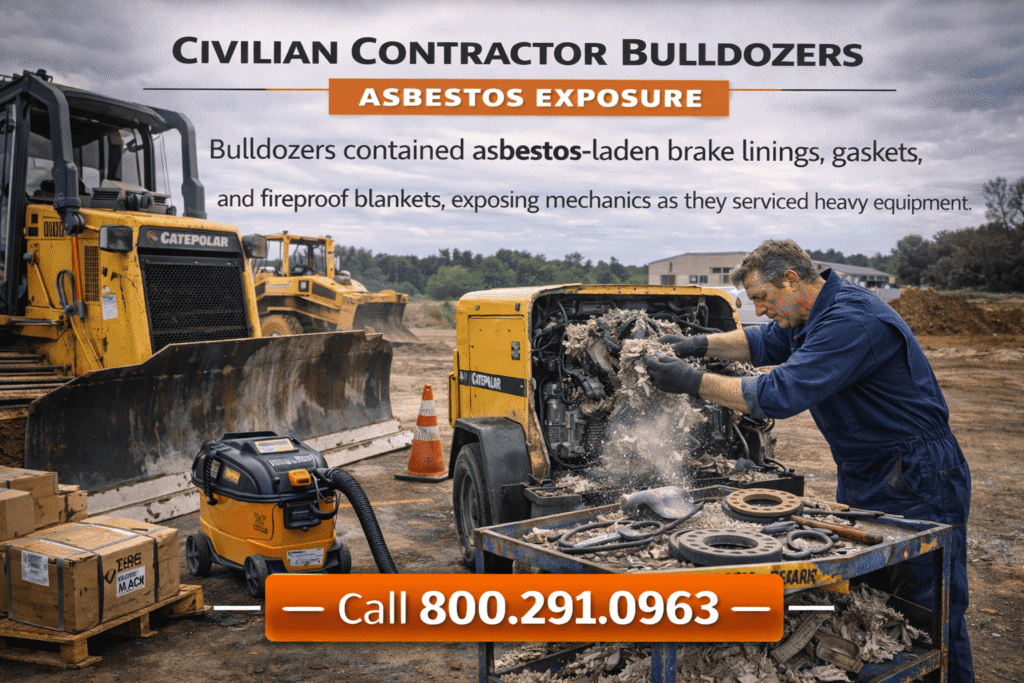
🚜 Civilian Contractor Bulldozers – Asbestos Exposure
Bulldozers have been a cornerstone of large-scale construction, mining, land clearing, highway building, and industrial site preparation for nearly a century. Civilian contractors, municipal crews, and private development companies relied on bulldozers from the 1930s through the late 1980s to push earth, clear debris, grade land, and prepare foundations.
During those decades, many bulldozers were manufactured or repaired using asbestos-containing components designed to withstand extreme heat, friction, and heavy mechanical stress.
Asbestos was commonly found in brake linings, clutch assemblies, engine insulation, exhaust systems, gaskets, hydraulic components, and fireproof panels. When these parts deteriorated or were replaced during maintenance, microscopic asbestos fibers were released into the air. Mechanics, operators, and maintenance crews often worked without respirators or dust controls, unknowingly inhaling hazardous fibers.
Today, decades later, many former bulldozer operators and heavy equipment mechanics are being diagnosed with mesothelioma and other asbestos-related illnesses.
📘 Bulldozer Asbestos Exposure – What You’ll Learn on This Page
-
🚜 How asbestos was used in bulldozer brake and clutch systems
-
⚙️ Why maintenance work created airborne asbestos dust
-
👷 Which civilian contractor roles faced the highest risk
-
🫁 Diseases linked to bulldozer asbestos exposure
-
⚖️ Legal options including lawsuits and trust fund claims
-
💰 Sample settlements involving heavy equipment mechanics
-
⏳ Filing deadlines and time limits for claims
More than $30 billion remains available in asbestos trust funds for eligible workers and families.
🧾 Estimated Number of People Exposed via Bulldozers
| Exposure Group | Estimated Number of People Exposed |
|---|---|
| Heavy Equipment Mechanics | 48,000+ exposed |
| Bulldozer Operators | 52,000+ exposed |
| Municipal Fleet Crews | 27,000+ exposed |
| Mining & Land Clearing Workers | 21,000+ exposed |
Total Estimated Exposure: Over 148,000 workers
Bulldozers were widely used in road construction, pipeline installation, military base development, mining operations, and urban expansion projects.
🔥 Why Asbestos Was Used in Bulldozers
Asbestos was valued for its strength, fire resistance, and ability to endure intense friction.
It was commonly installed in:
-
🛑 Brake Linings – Required to control heavy tracked machines
-
⚙️ Clutch Discs – Withstood friction in transmission systems
-
🔥 Engine Insulation Wraps – Protected surrounding components
-
🔩 Gaskets & Seals – Maintained compression in engines and exhaust systems
-
🧱 Fireproof Panels – Reduced risk in engine compartments
-
🏭 Hydraulic System Heat Shields – Insulated pressurized lines
Bulldozers working in mines, quarries, and industrial facilities generated high internal temperatures, making asbestos a common material choice.
🏗️ Where Bulldozers Were Commonly Used
| Project Type | Exposure Setting | Location Examples |
|---|---|---|
| Highway Construction | Road grading sites | DOT and contractor projects |
| Mining Operations | Open-pit mines | Coal, metal, mineral sites |
| Land Development | Residential & commercial builds | Urban expansion zones |
| Oil & Gas Projects | Pipeline routes | Energy sector construction |
| Military Base Construction | Equipment yards | Federal and defense sites |
Maintenance often occurred in enclosed garages where brake dust accumulated over years.
👷 High-Risk Roles Around Bulldozers
| Role | Exposure Risk | Description |
|---|---|---|
| Heavy Equipment Mechanics | High | Replaced brakes, clutches, gaskets |
| Bulldozer Operators | Moderate | Exposed to deteriorating insulation & dust |
| Fleet Maintenance Technicians | High | Repeated servicing of friction components |
| Welders & Fabricators | Moderate | Cut into insulated engine panels |
| Mining Equipment Crews | Moderate | Worked near repairs and engine rebuilds |
Grinding, sanding, and replacing brake shoes created concentrated airborne asbestos fibers.
⚙️ Common Asbestos Components in Bulldozers
-
🛑 Brake Shoes & Pads – High-friction asbestos materials
-
⚙️ Clutch Plates – Heat-resistant composite parts
-
🔥 Exhaust & Manifold Insulation – Wrapped with asbestos fabric
-
🔩 Engine & Head Gaskets – Compressed asbestos fiber seals
-
🧱 Cabin Insulation Panels – Reduced engine heat transfer
-
🏭 Hydraulic Pump Seals – Used asbestos reinforcement
Replacement parts often contained asbestos even after manufacturers began phasing it out in new models.
🫁 Health Risks from Bulldozer Asbestos Exposure
Long-term inhalation of asbestos fibers may lead to:
-
🫁 Mesothelioma – Cancer of lung or abdominal lining
-
🚬 Lung Cancer – Elevated risk with repeated exposure
-
🌫️ Asbestosis – Permanent lung scarring
-
🧱 Pleural Thickening – Hardening of lung membranes
-
⚠️ Pleural Effusions – Fluid buildup in lungs
Symptoms frequently appear 20–50 years after exposure, meaning bulldozer work from the 1960s–1980s is still causing diagnoses today.
⚖️ Lawsuits from Bulldozer Asbestos Exposure
Thousands of heavy equipment workers have filed asbestos claims related to bulldozers.
-
Claims typically target manufacturers of brake linings, gaskets, and insulation
-
Employers are rarely sued directly
-
Compensation may include medical bills, lost income, and pain and suffering
-
Most cases resolve through settlement
Workers may qualify even if they only performed occasional maintenance.
💰 Sample Settlements – Bulldozer Exposure Cases
| Settlement Amount | Description |
|---|---|
| $1.5 million | Bulldozer mechanic exposed over 25 years |
| $1.3 million | Mining operator diagnosed with mesothelioma |
| $1.05 million | Fleet technician exposed during brake replacements |
| $900,000 | Land development contractor exposed to engine insulation |
Settlement amounts depend on diagnosis, age, work history, and documentation.
🏭 Companies Linked to Bulldozer Asbestos Parts
-
Caterpillar (older parts suppliers) – Friction materials and insulation
-
Raybestos-Manhattan – Asbestos brake products
-
Garlock – Industrial asbestos gaskets
-
Johns-Manville – Insulation materials
-
Bendix – Brake components
Many of these companies established trust funds after asbestos-related bankruptcies.
🏦 Trust Funds for Bulldozer Exposure Victims
-
💰 Over $30 billion remains available
-
📄 Claims can be filed without suing employers
-
⏳ Many claims resolved within months
-
💵 Typical compensation ranges from $250,000 to $1 million+
Eligibility requires medical confirmation and documented exposure history.
🪖 Additional Benefits Available
-
🏥 SSDI – Disability benefits for those unable to work
-
🪖 VA Benefits – For veterans who operated bulldozers on bases
-
📋 Workers’ Compensation – State occupational disease benefits
-
⚖️ Wrongful Death Claims – Filed by surviving family members
Secondary exposure claims may apply if family members were exposed through contaminated clothing.
📝 How to File a Bulldozer Asbestos Claim
-
Obtain a confirmed diagnosis (mesothelioma, lung cancer, or asbestosis)
-
Document bulldozer operation or repair work history
-
Identify manufacturers of brakes, clutches, or gaskets
-
Contact an experienced asbestos attorney
-
File lawsuits or trust fund claims
Most claims are resolved within 6–12 months.
⏳ Statutes of Limitation
| Claim Type | Deadline from Diagnosis or Death |
|---|---|
| Personal Injury Lawsuit | 2–3 years |
| Wrongful Death Claim | 2–3 years |
| Trust Fund Claim | Varies by fund |
Deadlines vary by state. Prompt legal consultation is important.
❓ Bulldozer Asbestos Exposure FAQs
Q: Are modern bulldozers still dangerous?
Most bulldozers manufactured after the early 1990s do not contain asbestos components.
Q: I only worked on bulldozers occasionally. Can I still file?
Yes. Even intermittent exposure may qualify if illness is confirmed.
Q: What if the manufacturer no longer exists?
Trust funds may still provide compensation.
Q: Can my spouse file after my death?
Yes. Wrongful death claims are available to surviving family members.
📞 Talk to a Legal Advocate for Bulldozer Asbestos Exposure
Call 800.291.0963 for a free case review.
Heavy equipment operators, mechanics, and construction workers may qualify for substantial compensation.
Free Consultation – No Upfront Costs