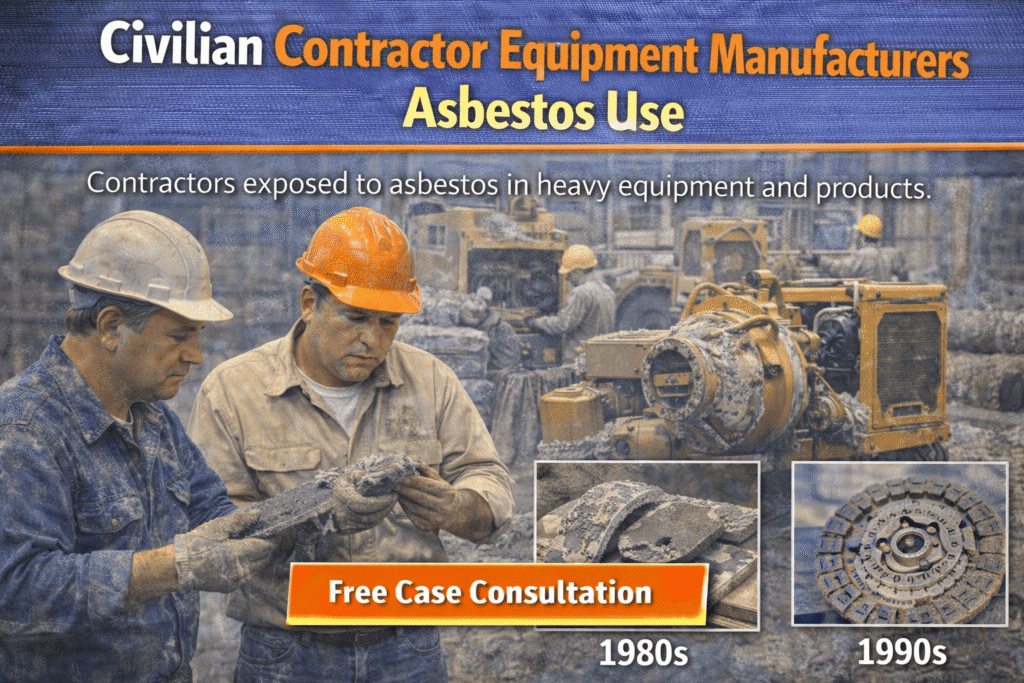
🏭 Civilian Contractor Equipment Manufacturers Asbestos Use
Equipment manufacturers widely used asbestos in tools, machinery, and industrial systems—exposing civilian contractors during operation, repair, maintenance, and replacement.
For much of the 20th century, asbestos was not only used in buildings—it was engineered directly into equipment and machinery. Civilian contractors working in construction, power generation, shipyards, factories, refineries, and military-supported facilities routinely handled machines that contained asbestos insulation, gaskets, seals, brakes, clutches, heat shields, and electrical components.
Manufacturers knew asbestos resisted heat, friction, and vibration. What they did not disclose was that servicing or operating this equipment released dangerous airborne asbestos fibers. Decades later, contractors are being diagnosed with mesothelioma and other asbestos-related diseases, long after the equipment was scrapped or replaced.
🧱 Why Equipment Manufacturers Used Asbestos
Asbestos was considered ideal for heavy machinery.
Manufacturers used asbestos because it:
-
🔥 Withstood extreme heat
-
⚙️ Reduced friction and wear
-
🧱 Insulated engines, boilers, and turbines
-
🔌 Protected electrical systems from fire
-
💲 Lowered manufacturing costs
Asbestos-containing equipment was sold nationwide and installed in industrial plants, power facilities, shipyards, refineries, construction sites, and government-supported operations, including facilities associated with the Department of Defense (claims target manufacturers—not the government).
🚧 Civilian Contractor Jobs Exposed Through Equipment Use
Equipment-based asbestos exposure affected many contractor roles.
High-risk civilian contractor jobs included:
-
🔧 Mechanics and maintenance technicians
-
⚙️ Power plant and refinery contractors
-
🏗️ Construction equipment operators
-
🚢 Shipyard and port contractors
-
🔌 Electricians and instrumentation workers
-
🧪 Industrial and plant engineers
-
🛠️ Millwrights and machinery installers
Contractors were exposed even if they never installed asbestos themselves.
🧰 Types of Equipment That Contained Asbestos
Asbestos was embedded inside thousands of machines.
Common asbestos-containing equipment included:
-
🔥 Boilers and furnaces
-
⚡ Turbines and generators
-
🛢️ Pumps, valves, and compressors
-
🚜 Heavy construction equipment
-
🚚 Industrial vehicles and engines
-
🔧 Brake systems and clutches
-
🔌 Electrical switchgear and panels
-
🧯 Fire-suppression and safety systems
Servicing or repairing these machines disturbed asbestos components.
🔧 How Contractors Were Exposed Through Equipment
Exposure occurred during normal work tasks.
Common scenarios included:
-
🔧 Replacing gaskets, seals, and packing
-
⚙️ Grinding or cutting asbestos brake linings
-
🔥 Opening insulated boilers or turbines
-
🛠️ Repairing worn heat shields
-
🔌 Servicing electrical panels and switchgear
-
🚧 Dismantling or retrofitting old equipment
Many machines released asbestos only when opened, catching workers off guard.
⚠️ Why Equipment-Related Asbestos Exposure Was Often Hidden
Equipment exposure was dangerous because:
-
❌ Asbestos was enclosed inside machinery
-
❌ Warning labels were absent or vague
-
❌ Manufacturers failed to disclose asbestos content
-
❌ Contractors reused equipment for decades
-
❌ Dust was released in confined spaces
Contractors often inhaled fibers directly at breathing height.
🫁 Diseases Linked to Equipment-Based Asbestos Exposure
Civilian contractors exposed through equipment face risk for:
-
Mesothelioma
-
Asbestos-related lung cancer
-
Asbestosis
-
Pleural plaques and thickening
Many diagnoses occur long after retirement, when equipment manufacturers are the only remaining liable parties.
🏭 Equipment Manufacturers’ Legal Responsibility
Asbestos lawsuits against equipment manufacturers focus on:
-
🏭 Failure to warn about asbestos hazards
-
🏭 Designing equipment with asbestos alternatives available
-
🏭 Selling asbestos components without safety instructions
-
🏭 Continuing asbestos use despite known health risks
Courts have ruled that manufacturers owed a duty to warn contractors, not just direct purchasers.
🧑⚖️ How a Lawyer Proves Equipment-Related Exposure
An experienced asbestos lawyer can:
-
🔍 Identify equipment models used during employment
-
📂 Match job duties to asbestos-containing components
-
🏗️ Use manufacturer catalogs and repair manuals
-
🏦 File asbestos trust fund claims where applicable
-
⚖️ File lawsuits against solvent manufacturers
-
👨👩👧 Handle wrongful death and estate claims
Contractors do not need serial numbers or receipts.
⌛ Statute of Limitations for Equipment Manufacturer Claims
Deadlines vary by state and typically begin:
-
🩺 At date of diagnosis, or
-
⚰️ At date of death for wrongful death claims
Because equipment exposure often spans decades, early legal review is critical.
❓ Frequently Asked Questions (FAQs)
❓ Can I sue equipment manufacturers even if my employer is gone?
Yes. Claims target manufacturers—not employers.
❓ What if I don’t remember the equipment brand?
Lawyers identify likely manufacturers using era-specific data.
❓ Does maintenance work count as exposure?
Yes. Maintenance and repair are high-risk activities.
❓ Can multiple manufacturers be responsible?
Yes. Most contractors used many machines over time.
❓ Are trust funds available for equipment exposure?
Yes. Many equipment manufacturers created trust funds.
📞 Help for Contractors Exposed Through Asbestos-Containing Equipment
If you worked as a civilian contractor and were exposed to asbestos through machinery, tools, or industrial equipment, you may still have strong legal options today.
📌 You May Be Eligible For:
-
Asbestos trust fund compensation
-
Equipment manufacturer lawsuits
-
Wrongful death compensation for families
📞 Call 800-291-0963 for a free, confidential equipment-exposure case review
⏱️ No upfront costs • Equipment-focused cases • Nationwide representation
The danger was built into the machines. Accountability belongs with the manufacturers.