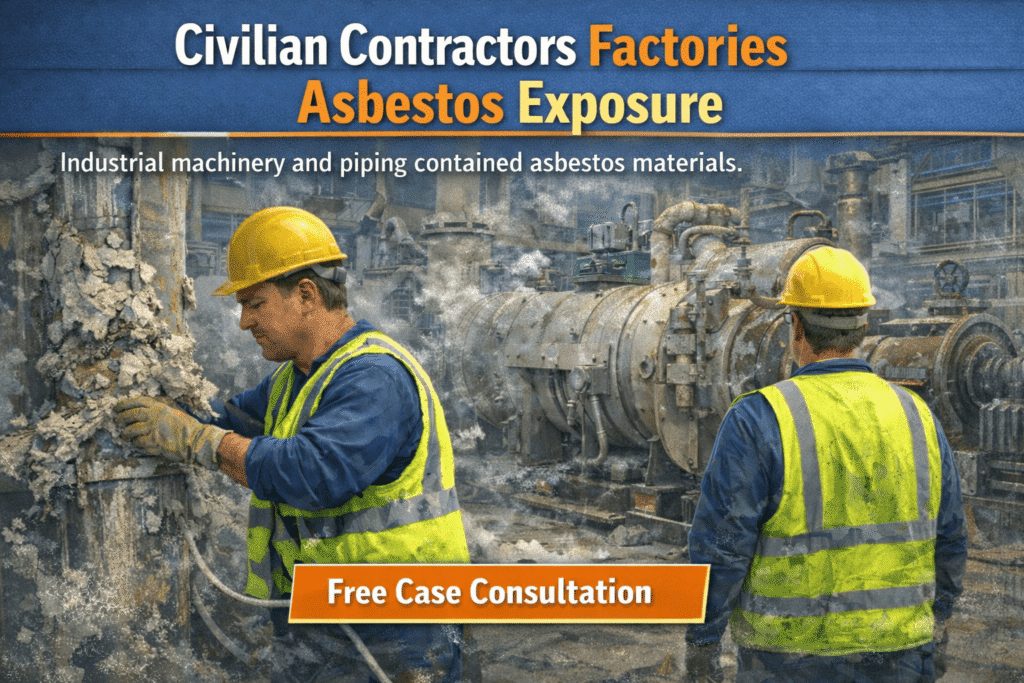
🏭 Civilian Contractors Factories Asbestos Exposure
Industrial factories exposed civilian contractors to asbestos machinery insulation, piping systems, fireproofing, gaskets, and high-heat manufacturing equipment.
For much of the 20th century, factories were among the most asbestos-dense work environments in the United States. Civilian contractors were routinely brought into factories to build new production lines, repair machinery, upgrade utilities, install insulation, and perform shutdown maintenance. From the 1930s through the late 1980s, asbestos was embedded in nearly every part of industrial manufacturing.
Unlike permanent factory employees, civilian contractors often worked temporarily but intensively, performing high-disturbance tasks that released large amounts of asbestos dust—frequently without warnings, respirators, or training. Decades later, many of these contractors developed mesothelioma, lung cancer, and other asbestos-related diseases.
🧱 Why Asbestos Was Widely Used in Factories
Factories required materials that could tolerate constant heat, friction, vibration, and chemical exposure.
Asbestos was heavily used because it:
-
🔥 Withstood extreme manufacturing heat
-
⚙️ Reduced friction and wear in machinery
-
🌬️ Insulated steam, gas, and chemical piping
-
🧱 Fireproofed structural steel and equipment rooms
-
💲 Lowered production and maintenance costs
These materials were commonly specified in factory construction and upgrades—especially in facilities tied to defense manufacturing, government contracts, and heavy industry overseen by agencies such as the Department of Defense.
🚧 Civilian Contractor Roles in Factories With High Exposure
Factories relied heavily on outside contractors for specialized and high-risk work.
High-exposure civilian contractor roles included:
-
🏗️ Industrial construction contractors
-
🔧 Machinery installers and repair technicians
-
⚙️ Millwrights and mechanics
-
🔌 Industrial electricians
-
🛠️ Pipefitters and steamfitters
-
🔥 Insulators and refractory workers
-
🧱 Maintenance shutdown crews
-
🧹 Demolition and cleanup contractors
Contractors were often brought in specifically when asbestos-containing materials needed to be cut, removed, or replaced.
🧰 Common Asbestos-Containing Materials in Factories
Asbestos was present throughout factory infrastructure.
Common asbestos materials included:
-
⚙️ Machinery insulation and heat shields
-
🔥 Boilers, furnaces, and kilns
-
🌬️ Steam pipes, elbows, and valves
-
🔩 Gaskets, seals, and packing materials
-
🧱 Firebrick, cement, and refractory linings
-
🔌 Electrical panels and arc chutes
-
🧱 Floor tiles, mastics, and adhesives
Normal wear, vibration, and repairs caused these materials to degrade and release airborne asbestos fibers.
🔧 How Civilian Contractors Were Exposed in Factories
Exposure occurred during routine industrial work.
Common exposure scenarios included:
-
🔧 Repairing or dismantling machinery
-
🏗️ Installing or upgrading production lines
-
🔥 Rebuilding furnaces and boilers
-
🧱 Removing old insulation during shutdowns
-
🔩 Replacing gaskets, valves, and seals
-
🧹 Cleaning dusty equipment rooms and pipe chases
Factory ventilation systems often spread asbestos fibers throughout large areas, increasing exposure beyond the immediate worksite.
⚠️ Why Factory Contractor Exposure Was Often Severe
Factory asbestos exposure was especially dangerous because:
-
❌ Asbestos was used in massive quantities
-
❌ Work occurred in enclosed industrial spaces
-
❌ Contractors disturbed aging, friable materials
-
❌ Protective gear was rarely required
-
❌ Exposure occurred during intense, time-pressured shutdowns
Industrial contractors experienced some of the highest cumulative asbestos exposures recorded in occupational studies.
🫁 Diseases Linked to Factory Asbestos Exposure
Civilian contractors exposed in factories face high risk for:
-
Mesothelioma
-
Asbestos-related lung cancer
-
Asbestosis
-
Pleural plaques and pleural thickening
Because factory exposure often involved daily, hands-on contact, disease risk remains high even decades later.
⏳ Latency Period and Delayed Diagnosis
Factory-related asbestos disease typically follows a long delay:
-
⏱️ Exposure during working years
-
⏱️ No immediate symptoms
-
⏱️ Diagnosis 20–50 years later
Many former contractors are diagnosed long after factory work has ended or the facility has closed.
⚖️ Legal Responsibility for Factory Asbestos Exposure
Civilian contractor asbestos claims do not sue the factory owner or employer.
Instead, claims target:
-
🏭 Machinery manufacturers
-
🏭 Insulation and refractory suppliers
-
🏭 Boiler, furnace, and kiln manufacturers
-
🏭 Gasket, valve, and packing manufacturers
Many of these companies later entered bankruptcy and established asbestos trust funds for victims.
🧑⚖️ How a Lawyer Can Help Factory Contractors
An experienced asbestos lawyer can:
-
🔍 Identify asbestos products used in specific factories
-
📂 Reconstruct contractor work history
-
🏗️ Match job tasks to known asbestos materials
-
🏦 File multiple asbestos trust fund claims
-
⚖️ Pursue lawsuits against solvent manufacturers
-
👨👩👧 Handle wrongful death claims
Contractors do not need to remember brand names—lawyers rely on industrial records and expert databases.
⌛ Statute of Limitations for Factory Claims
Deadlines vary by state and usually begin:
-
🩺 At date of diagnosis, or
-
⚰️ At date of death for wrongful death claims
Missing the deadline can permanently block compensation.
❓ Frequently Asked Questions (FAQs)
❓ Can factory contractors file asbestos lawsuits?
Yes. Factory-related asbestos claims are well established.
❓ What if the factory closed years ago?
Claims target manufacturers, not the facility.
❓ Does short-term shutdown work count?
Yes. High-intensity exposure during shutdowns is common.
❓ Can multiple manufacturers be responsible?
Yes. Factory cases often involve many defendants.
❓ Can families file claims?
Yes. Wrongful death and secondhand exposure claims apply.
📞 Help for Civilian Contractors Exposed in Factories
If you worked as a civilian contractor in a factory and later developed an asbestos-related disease, you may still have strong legal options today.
📌 You May Be Eligible For:
-
Asbestos trust fund compensation
-
Manufacturer lawsuit settlements
-
Wrongful death compensation for families
📞 Call 800-291-0963 for a free, confidential factory asbestos exposure review
⏱️ No upfront costs • Factory-focused claims • Nationwide representation
You built the backbone of industry. You deserve accountability.