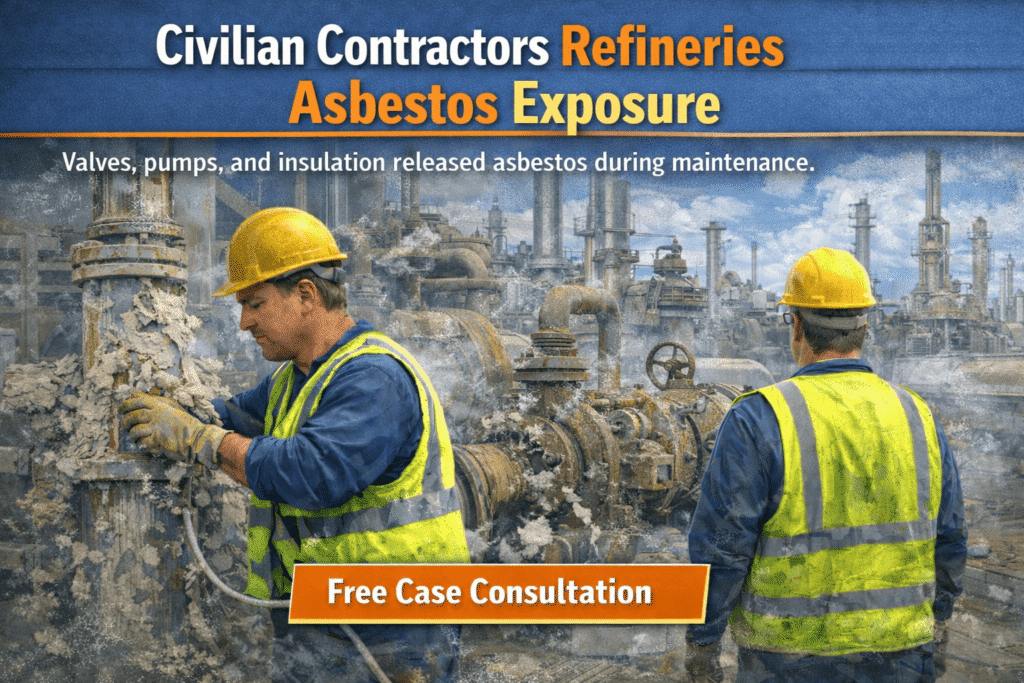
🛢️ Civilian Contractors Refineries Asbestos Exposure
Oil refineries and petrochemical plants exposed civilian contractors to asbestos insulation, valves, pumps, furnaces, and high-temperature processing equipment.
For decades, refineries were among the most asbestos-intensive industrial environments in the United States. Civilian contractors were essential to refinery operations, performing construction, shutdown maintenance, equipment overhauls, piping replacements, and emergency repairs. From the 1930s through the late 1980s, asbestos was heavily relied upon to control extreme heat, pressure, corrosion, and fire risk inherent in oil and chemical processing.
Civilian contractors often worked inside live processing units, pipe racks, furnace areas, and compressor stations, where asbestos materials were thick, aged, and friable. Protective warnings were rare, respirators were uncommon, and exposure records were rarely kept—leaving many workers unaware of the danger until serious illness appeared decades later.
🧱 Why Asbestos Was Widely Used in Refineries
Refineries operate under extreme industrial stress.
Asbestos was used extensively because it:
-
🔥 Withstood extreme heat from furnaces and heaters
-
🌬️ Insulated high-pressure steam and process piping
-
⚙️ Reduced vibration in pumps and compressors
-
🧱 Fireproofed structural steel and processing units
-
💲 Lowered maintenance costs in harsh environments
These materials were standard in refinery designs supplying fuel and chemicals to military, aviation, and industrial operations regulated by entities connected to the Department of Defense and national energy infrastructure.
🚧 Civilian Contractor Jobs in Refineries With High Exposure
Refineries relied heavily on specialized civilian contractors.
High-risk contractor roles included:
-
🔧 Maintenance and turnaround contractors
-
⚙️ Pipefitters and steamfitters
-
🛠️ Valve, pump, and compressor mechanics
-
🔥 Furnace and heater repair crews
-
🔩 Insulators and laggers
-
🔌 Industrial electricians
-
🧱 Structural steel and fireproofing crews
-
🧹 Cleanup and demolition contractors
Contractors were often brought in during shutdowns (“turnarounds”), when asbestos-containing materials were actively removed or replaced.
🧰 Common Asbestos-Containing Materials in Refineries
Asbestos was embedded throughout refinery systems.
Common materials included:
-
🔥 Furnace and heater insulation
-
🌬️ Steam and process pipe insulation
-
🔩 Valve packing and flange gaskets
-
⚙️ Pump and compressor seals
-
🧱 Fireproofing on steel columns and racks
-
🧱 Refractory brick and cement
-
🔌 Electrical panels and arc chutes
Cutting, grinding, scraping, or removing these materials released large quantities of airborne asbestos fibers.
🔧 How Civilian Contractors Were Exposed in Refineries
Exposure occurred during routine and emergency refinery work.
Common exposure scenarios included:
-
🔧 Valve and pump rebuilds
-
🧱 Removing old pipe insulation during replacements
-
🔥 Furnace relines and heater repairs
-
⚙️ Compressor overhauls
-
🧹 Sweeping dusty units and pipe racks
-
🚧 Emergency repairs after leaks, fires, or shutdowns
Refinery environments were often confined and poorly ventilated, allowing fibers to accumulate and spread.
⚠️ Why Refinery Asbestos Exposure Was Especially Severe
Refinery exposure was particularly dangerous because:
-
❌ Asbestos was used in massive quantities
-
❌ Materials were exposed to heat and vibration, increasing friability
-
❌ Contractors worked inches from asbestos sources
-
❌ Respiratory protection was rarely enforced
-
❌ Exposure occurred repeatedly over long careers
Refinery contractors consistently show elevated mesothelioma and lung-disease rates in occupational studies.
🫁 Diseases Linked to Refinery Asbestos Exposure
Civilian contractors exposed in refineries face high risk for:
-
Mesothelioma
-
Asbestos-related lung cancer
-
Asbestosis
-
Pleural plaques and pleural thickening
Because refinery exposure was often intense and repeated, disease risk remains high even decades later.
⏳ Latency Period and Delayed Diagnosis
Refinery asbestos disease typically follows a long delay:
-
⏱️ Years of cumulative exposure
-
⏱️ No immediate symptoms
-
⏱️ Diagnosis 20–50 years after exposure
Many contractors are diagnosed long after refinery work has ended or facilities have closed.
⚖️ Legal Responsibility for Refinery Asbestos Exposure
Civilian refinery asbestos claims do not sue the refinery owner or employer.
Instead, claims target:
-
🏭 Valve, pump, and compressor manufacturers
-
🏭 Insulation and refractory suppliers
-
🏭 Furnace and heater manufacturers
-
🏭 Gasket, packing, and seal manufacturers
Many of these companies later entered bankruptcy and created asbestos trust funds to compensate victims.
🧑⚖️ How a Lawyer Can Help Refinery Contractors
An experienced asbestos lawyer can:
-
🔍 Identify asbestos products used in specific refineries
-
📂 Reconstruct contractor work history and shutdown schedules
-
🏗️ Match job tasks to known asbestos materials
-
🏦 File multiple asbestos trust fund claims
-
⚖️ Pursue lawsuits against solvent manufacturers
-
👨👩👧 Handle wrongful death claims
Victims do not need product names—lawyers rely on refinery records and expert databases.
⌛ Statute of Limitations for Refinery Claims
Deadlines vary by state and usually begin:
-
🩺 At date of diagnosis, or
-
⚰️ At date of death for wrongful death claims
Missing the deadline can permanently block compensation—early review is critical.
❓ Frequently Asked Questions (FAQs)
❓ Can refinery contractors file asbestos lawsuits?
Yes. Refinery-related asbestos claims are well documented.
❓ What if the refinery closed years ago?
Claims target manufacturers, not the facility.
❓ Does short-term turnaround work count?
Yes. High-intensity shutdown exposure is common.
❓ Can multiple companies be responsible?
Yes. Refinery cases often involve many defendants.
❓ Can family members file claims?
Yes. Wrongful death and secondhand exposure claims apply.
📞 Help for Civilian Contractors Exposed in Refineries
If you worked as a civilian contractor in an oil refinery or petrochemical plant and later developed an asbestos-related disease, you may still have strong legal options today.
📌 You May Be Eligible For:
-
Asbestos trust fund compensation
-
Manufacturer lawsuit settlements
-
Wrongful death compensation for families
📞 Call 800-291-0963 for a free, confidential refinery asbestos exposure review
⏱️ No upfront costs • Refinery-focused claims • Nationwide representation
You kept critical infrastructure running. You deserve accountability.